



Banking
The Proposed Regulatory Reclassification of Systemically Significant Non-Banking Financial Entities
A significant shift in the regulatory framework governing the Indian financial landscape was introduced on Friday by the Reserve Bank of India (RBI), as a proposal was issued to classify non-banking lenders with assets of 1 trillion rupees or more within the “upper layer” category. This specific designation is reserved for the largest and most systemically important participants in the sector, whose operational stability is considered vital to the health of the broader national economy. It has been articulated by the central bank that the issuance of these draft rules is intended to foster a more transparent and simplified identification process, ensuring that the criteria for designating upper-layer entities are clearly understood by all stakeholders in the market.
Within the existing regulatory architecture, non-banking financial companies (NBFCs) are categorized based on their size and risk profile, with the upper layer representing the apex of this hierarchy. Because the potential failure of these massive lenders could pose substantial risks to the integrity of the entire financial system, they are subject to significantly more rigorous oversight and stricter capital requirements than those situated in the base or middle layers. The proposed classification threshold of 1 trillion rupees, equivalent to approximately $10.78 billion, is intended to act as a definitive benchmark for identifying those institutions that possess sufficient scale to be deemed systemically critical.
A notable expansion of the regulatory scope was also included in the draft proposal, specifically regarding the inclusion of government-owned non-banking financial companies. It has been suggested that eligible state-owned entities should now be considered for classification within the upper layer, a departure from previous protocols where such institutions were predominantly restricted to the base or middle-layer categories. This modification reflects a growing recognition of the significant market influence and systemic footprint maintained by government-backed lenders, necessitating an alignment of their regulatory treatment with that of their private-sector counterparts.
Historically, the identification of upper-layer entities was conducted using a risk-based scoring method and was generally restricted to the top ten organizations by size. The transition toward a specific asset-size threshold represents a move toward a more objective and predictable regulatory environment. It has been proposed that these identification criteria be subject to periodic review to ensure their continued relevance in a dynamic economic climate. Specifically, it is intended that the asset-size threshold of 1 trillion rupees will be re-evaluated every five years, allowing the central bank to adjust the benchmark in response to inflation, economic growth, and structural shifts within the financial industry.
The central bank has actively sought engagement from the public and various industry stakeholders, with a deadline for the submission of comments and feedback established for May 4. This consultative approach is designed to ensure that the final rules account for the diverse perspectives within the $315 billion financial services sector and the broader lending community. The emphasis on transparency is viewed as a mechanical necessity to maintain investor confidence and to provide a stable foundation for the continued expansion of non-bank credit across the country.
From a macroeconomic perspective, the strengthening of the upper-layer regulatory framework is interpreted as a proactive defense against systemic contagion. As the 2026 fiscal year progresses, the Indian economy continues to navigate the complexities of global energy volatility and shifting geopolitical alliances, which have placed intermittent pressure on domestic liquidity and the exchange rate of the rupee. By ensuring that the largest non-bank lenders are held to the highest standards of safety and soundness, the central bank aims to insulate the domestic credit market from exogenous shocks. This strategy is particularly relevant for the “Muskonomy” of modern finance, where the rapid movement of capital and the integration of digital assets require a robust and clearly defined regulatory anchor.
Ultimately, the proposed reclassification serves as a definitive signal of the central bank’s commitment to modernization and risk mitigation. The transition from a relative ranking system to a fixed asset-based threshold provides a clearer roadmap for growing institutions and ensures that regulatory intensity increases in direct proportion to systemic risk. As the feedback period concludes in early May, the finalization of these rules is expected to establish a new benchmark for financial oversight in India, ensuring that the nation’s most influential non-bank lenders operate within a framework that prioritizes the long-term stability of the sovereign financial system over short-term expansionary goals. The successful implementation of these standards will be a critical factor in maintaining India’s resilience as a premier destination for global capital in the mid-2020s.








Banking
HDFC Bank Puts Forward Two Names for Next CEO as Jagdishan’s Exit Approaches

HDFC Bank has taken the next step in its leadership succession plan by forwarding the names of two candidates to the Reserve Bank of India (RBI) for the position of managing director and chief executive officer. The move comes ahead of the planned departure of Sashidhar Jagdishan, whose second term at the helm of the bank is scheduled to conclude in October.
The lender confirmed the submission on September 12 but did not identify either of the candidates. By sending the names to the central bank, HDFC Bank has officially entered the regulatory phase of its search for a new chief executive.
Jagdishan has been leading HDFC Bank since 2020 and is expected to step down when his second term ends in October. His impending exit makes the appointment of his successor an important decision for the bank as it prepares for a new phase of management.
The RBI has a statutory role in such appointments. Under India’s banking framework, private-sector lenders need the central bank’s approval before appointing a managing director or chief executive officer. As a result, the two individuals proposed by HDFC Bank will have to go through the regulator’s review before the bank can finalize its next CEO.
The lender has not disclosed which candidate it prefers or provided any details about the two people whose names were submitted. The absence of public information means the final choice remains unclear while the RBI considers the proposals.
Alongside the CEO succession process, HDFC Bank is strengthening its board. The bank has reappointed V. Srinivasa Rangan as a whole-time director. In banking, a whole-time director is a board member who holds a full-time executive role within the institution.
HDFC Bank has also appointed Jimmy Tata, who serves as its Chief Credit Officer, to the board as a whole-time director. The changes increase the representation of senior executives on the board at a time when the lender is preparing for a change in its top management.
Deputy Managing Director Kaizad Bharucha is already a whole-time director of the bank.
The lender has further decided to add another whole-time director position to its board. According to HDFC Bank, that fourth position will eventually be occupied by the new CEO after the successor has been selected and received the required approval.
The leadership transition comes after a period of significant change for HDFC Bank. In 2023, the lender completed its merger with Housing Development Finance Corporation, a major development that reshaped the structure and scale of the financial institution. The appointment of a new CEO will consequently be closely observed as the bank continues operating under the post-merger structure.
Jagdishan assumed the CEO role in 2020 after Aditya Puri, who had headed HDFC Bank for more than 20 years, stepped down. During Jagdishan’s tenure, the bank has navigated the merger with HDFC Ltd. and the organizational changes that followed the combination.
The incoming chief executive will take charge at a time when India’s banking sector is undergoing continuing changes involving regulation, digital technology and competition. The appointment will also shape HDFC Bank’s strategic direction as it enters its next period under new leadership.
For the moment, however, the identities of the two candidates remain undisclosed. The RBI’s assessment will be an essential part of the appointment process, and the final decision will determine who succeeds Jagdishan when his term comes to an end in October.
Banking
RBI Actions, Global Cues Set to Shape Rupee and Bond Markets This Week
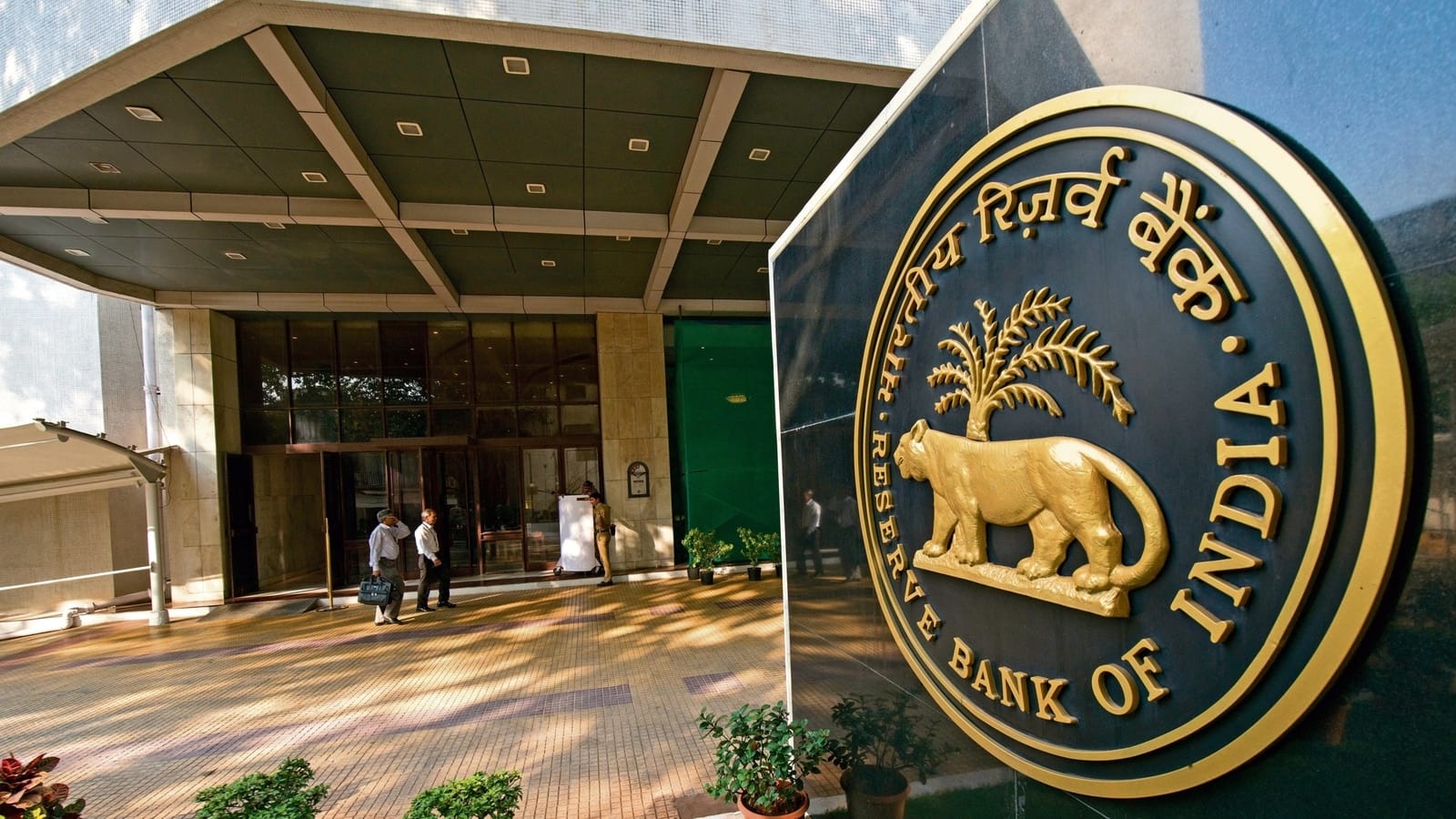
The Indian rupee and government bond markets are expected to remain closely tied to the Reserve Bank of India’s policy actions this week, with the central bank’s foreign exchange intervention and efforts to manage surplus liquidity likely to be key domestic drivers. Global developments, particularly oil prices and expectations for U.S. interest rates, are also expected to influence market sentiment.
The rupee gained 0.9% last week, reaching its strongest level in two months before ending at 94.4850 per dollar. The rise came as the RBI continued selling dollars in the market and traders anticipated that the central bank could use its larger foreign exchange reserves to provide further support to the currency.
Anil Bhansali, head of treasury at Finrex Treasury Advisors, said the RBI has become the most important factor for the rupee. He noted that the central bank had shielded the currency from unfavorable external signals during the previous week, leaving investors focused on whether that support would continue.
The rupee enters the week against a more challenging global backdrop. Expectations of a Federal Reserve rate hike at its September meeting have increased following stronger-than-expected U.S. employment figures. U.S. nonfarm payrolls increased by 162,000 last month, substantially above the 56,000 rise economists surveyed by Reuters had forecast.
Markets will now turn their attention to U.S. inflation figures. The August consumer price report is scheduled for Friday evening, only a few days before the Federal Reserve’s policy meeting. The inflation data could have an important influence on expectations for the Fed’s next policy move, with market bets currently closely balanced.
Oil prices are another major factor for both currencies and bonds. Brent crude jumped 7.8% last week to reach a six-week high. Investors are monitoring developments in tensions between the United States and Iran, particularly any escalation that could affect global oil supplies.
Bond Market Faces Pressure
Indian government bonds are expected to trade with a negative bias this week after benchmark yields increased for a third consecutive week. The 10-year government bond yield finished Friday at 6.9625%, representing a 5-basis-point increase over the week. This followed a rise of approximately 15 basis points during the preceding two weeks.
Market participants expect the benchmark yield to remain within a range of 6.90% to 7.00%. Traders are likely to watch movements in crude oil prices as well as the RBI’s measures to regulate liquidity in the financial system.
Shorter-maturity government bonds have continued to receive support as liquidity in India’s banking system climbed above 10 trillion rupees ($105.84 billion) for the first time. The unusually large surplus has strengthened expectations that the RBI will need to adopt longer-lasting measures to absorb excess cash.
As part of those efforts, the RBI is scheduled to conduct a 30-day variable-rate reverse repo auction worth 7 trillion rupees on Monday. The operation includes an early redemption option, designed to encourage banks to place surplus funds with the central bank while allowing them flexibility to withdraw those funds earlier.
The combination of higher oil prices and rising U.S. Treasury yields has weakened sentiment toward Indian government bonds. However, some international investors continue to view the country’s debt market favorably.
Matthew Kok, fixed-income portfolio manager at Eastspring Investments, said Indian government bonds remain comparatively attractive on both fundamental and valuation considerations. He pointed to stronger growth prospects, an improved currency and greater stability in bond prices, along with the removal of withholding tax, as factors that have increased the attractiveness of Indian debt relative to local-currency bonds in other regional markets.
Several U.S. economic indicators are also scheduled for release during the week. Initial weekly jobless claims for the week ending September 5 are due on Thursday, September 10, along with August producer price and manufacturing-related data. August existing home sales are also scheduled for September 10.
The main focus will come on Friday, September 11, when the August consumer price and core inflation figures are due. A Reuters poll puts inflation at 3.4%. The preliminary September University of Michigan consumer sentiment reading is also expected that day.
Together, these domestic and international developments are likely to determine the direction of the rupee and Indian bond markets as investors assess RBI intervention, liquidity conditions, oil prices and the outlook for U.S. monetary policy.
Banking
Top Banks in Brazil Cut Risk as Household Debt Pressures Rise

Brazil’s largest banks are becoming increasingly cautious about lending as rising household debt raises concerns about the ability of consumers to manage additional borrowing. Despite a resilient labor market and economic growth that has exceeded expectations, major lenders are shifting away from riskier customers and unsecured loans.
The latest earnings reports from Banco do Brasil, Itau, Bradesco and Santander Brasil showed a broadly similar approach. Bank executives said they are placing greater emphasis on borrowers with higher incomes and loans supported by collateral, while reducing exposure to customers considered more vulnerable.
Katherine Hennings, an analyst at BRCG, said the shift reflects the need for banks to apply stricter standards when assessing borrowers. She noted that Brazil could be entering a slower stage of its credit cycle after several years in which increased household borrowing helped sustain economic activity.
Historically, periods of rapid credit expansion followed by rising household indebtedness have contributed to weaker consumer spending. Hennings pointed to Brazil’s experience between 2011 and 2015, when a sharp increase in household debt was followed by a significant slowdown in consumption.
The current situation presents a particular concern because household finances have weakened even while unemployment remains low and incomes have improved. Family debt obligations are close to record levels, standing at about 50% of disposable income.
Several factors have contributed to the increase. Regulatory changes, the expansion of fintech companies and the widespread use of digital payments have made borrowing more accessible to consumers who previously had limited access to financial services. Government measures designed to encourage consumption and credit have also contributed to higher household borrowing.
Some of that additional borrowing has come through expensive unsecured products, including credit cards and personal loans. These are precisely the types of lending that major banks are now becoming more reluctant to offer to lower-income customers.
Banco do Brasil expects the economy to grow by about 1% in 2027, below the median forecast of 1.5% from more than 100 economists surveyed weekly by Brazil’s central bank. The economists expect growth of around 2% this year.
Geovanne Tobias, Banco do Brasil’s vice president for finance, said the bank expects consumer delinquency to improve next year as it continues concentrating growth on payroll loans for public- and private-sector employees.
Itau CEO Milton Maluhy Filho offered a particularly cautious assessment, saying the amount of credit distributed in Brazil has surpassed what household incomes can comfortably absorb. He said the bank’s outlook had weakened at the margin and that Itau was responding by increasing its focus on secured loans while reducing unsecured consumer lending.
Bradesco has adopted a similar strategy. CEO Marcelo Noronha said the bank has become significantly more selective, particularly when dealing with lower-income customers. He added that a larger share of the bank’s lending portfolio is now supported by collateral.
Santander Brasil has also reduced its exposure to borrowers it considers higher risk. The bank is paying particular attention to customers earning less than 4,000 reais ($771.40) per month, equivalent to roughly 2.5 times Brazil’s minimum wage.
Carlos Muniz, Santander Brasil’s chief financial officer, said the bank would not currently compete for customers below that income threshold. For borrowers earning more than 4,000 reais, he said Santander would seek lending opportunities backed by some form of collateral. The strategy affects a substantial portion of Brazilian workers, with about 70% of employed people earning no more than twice the minimum wage.
Banco do Brasil CEO Tarciana Medeiros said the bank aims to increase its number of “high-value clients” by 25% by 2030, making the expansion of that customer base a central strategic objective.
Meanwhile, Nubank, Brazil’s largest digital lender and a company heavily exposed to credit cards and other unsecured loans, reported a rise in loans more than 90 days overdue. The figure reached 6.9% in the second quarter, compared with 6.5% in both the previous quarter and the same period a year earlier.
Nubank nevertheless reported stronger-than-expected profit growth, supported by increased revenue and an improved risk-adjusted net interest margin. Its management maintained that there was no broad deterioration among consumers, although it acknowledged a more cautious economic environment.
The banks’ changing lending strategies indicate that Brazil’s financial sector is preparing for greater pressure on household borrowers as economic growth is expected to slow.

HDFC Bank Puts Forward Two Names for Next CEO as Jagdishan’s Exit Approaches

EU Regulator Warns Markets Could Face Sudden Correction Amid Rising Risks

AI Investment Boom Raises Financial Stability Concerns, BIS Chief Warns

Argentina Explores Debt Management Strategies: Potential Debt Swap and IMF Discussions on the Horizon

Apple Introduces “Tap to Pay” Feature for iPhone, Allowing Contactless Payments

Hedge Funds Capitalize on U.S. Regional Banking Stocks Plunge: Insights and Implications
-
 Banking3 years ago
Argentina Explores Debt Management Strategies: Potential Debt Swap and IMF Discussions on the Horizon
-
 Technology3 years ago
Apple Introduces “Tap to Pay” Feature for iPhone, Allowing Contactless Payments
-
 Banking2 years ago
Hedge Funds Capitalize on U.S. Regional Banking Stocks Plunge: Insights and Implications
-

 Technology3 years ago
Aviation Industry Urges Swift Action Against GPS Spoofing Amid Growing Threats
-

 Technology3 years ago
Bitcoin Weakens as Regulatory Concerns and Market Sentiment Impact Cryptocurrency Market
-

 Technology3 years ago
FTX denies talks of acquiring Robinhood
-

 Business2 years ago
Overcoming Financial Hurdles: TotalEnergies’ Quest for Renewable Energy in Africa
-

 Forex2 years ago
Navigating Risks in Bank-Fintech Partnerships: Insights from U.S. Bank Regulator