Technology
The Strategic Expansion of Edge Computing: Analyzing Axera Semiconductor’s $379 Million Initial Public Offering in the Hong Kong Capital Market
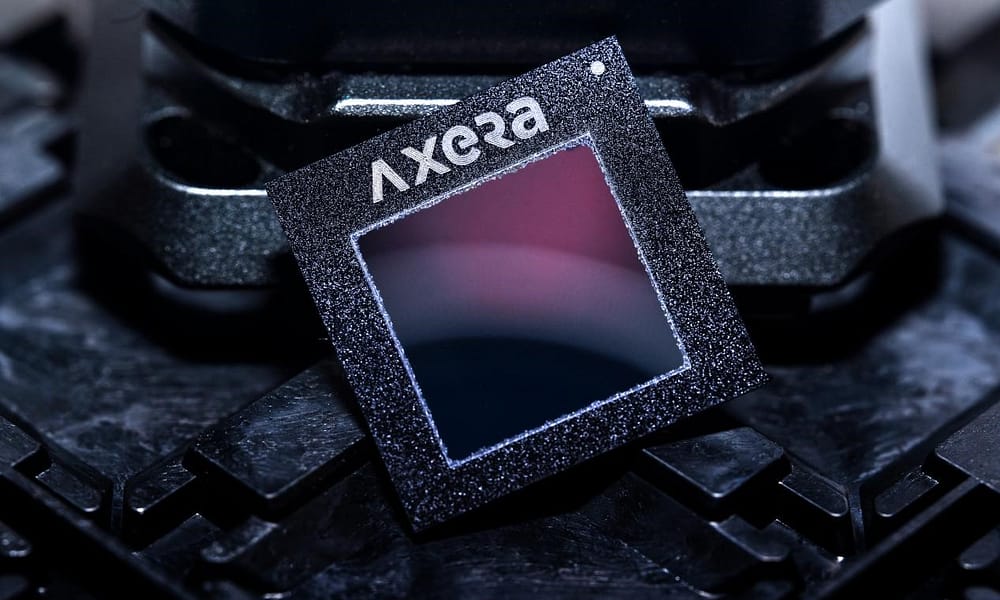
A significant milestone in the regional semiconductor landscape was documented on Friday, January 30, 2026, as it was revealed through regulatory filings that Axera Semiconductor, a prominent Chinese artificial intelligence chipmaker, is seeking to raise HK$2.96 billion—equivalent to approximately $379.2 million—through an initial public offering in Hong Kong. This capital-raising endeavor is characterized by the offering of 104.9 million shares, with a price point established at HK$28.20 per unit. The proceeds from this transaction have been earmarked for the comprehensive upgrading of the company’s technology platform, the development of next-generation product lines, and the expansion of international sales operations. Furthermore, the capital is intended to be utilized for potential equity investments, strategic acquisitions, and the fulfillment of general working capital requirements.
The institutional backing of Axera Semiconductor, formerly known as Shanghai Zhiaixin Semiconductor Technology, is underscored by the involvement of high-profile investors, including Qiming Venture Partners and the technology conglomerate Tencent. For the current offering, the company has secured commitments from notable cornerstone investors, such as JSC International Investment Fund SPC and WILL Semiconductor, a unit of OmniVision Integrated Circuits. This level of support reflects a broader trend within the Chinese technological ecosystem, where artificial intelligence and semiconductor firms are increasingly utilizing the Hong Kong exchange to fund the capital-intensive nature of advanced chip development and to broaden the commercial adoption of their proprietary architectures.
Founded in 2019, the organization operates as a fabless chip designer with a primary focus on artificial intelligence inference system-on-chips (SoCs). These processors are specifically engineered for on-device computing, edge inference, and the burgeoning smart vehicle market. It is understood that the processors developed by the firm are essential for the real-time processing of visual data within cameras and industrial equipment. This strategic focus aligns with a global shift in AI workloads, where the process of “AI inference”—the running of trained models to recognize patterns and execute decisions—is transitioning from centralized cloud servers toward localized devices. This shift is viewed as a prerequisite for the development of autonomous systems that require low-latency responses and high levels of data privacy.
According to the data provided in the prospectus, the institution was identified as the largest provider of mid-to-high-end visual on-device AI inference chips globally by shipments during the 2024 calendar year. This assessment, cited from research conducted by China Insights Industry Consultancy, highlights the firm’s significant market penetration in a sector that is increasingly critical for the automation of urban infrastructure and automotive safety. By specializing in chips that process high-resolution visual inputs with minimal power consumption, the organization has positioned itself as a key supplier for the next generation of smart city and telematics applications.
The financial performance of the firm during the initial three quarters of 2025 has demonstrated a steady increase in revenue, which rose by 5.8% to 269.0 million yuan, compared to 254.2 million yuan documented during the same period in the preceding year. However, the costs associated with the rapid scaling of semiconductor research and development have resulted in a widening net loss, which reached 855.7 million yuan for the nine-month period, up from 691.0 million yuan a year earlier. This fiscal profile is typical of high-growth technology firms in the pre-profit stage, where the pursuit of market share and technological superiority necessitates substantial upfront expenditure on human capital and intellectual property.
The timing of this initial public offering is particularly significant given the current geopolitical and regulatory climate surrounding the global semiconductor trade. As access to certain Western-designed high-end chips remains restricted, domestic Chinese manufacturers are being incentivized to accelerate the production of localized alternatives. The successful listing of Axera in Hong Kong is expected to serve as a bellwether for the appetite of international investors for Chinese-designed AI hardware. Furthermore, the move facilitates the company’s ability to engage in cross-border acquisitions, potentially allowing for the integration of foreign technologies that can enhance its edge computing ecosystem.
Ultimately, the capital infusion from the Hong Kong listing is intended to sustain the organization’s competitive advantage in the visual AI domain through the remainder of the decade. As the 2026 fiscal cycle progresses, the focus of the market will likely remain on whether the company can successfully translate its shipment volumes into a sustainable path toward profitability. The transition of AI from the cloud to the edge represents a fundamental evolution in digital architecture, and the strategic positioning of firms like Axera will dictate the pace at which autonomous vehicles and smart industrial systems become a ubiquitous reality in global markets.