Banking
Argentina Explores Debt Management Strategies: Potential Debt Swap and IMF Discussions on the Horizon
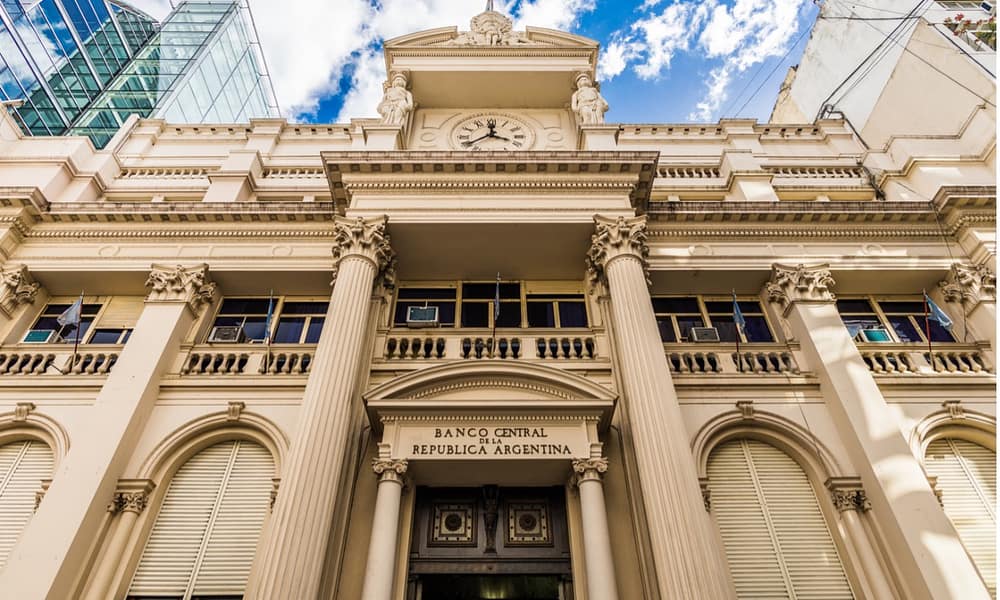
Argentina’s economic landscape has been a topic of significant discussion, with Economy Minister Luis Caputo recently holding discussions with representatives from various banks. While the primary focus was on the country’s economic program, including liability management, no official debt swap proposals have been officially presented at this point, according to a source within the Ministry of Economy.
The meeting, which took place on Thursday evening, saw government officials conveying their “intention” to explore the possibility of swapping local debt maturing in 2024 for notes with maturities ranging from 2025 to 2027. The potential scale of this debt exchange could be substantial, reaching up to the equivalent of $71 billion in pesos. However, despite the intention being voiced, specific figures for the debt management were not explicitly discussed.
A source from the Ministry of Economy emphasized that there wasn’t and isn’t a concrete proposal in place. The source clarified that the economic program had been presented, and there had been an exchange of ideas regarding liability management. The emphasis was on the meeting serving as a platform for the presentation of the economic program and the exploration of potential strategies for handling liabilities.
Earlier on the same day, reports from Bloomberg News had suggested the possibility of a debt swap involving the issuance of new peso-denominated bonds in February. These new bonds would be used to replace the maturing debts set for 2024. While the details of such a debt swap were not confirmed, the reports stirred discussions within financial circles and underscored the Argentine government’s proactive stance in addressing its financial challenges.
A third source within the banking sector shed light on the broader context of Argentina’s current economic strategies. The newly appointed government is actively exploring multiple options to address short-term external liabilities, with the proposed debt swap being part of a comprehensive economic adjustment. This adjustment plan also involves negotiations with the International Monetary Fund (IMF) and the implementation of substantial reforms aimed at stabilizing the country’s economic situation.
Argentina’s economic challenges are multifaceted, and the issue of managing external debt has been a critical aspect of the government’s agenda. The potential debt swap, if implemented, could represent a strategic move to navigate the financial complexities the country is facing. It aligns with the broader efforts to stabilize the economy and regain financial footing.
The relationship with the IMF has been a pivotal element in Argentina’s economic strategy. The country and the IMF were scheduled to commence meetings on the day following the discussions with the banks. The primary agenda was to address the delayed review of Argentina’s $44 billion program with the IMF. These discussions are crucial as they can significantly influence Argentina’s economic trajectory, shaping its ability to manage external debt effectively and implement necessary reforms.
As Argentina engages in these discussions and explores potential strategies, the global financial community is closely monitoring developments. The outcome of talks with the IMF and any subsequent decisions regarding debt management will undoubtedly have implications for Argentina’s economic stability and its positioning in the international financial landscape. The proactive engagement with banks signals a commitment to addressing economic challenges head-on, reflecting the government’s determination to navigate through a complex economic environment.