



Technology
The Dawn of Stargate in South Asia: Analyzing OpenAI’s Landmark Infrastructure Partnership with Tata Consultancy Services
A foundational shift in the global landscape of artificial intelligence infrastructure was documented on Saturday, February 21, 2026, as it was confirmed that OpenAI has selected Tata Consultancy Services (TCS) as its primary data center partner within the Indian subcontinent. It was articulated in a joint statement that the creator of ChatGPT will serve as the inaugural customer for the newly established data center division of TCS, initially securing a substantial 100 megawatts of power capacity. This agreement is understood to be a critical component of “Stargate,” an ambitious, multi-year initiative valued at approximately $500 billion. Backed by a consortium of major international investors, the Stargate project is designed to facilitate the construction of hyper-scale data centers dedicated to the intensive computational requirements of AI model training and real-time inference across the globe.
The finalization of this deal is perceived by market observers as a transformative victory for TCS, representing a significant validation of the strategic pivot executed by the firm in the preceding year. At that time, plans were disclosed by the Indian technology titan to commit up to $7 billion toward the development of a massive 1-gigawatt data center unit within India. By securing OpenAI as a flagship tenant, the viability of India as a hub for the next generation of global AI workloads is considered to have been firmly established. This surge in domestic capacity is occurring amidst a broader era of big-ticket infrastructure spending, characterized by the aggressive expansion of both international entities—including Google, Amazon, Meta, and Microsoft—and domestic conglomerates such as the Reliance and Adani Groups.
The collaboration between the two entities is reported to extend beyond the mere provision of physical infrastructure. In a secondary, parallel partnership, it was revealed that the parent organization, Tata Group, intends to execute a comprehensive deployment of ChatGPT Enterprise across its vast corporate network. This initiative is expected to span several years, with the initial phase involving the integration of the AI platform into the daily workflows of hundreds of thousands of employees. This large-scale adoption is intended to catalyze productivity gains across the diverse sectors in which the Tata Group operates, ranging from automotive and steel manufacturing to retail and financial services.
The strategic importance of the Indian market to the future of generative artificial intelligence was further emphasized by the disclosure that the country now accounts for more than 100 million weekly ChatGPT users. This immense user base provides a critical mass of data and engagement that is viewed as vital for the refinement of localized AI models. By establishing a physical presence in India through the TCS partnership, the latency of AI services is expected to be significantly reduced, while simultaneously ensuring that the sensitive data processing requirements of Indian enterprises are met within domestic borders. The move is seen as a pragmatic response to the evolving regulatory landscape in India, which has increasingly prioritized data localization and the sovereignty of digital infrastructure.
From a technical perspective, the 100-megawatt commitment from OpenAI is regarded as an extraordinary allocation for a single market. The specialized cooling systems and high-density power architectures required for such an installation are currently being finalized at the TCS facilities. It is anticipated that as the Stargate project progresses, the capacity utilized by OpenAI in India could expand significantly, potentially consuming a larger portion of the 1-gigawatt target set by TCS. This development is expected to foster a localized ecosystem of AI research and development, as the proximity to world-class computational power attracts global talent and fosters the growth of indigenous AI startups.
Ultimately, the 2026 agreement between OpenAI and TCS represents a pivotal moment in the institutionalization of artificial intelligence within the world’s most populous nation. The transition of India from a consumer of AI services to a primary host of the infrastructure that powers those services is now being realized. As the construction of the Stargate-linked facilities commences, the focus of the international community will likely remain on the sustainability of the energy required to power such massive installations. The ability of TCS to provide green, renewable energy for these data centers is expected to be a primary barometer for the long-term success of the partnership.












Technology
AI Investment Boom Raises Financial Stability Concerns, BIS Chief Warns

The rapid expansion of artificial intelligence is creating emerging risks for global financial stability, Bank for International Settlements (BIS) General Manager Pablo Hernandez de Cos said on September 10, 2026, warning that the scale of investment in AI infrastructure is becoming large enough to influence broader economic conditions.
Speaking at a conference hosted by India’s central bank, Hernandez de Cos said AI was transforming demand, supply and financial markets at the same time. While the technology does not alter the mandates of central banks, its effects could make economic conditions more difficult for policymakers to assess.
The BIS estimates that the world’s five largest technology companies will spend more than $1 trillion on AI during 2025 and 2026. Industry forecasts indicate that worldwide AI investment could rise from roughly $500 billion currently to as much as $4 trillion by 2030.
Hernandez de Cos said the potential benefits of AI were substantial, but stressed that its longer-term economic impact would depend on government policies, investment in infrastructure and skills, and how broadly the gains from the technology are distributed.
At the same time, he called for closer examination of how the AI expansion is being financed. Increasingly, AI-related investment is being supported by debt and private credit rather than corporate earnings. Hernandez de Cos said this was a concern because significant portions of the financing network remain “opaque and interconnected.”
Such financial structures could become more vulnerable if companies fail to generate the profits investors currently expect.
## AI Reshapes Global Trade and Productivity
The AI boom is also affecting international trade. Countries with strong links to the technology supply chain, including South Korea, Singapore, Malaysia and Taiwan, have benefited from higher export prices for AI chips and related equipment.
Beyond trade, AI has demonstrated the potential to improve productivity. Hernandez de Cos cited studies showing that generative AI can increase productivity by between 10% and 65% for particular tasks. The strongest gains have been reported in areas such as coding, consulting and professional writing.
However, the BIS chief said the more important economic question was whether these improvements at the individual task level would translate into stronger productivity across entire economies.
Current estimates indicate that AI could increase total factor productivity growth by around half a percentage point annually. The eventual impact will depend on how quickly businesses adopt the technology and how effectively workers and capital are shifted toward more productive uses.
Advanced economies are expected to see benefits earlier because they have larger service sectors and are generally better prepared to deploy AI technologies. Emerging economies face more diverse outcomes.
India, however, could be positioned to benefit significantly. Hernandez de Cos said the country had a “genuine opportunity” to reduce the productivity gap with more advanced economies, supported in part by its digital public infrastructure.
## Employment Risks and Market Vulnerabilities
The economic effects of AI are not limited to productivity gains. Hernandez de Cos also warned that the technology could replace workers performing routine cognitive tasks.
So far, job losses linked directly to AI have remained limited, but early signs of disruption are appearing in customer service, programming and administrative work. This increases the importance of retraining and reskilling workers as businesses adopt AI more widely.
Financial markets present another area of concern. Hernandez de Cos highlighted elevated valuations, concentration among major technology companies and complex financing arrangements as potential sources of vulnerability.
If corporate profits fail to meet the expectations built into current valuations, those weaknesses could become more pronounced. He cautioned that the outcome was not predetermined, but said the scale and speed of today’s AI investment cycle justified careful attention.
Hernandez de Cos compared the situation with earlier periods of rapid economic expansion, including the railway boom and the dotcom surge. The comparison was not intended to suggest that AI would necessarily produce the same outcome, but rather to underline the risks that can emerge when investment grows rapidly alongside expectations of large future commercial returns.
“The promise of AI is real,” Hernandez de Cos said, while emphasizing that policymakers and investors must remain alert to the financial risks accompanying its extraordinary expansion.
Technology
Amazon Drone Delivery Expansion Is Planned Across About 500 US Locales
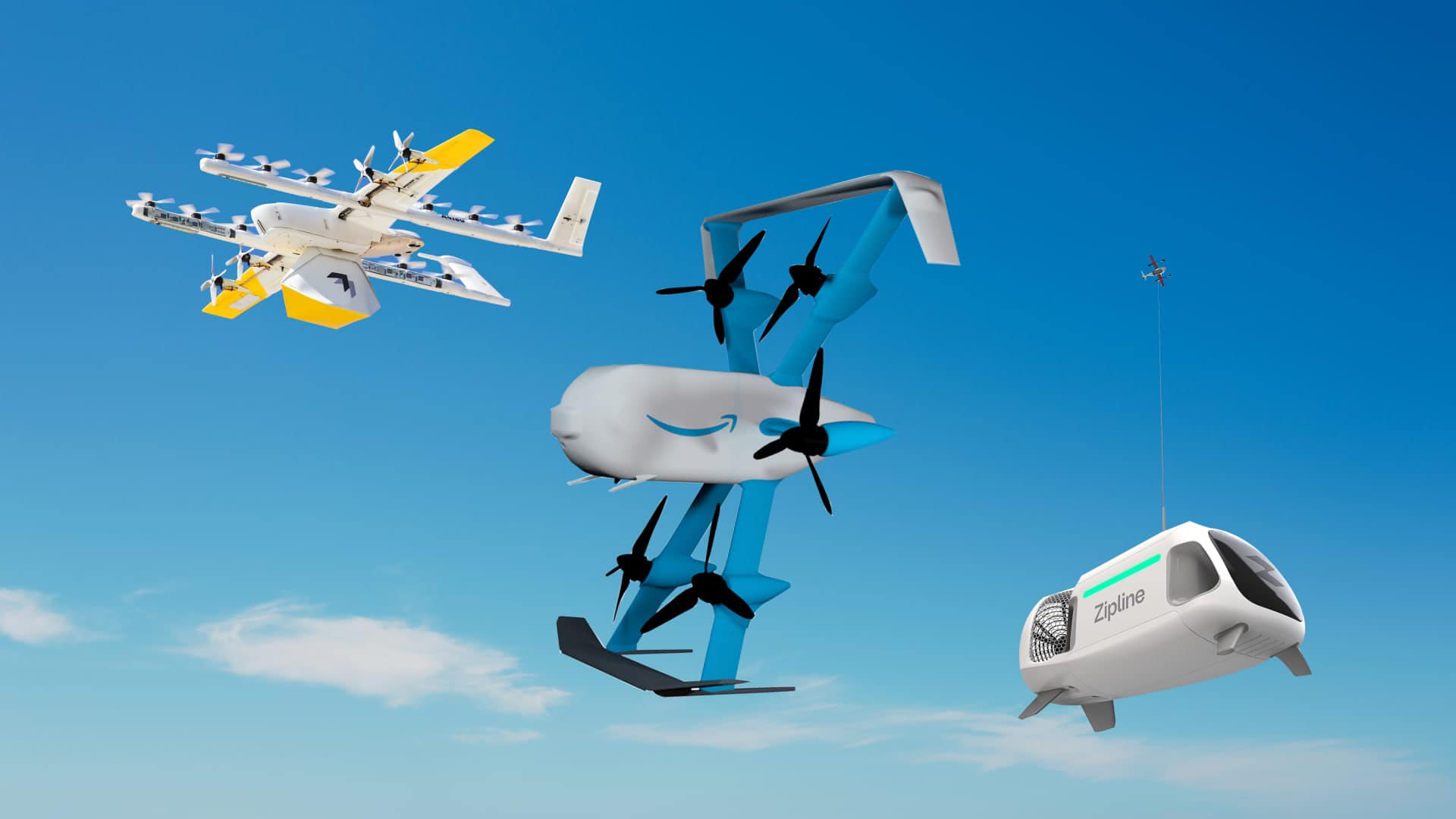
Amazon is preparing for a major expansion of its Prime Air drone delivery service, with the company planning to make the service available across about 500 U.S. cities and towns by the end of 2026. The move would represent a significant increase from the 11 locations where Amazon currently operates drone deliveries, serving several nearby communities from each location.
The expansion marks a major step forward for a program first presented more than a decade ago. In 2013, Amazon founder Jeff Bezos unveiled the concept of using unmanned drones, which he described as octocopters, to deliver packages directly to customers. At the time, Bezos predicted that the service could become available within four to five years. The rollout, however, has taken considerably longer.
Amazon currently operates its drone delivery service from 11 locations, including Papillion, Nebraska, and Ruskin, Florida. The company is also preparing to launch the service in Syracuse, New York, and in an area near Cleveland, among other communities. From a single delivery hub, drones can serve several towns located within approximately a 7.5-mile radius. With the planned expansion, Amazon expects its overall coverage to reach roughly 500 locales.
The company has redesigned its Prime Air drones several times since the program was introduced. Earlier versions were designed to land before releasing packages, while the latest model, known as the MK30, uses a different approach. The drone hovers several feet above the ground and releases the package before departing.
Customers are charged $4.99 for a drone delivery under the current pricing structure. Amazon Prime members receive a $2 discount, bringing the charge to $2.99. The delivery fee is waived for orders valued at $50 or more.
The expansion was announced after Reuters contacted Amazon on Tuesday about the status of its drone delivery program. While Amazon has received approval from the Federal Aviation Administration to operate drones in most areas of the United States, additional approval is generally required from individual communities before the service can begin.
Local authorization can involve planning meetings, council hearings and opportunities for residents to raise concerns. Issues such as noise, safety, logistics and the potential effect on wildlife have emerged during discussions over the technology.
In Nampa, Idaho, for example, Amazon executive Sam Bailey faced about an hour of questions from a planning and zoning board in May. Residents raised concerns involving noise, safety and drone operations, while some also expressed worries about the impact on birds. Despite the objections, the board unanimously approved the company’s rollout.
Bailey said the drones would typically be audible for around 20 seconds as they descend and then leave the area. According to him, their noise level is lower than that of a lawnmower. He characterized the disruption as brief and compared the experience with having a delivery truck arrive on a residential street.
Amazon has also highlighted potential benefits for certain customers. Bailey said drone deliveries could be particularly useful for older adults, parents dealing with children who suddenly develop a fever, and people who discover they are missing an ingredient while preparing a meal at home.
Noise remains a concern for some residents, however. Videos of successful deliveries shared on social media suggest that the drones can produce a sound comparable to a leaf blower, although the noise does not continue for as long. Amazon has also sought to address privacy concerns by saying that cameras installed on its drones are used only for navigation.
Safety incidents have also occurred. In October, two Amazon delivery drones collided with a crane in suburban Arizona. It remains under an investigation by the National Transportation Safety Board.
During a March hearing in Richardson, Texas, one resident complained about the noise created by drones flying overhead, saying it had become a source of irritation and disrupted the peacefulness of the area.
Amazon has made adjustments in response to community concerns. Bailey said the company had altered the average height at which its drones fly and modified routes so that the aircraft pass over commercial areas more consistently.
Despite continued concerns, some local officials appear to view the technology as unavoidable. One council member said the focus should be on finding ways to accommodate the new technology and making adjustments as it develops.
With the planned expansion, Amazon is seeking to move drone delivery from a limited service into a much broader part of its U.S. delivery network.
Technology
Non-Binding Acquisition Proposal Submitted by Sony Group to Optical Manufacturer Tamron

A formal non-binding acquisition proposal aimed at converting optical lens manufacturer Tamron into a wholly owned subsidiary was received from Sony Group, as announced on Thursday by the Japanese optical component producer. Following the receipt of the acquisition offer, an independent review committee was established by Tamron’s corporate leadership to evaluate potential strategic options and assess the transaction terms. Specific financial parameters and valuation metrics associated with the proposed series of transactions were omitted from the official public statements released by Tamron.
Market reactions across the Tokyo Stock Exchange were immediately observed following the corporate disclosure. Prior to the trading halt, a total market capitalization of approximately $1.18 billion was recorded for Tamron as of Wednesday’s market close. Conversely, a minor share price decline of 0.3 percent was experienced by Sony Group during the same trading period.
The underlying strategic rationale for the consolidation was addressed by a spokesperson for Sony Group, by whom it was affirmed that the proposed acquisition was expected to enhance overall corporate value for Tamron, advance the long-term interests of key corporate stakeholders, and contribute directly to the ongoing expansion and technological development of Sony’s global imaging business.
Within the optical and consumer hardware landscape, a dominant market position in digital cameras and image sensors is maintained by Sony, whereas interchangeable camera lenses, industrial optics, and specialized components are manufactured and supplied by Tamron for both Sony and competing camera makers, including Nikon and Canon. Prior to the submission of the acquisition proposal, an existing equity stake of 14.7 percent in Tamron was already held by Sony, according to financial repository data. The largest single equity holding in the optical manufacturer, amounting to a 17.4 percent stake, was held by Singapore-based investment entity Effissimo Capital.
The acquisition target, which was originally established in 1950, previously reported a 13 percent contraction in annual operating profit to 16.7 billion yen (approximately $102.15 million) for the fiscal year ended December 2025. The earnings decline reflected broader operational pressures and shifting consumer demand patterns within the global optical hardware market over recent reporting periods.
Concurrently, corporate equity valuations for Sony Group have experienced sustained downward pressure in recent months as institutional investor concerns were heightened regarding persistent global supply chain disruptions and potential structural headwinds facing its broader entertainment divisions from artificial intelligence technologies. Although substantial revenue generation is anticipated by market analysts for Sony’s interactive entertainment unit following the scheduled November launch of the highly anticipated video game title Grand Theft Auto VI, operational margins across its hardware units continue to be impacted by elevated component costs, particularly rising prices for memory microchips.
The creation of an independent evaluation committee by Tamron underscores the fiduciary protocols governing major corporate transactions in Japan. As the review process unfolds, the prospective integration of Tamron’s optical design capabilities into Sony’s broader hardware ecosystem represents a strategic move toward vertical integration within the high-end imaging and industrial optics sectors.

Yes Bank Reports 65% Profit Growth as Supreme Court AT1 Bond Ruling Raises Financial Uncertainty

HDFC Bank Puts Forward Two Names for Next CEO as Jagdishan’s Exit Approaches

EU Regulator Warns Markets Could Face Sudden Correction Amid Rising Risks

Argentina Explores Debt Management Strategies: Potential Debt Swap and IMF Discussions on the Horizon

Apple Introduces “Tap to Pay” Feature for iPhone, Allowing Contactless Payments

Hedge Funds Capitalize on U.S. Regional Banking Stocks Plunge: Insights and Implications
-
 Banking3 years ago
Argentina Explores Debt Management Strategies: Potential Debt Swap and IMF Discussions on the Horizon
-
 Technology3 years ago
Apple Introduces “Tap to Pay” Feature for iPhone, Allowing Contactless Payments
-
 Banking2 years ago
Hedge Funds Capitalize on U.S. Regional Banking Stocks Plunge: Insights and Implications
-

 Technology3 years ago
Aviation Industry Urges Swift Action Against GPS Spoofing Amid Growing Threats
-

 Technology3 years ago
Bitcoin Weakens as Regulatory Concerns and Market Sentiment Impact Cryptocurrency Market
-

 Technology3 years ago
FTX denies talks of acquiring Robinhood
-

 Business2 years ago
Overcoming Financial Hurdles: TotalEnergies’ Quest for Renewable Energy in Africa
-

 Forex2 years ago
Navigating Risks in Bank-Fintech Partnerships: Insights from U.S. Bank Regulator