



Technology
Tesla May Need to Restructure China Operations for SpaceX Merger
Elon Musk’s potential plan to combine Tesla and SpaceX could encounter significant regulatory obstacles because of Tesla’s extensive operations in China and SpaceX’s growing involvement in sensitive US government and defence projects. Any merger would need to address concerns over national security, confidential information and the movement of technology between businesses operating under different regulatory systems.
Musk said on Tuesday that the two companies had established special committees to examine the possibility of joining forces, describing a merger as a “good idea.” However, reaching an agreement could prove complicated as regulators in Washington and Beijing assess the consequences of bringing Tesla’s Chinese manufacturing operations under the same corporate structure as SpaceX’s defence-related activities.
SpaceX has become increasingly dependent on contracts involving the US government and military. Its Starshield business develops satellite systems for defence and intelligence applications for the Pentagon, making the company particularly sensitive to national security restrictions.
Tesla, meanwhile, has a substantial presence in China, where it manufactures vehicles and collects data through its driver-assistance and automated driving technologies. Chinese rules require the company to store driver information collected in the country domestically. Tesla has complied with that requirement since 2021.
Combining the two businesses could therefore require strict safeguards to prevent confidential Chinese data from reaching SpaceX or other parts of the merged organisation. Similar protections would also need to stop sensitive US defence information and technology from entering Tesla’s Chinese operations.Such an arrangement could allow Tesla to continue operating in the country while preventing access to restricted information.
Daniel Kollar, who leads the automotive and mobility practice at consultancy Intralink Group, said companies have previously managed to maintain substantial operations in China while running defence-related businesses elsewhere. He cited Airbus and Honeywell as examples of companies operating across different regulatory environments.
Michael Dunne, chief executive of automotive advisory firm Dunne Insights, said Tesla could potentially maintain its Chinese operations as an independent unit within the broader corporate structure. That arrangement could include separate research and development activities and strict agreements governing the handling and storage of data.
Christopher Tang, a professor specialising in global supply chains at UCLA’s Anderson School of Management, said Beijing could use the proposed transaction to seek concessions from Musk.
China might demand access for domestic companies to strategically important technologies or seek guarantees that Tesla would maintain its manufacturing capacity and investment in the country. Ioannis Kokkoris, a professor of competition law and economics at Queen Mary University of London, identified these as possible conditions Chinese authorities could pursue.
Any request involving the transfer of sensitive SpaceX technology would create an additional challenge because of US national security restrictions.
If regulators refuse to approve the merger without major changes, another possibility would be to separate Tesla’s Chinese business from the transaction.
Analysts have outlined three broad approaches: spinning off the China operation while Tesla retains a majority economic interest, selling the business through an arrangement that includes long-term brand licensing, or completing an outright sale, potentially to another automobile manufacturer.
Finding a buyer could be difficult. Li Yanwei, an analyst at the China Automobile Dealers Association, said Chinese automakers were unlikely to purchase additional production capacity because they did not need it. Many international carmakers are also facing financial pressure, limiting their ability to acquire Tesla’s Chinese operations.
Kollar suggested that Musk might consider selling individual parts of the business rather than transferring the entire operation to another owner. Nevertheless, he believed Musk would probably try to preserve Tesla’s existing ownership structure in China unless he intended to withdraw from the automotive industry.
Neither Tesla China nor China’s State Administration for Market Regulation responded to requests for comment.
A complete separation from China could carry substantial financial consequences. According to Yale Zhang, managing director of Shanghai-based consultancy AutoForesight, Tesla’s Shanghai factory accounts for more than 50% of its worldwide vehicle production. Chinese suppliers are also deeply embedded in Musk’s wider business operations.
Some investors believe these challenges would not necessarily prevent a merger. Brian Mulberry, chief market strategist at Zacks Investment Management, which invests in Tesla and SpaceX, said Tesla could point to its expanding US manufacturing operations when arguing that its Chinese business does not overlap with SpaceX. Mulberry said investors are paying considerable attention to Musk’s plans for these businesses and their future potential.
He added that Tesla might be prepared to reduce or close its Chinese production if US regulators rejected its proposed safeguards.
Tang, however, argued that Tesla’s current financial position remains closely connected to China, even if its longer-term growth opportunities develop elsewhere. Revenue and cash generated by its electric vehicle operations in the country help finance the company’s future investments.
That dependence could strengthen Beijing’s negotiating position as the companies consider a potential merger. While a corporate combination remains under discussion, resolving the competing demands of Chinese manufacturing, data protection and US defence security could prove central to determining whether the deal can proceed.









Technology
Samsung’s AI Chip Profits Surge, but Investors Remain Uncertain Over Shareholder Returns

Samsung Electronics reported a substantial increase in quarterly earnings on October 29, 2026, as demand for semiconductors used in artificial intelligence infrastructure continued to strengthen. However, the South Korean technology giant’s shares declined after investors expressed disappointment over the company’s outlook for the memory-chip market and its decision to postpone announcing a new shareholder-return policy until January.
The company’s semiconductor business delivered a significant improvement in profitability, reflecting growing demand for advanced memory products used in AI data centres. Despite these results, investors were looking for stronger assurances about future growth and additional details on how Samsung intends to distribute profits to shareholders.
Samsung’s operating profit for the July-to-September quarter reached 107.4 trillion won ($80 billion), compared with 12.2 trillion won during the same period a year earlier. The result was in line with the company’s earlier estimate.
Its semiconductor division generated operating profit of 106.5 trillion won, approximately 15 times its earnings a year earlier. Nevertheless, the figure fell slightly below the analyst consensus estimate of 107.3 trillion won, according to LSEG data.
Samsung’s shares initially rose after the results were released but subsequently reversed direction, falling as much as 6.2% during morning trading. Shares of rival SK Hynix gained 0.7% during the same period.
SK Hynix Sets a Higher Benchmark
Investor expectations for Samsung had increased after SK Hynix reported better-than-expected quarterly earnings on October 28 and provided a positive outlook for its memory-chip business. The company also outlined plans to return approximately $75 billion to shareholders this year.
SK Hynix said its dynamic random-access memory (DRAM) and high-bandwidth memory (HBM) products were fully booked through 2029. It also indicated that the semiconductor supply shortage could continue until 2030, easing concerns that the current AI-driven earnings boom might soon lose momentum.
Samsung offered a more cautious assessment of how long the supply imbalance would persist.
Lee Min-hee, an analyst at BNK Investment & Securities, said SK Hynix had exceeded market expectations, whereas Samsung had largely maintained its previously communicated guidance without introducing significant changes.
Morningstar analyst Jing Jie Yu said Samsung’s shares likely declined because its assessment of the duration of the memory-chip shortage appeared somewhat less optimistic than SK Hynix’s comments the previous day.
Samsung confirmed that its HBM production capacity for next year had already been sold out. The company added that major customers were requesting larger quantities of these specialised memory chips, which are essential for advanced AI computing systems.
Looking ahead to 2027, Samsung expects spending on AI infrastructure to reach an unprecedented level as the broader AI ecosystem expands. The company anticipates that demand driven by AI applications will substantially exceed the industry’s available supply compared with 2026.
It expects tight conditions in the semiconductor market to continue through 2028, noting that constructing and bringing new fabrication facilities online takes considerable time.
Higher Investment in Semiconductor Production
Samsung plans to increase investment in its semiconductor operations significantly as it attempts to meet rising demand.
Capital expenditure for its chip division is expected to rise by 62% this year to 76.8 trillion won. The company also anticipates another substantial increase in semiconductor investment next year, although it did not provide a specific figure in the reported outlook.
The spending reflects the need to expand manufacturing capacity and support production of increasingly sophisticated chips for AI applications. However, the lengthy construction and development process for new factories means additional investment will not immediately resolve supply constraints.
Meanwhile, concerns about the sustainability of AI infrastructure spending have weighed on semiconductor stocks. Growing competition from Chinese chipmakers has added to investor uncertainty.
Alphabet, the parent company of Google, reported on October 28 that its cash spending had accelerated sharply as it committed substantial resources to developing AI infrastructure.
Shareholder Returns Remain Unresolved
Samsung’s decision to delay announcing its next shareholder-return policy also contributed to the negative market reaction.
The company previously indicated that total shareholder returns for this year would range between 90 trillion won and 110 trillion won, including 30 trillion won in dividends for the third quarter.
On October 29, Samsung said it would finalise its next shareholder-return policy in January, leaving investors waiting for further details.
CLSA senior analyst Sanjeev Rana said the market appeared to have anticipated an additional share buyback or dividend announcement. Postponing the decision until late January may therefore have disappointed investors seeking more immediate clarity.
Samsung currently trades at approximately 3.3 times forecast earnings, according to the report.
Long-Term Contracts and Other Business Challenges
The company is also adjusting its sales strategy as memory-chip prices rise and manufacturers increasingly secure supply agreements over extended periods. Higher component costs are placing pressure on demand from smartphone and personal-computer manufacturers, while the pace of memory-price increases is slowing.
Samsung said it had signed long-term supply agreements with 10 major customers and was negotiating with another 10. Its objective is to have such contracts cover between 60% and 70% of its total production capacity by 2030.
The company is broadening these arrangements beyond large cloud-computing providers to include customers in the mobile-device and automotive industries.
Samsung’s foundry business, which manufactures chips for other companies, remains loss-making, according to analysts. However, the company reported a notable improvement in foundry revenue, supported by sales of logic dies used in HBM products and new orders for advanced 2-nanometre chips from hyperscalers and other AI customers.
Mass production is scheduled to begin next year at Samsung’s Taylor facility in Texas, where the company will manufacture chips for Tesla. Samsung is also considering another fabrication plant to accommodate demand for advanced 2-nanometre technology.
Elsewhere, rising memory-chip costs reduced profitability in Samsung’s mobile business, which recorded a loss of 800 billion won.
Samsung’s latest results demonstrate the financial benefits of the AI semiconductor boom, but the market reaction highlights the challenges facing the company as investors weigh future supply constraints, capital spending requirements and expectations for shareholder returns.
Technology
AI Investment Boom Raises Financial Stability Concerns, BIS Chief Warns
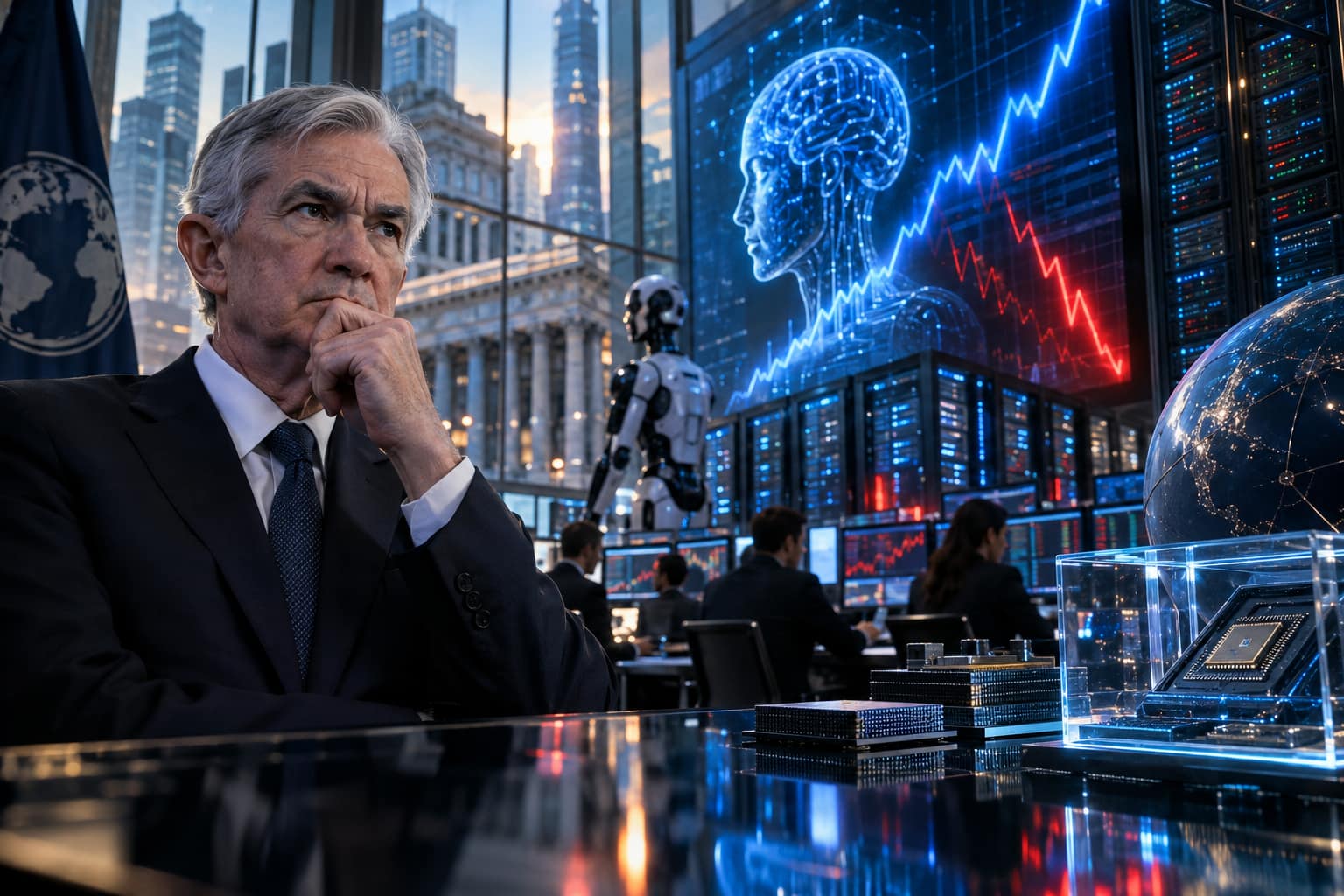
The rapid expansion of artificial intelligence is creating emerging risks for global financial stability, Bank for International Settlements (BIS) General Manager Pablo Hernandez de Cos said on September 10, 2026, warning that the scale of investment in AI infrastructure is becoming large enough to influence broader economic conditions.
Speaking at a conference hosted by India’s central bank, Hernandez de Cos said AI was transforming demand, supply and financial markets at the same time. While the technology does not alter the mandates of central banks, its effects could make economic conditions more difficult for policymakers to assess.
The BIS estimates that the world’s five largest technology companies will spend more than $1 trillion on AI during 2025 and 2026. Industry forecasts indicate that worldwide AI investment could rise from roughly $500 billion currently to as much as $4 trillion by 2030.
Hernandez de Cos said the potential benefits of AI were substantial, but stressed that its longer-term economic impact would depend on government policies, investment in infrastructure and skills, and how broadly the gains from the technology are distributed.
At the same time, he called for closer examination of how the AI expansion is being financed. Increasingly, AI-related investment is being supported by debt and private credit rather than corporate earnings. Hernandez de Cos said this was a concern because significant portions of the financing network remain “opaque and interconnected.”
Such financial structures could become more vulnerable if companies fail to generate the profits investors currently expect.
## AI Reshapes Global Trade and Productivity
The AI boom is also affecting international trade. Countries with strong links to the technology supply chain, including South Korea, Singapore, Malaysia and Taiwan, have benefited from higher export prices for AI chips and related equipment.
Beyond trade, AI has demonstrated the potential to improve productivity. Hernandez de Cos cited studies showing that generative AI can increase productivity by between 10% and 65% for particular tasks. The strongest gains have been reported in areas such as coding, consulting and professional writing.
However, the BIS chief said the more important economic question was whether these improvements at the individual task level would translate into stronger productivity across entire economies.
Current estimates indicate that AI could increase total factor productivity growth by around half a percentage point annually. The eventual impact will depend on how quickly businesses adopt the technology and how effectively workers and capital are shifted toward more productive uses.
Advanced economies are expected to see benefits earlier because they have larger service sectors and are generally better prepared to deploy AI technologies. Emerging economies face more diverse outcomes.
India, however, could be positioned to benefit significantly. Hernandez de Cos said the country had a “genuine opportunity” to reduce the productivity gap with more advanced economies, supported in part by its digital public infrastructure.
## Employment Risks and Market Vulnerabilities
The economic effects of AI are not limited to productivity gains. Hernandez de Cos also warned that the technology could replace workers performing routine cognitive tasks.
So far, job losses linked directly to AI have remained limited, but early signs of disruption are appearing in customer service, programming and administrative work. This increases the importance of retraining and reskilling workers as businesses adopt AI more widely.
Financial markets present another area of concern. Hernandez de Cos highlighted elevated valuations, concentration among major technology companies and complex financing arrangements as potential sources of vulnerability.
If corporate profits fail to meet the expectations built into current valuations, those weaknesses could become more pronounced. He cautioned that the outcome was not predetermined, but said the scale and speed of today’s AI investment cycle justified careful attention.
Hernandez de Cos compared the situation with earlier periods of rapid economic expansion, including the railway boom and the dotcom surge. The comparison was not intended to suggest that AI would necessarily produce the same outcome, but rather to underline the risks that can emerge when investment grows rapidly alongside expectations of large future commercial returns.
“The promise of AI is real,” Hernandez de Cos said, while emphasizing that policymakers and investors must remain alert to the financial risks accompanying its extraordinary expansion.
Technology
Amazon Drone Delivery Expansion Is Planned Across About 500 US Locales
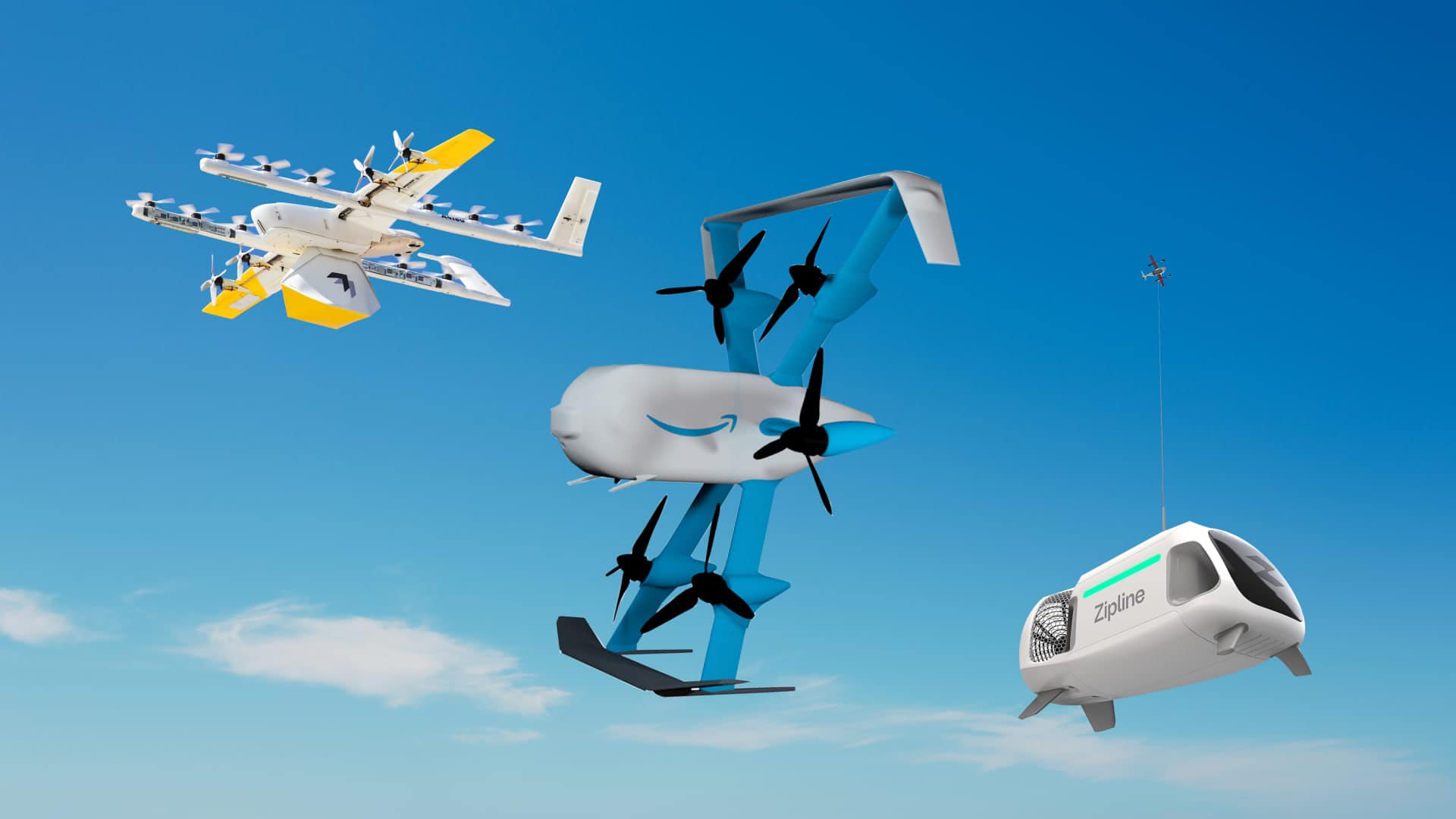
Amazon is preparing for a major expansion of its Prime Air drone delivery service, with the company planning to make the service available across about 500 U.S. cities and towns by the end of 2026. The move would represent a significant increase from the 11 locations where Amazon currently operates drone deliveries, serving several nearby communities from each location.
The expansion marks a major step forward for a program first presented more than a decade ago. In 2013, Amazon founder Jeff Bezos unveiled the concept of using unmanned drones, which he described as octocopters, to deliver packages directly to customers. At the time, Bezos predicted that the service could become available within four to five years. The rollout, however, has taken considerably longer.
Amazon currently operates its drone delivery service from 11 locations, including Papillion, Nebraska, and Ruskin, Florida. The company is also preparing to launch the service in Syracuse, New York, and in an area near Cleveland, among other communities. From a single delivery hub, drones can serve several towns located within approximately a 7.5-mile radius. With the planned expansion, Amazon expects its overall coverage to reach roughly 500 locales.
The company has redesigned its Prime Air drones several times since the program was introduced. Earlier versions were designed to land before releasing packages, while the latest model, known as the MK30, uses a different approach. The drone hovers several feet above the ground and releases the package before departing.
Customers are charged $4.99 for a drone delivery under the current pricing structure. Amazon Prime members receive a $2 discount, bringing the charge to $2.99. The delivery fee is waived for orders valued at $50 or more.
The expansion was announced after Reuters contacted Amazon on Tuesday about the status of its drone delivery program. While Amazon has received approval from the Federal Aviation Administration to operate drones in most areas of the United States, additional approval is generally required from individual communities before the service can begin.
Local authorization can involve planning meetings, council hearings and opportunities for residents to raise concerns. Issues such as noise, safety, logistics and the potential effect on wildlife have emerged during discussions over the technology.
In Nampa, Idaho, for example, Amazon executive Sam Bailey faced about an hour of questions from a planning and zoning board in May. Residents raised concerns involving noise, safety and drone operations, while some also expressed worries about the impact on birds. Despite the objections, the board unanimously approved the company’s rollout.
Bailey said the drones would typically be audible for around 20 seconds as they descend and then leave the area. According to him, their noise level is lower than that of a lawnmower. He characterized the disruption as brief and compared the experience with having a delivery truck arrive on a residential street.
Amazon has also highlighted potential benefits for certain customers. Bailey said drone deliveries could be particularly useful for older adults, parents dealing with children who suddenly develop a fever, and people who discover they are missing an ingredient while preparing a meal at home.
Noise remains a concern for some residents, however. Videos of successful deliveries shared on social media suggest that the drones can produce a sound comparable to a leaf blower, although the noise does not continue for as long. Amazon has also sought to address privacy concerns by saying that cameras installed on its drones are used only for navigation.
Safety incidents have also occurred. In October, two Amazon delivery drones collided with a crane in suburban Arizona. It remains under an investigation by the National Transportation Safety Board.
During a March hearing in Richardson, Texas, one resident complained about the noise created by drones flying overhead, saying it had become a source of irritation and disrupted the peacefulness of the area.
Amazon has made adjustments in response to community concerns. Bailey said the company had altered the average height at which its drones fly and modified routes so that the aircraft pass over commercial areas more consistently.
Despite continued concerns, some local officials appear to view the technology as unavoidable. One council member said the focus should be on finding ways to accommodate the new technology and making adjustments as it develops.
With the planned expansion, Amazon is seeking to move drone delivery from a limited service into a much broader part of its U.S. delivery network.

Samsung’s AI Chip Profits Surge, but Investors Remain Uncertain Over Shareholder Returns

Anthropic’s IPO Puts AI Investment Boom Under Scrutiny as Revenue Surges and Costs Mount

SoFi Seeks Crypto Investors With Bank-Backed Interest-Earning Deposits

Argentina Explores Debt Management Strategies: Potential Debt Swap and IMF Discussions on the Horizon

Apple Introduces “Tap to Pay” Feature for iPhone, Allowing Contactless Payments

Hedge Funds Capitalize on U.S. Regional Banking Stocks Plunge: Insights and Implications
-
 Banking3 years ago
Argentina Explores Debt Management Strategies: Potential Debt Swap and IMF Discussions on the Horizon
-
 Technology3 years ago
Apple Introduces “Tap to Pay” Feature for iPhone, Allowing Contactless Payments
-
 Banking2 years ago
Hedge Funds Capitalize on U.S. Regional Banking Stocks Plunge: Insights and Implications
-
 Technology3 years ago
Aviation Industry Urges Swift Action Against GPS Spoofing Amid Growing Threats
-

 Technology3 years ago
FTX denies talks of acquiring Robinhood
-

 Technology3 years ago
Bitcoin Weakens as Regulatory Concerns and Market Sentiment Impact Cryptocurrency Market
-

 Business2 years ago
Overcoming Financial Hurdles: TotalEnergies’ Quest for Renewable Energy in Africa
-
 Forex2 years ago
Navigating Risks in Bank-Fintech Partnerships: Insights from U.S. Bank Regulator