



Technology
Amazon Web Services Plans to Expand in Latin America Despite Political Turmoil
Amazon Web Services (AWS), a subsidiary of Amazon.com Inc, has announced plans to invest more in Chile and expand its physical presence in the country in response to growing demand from customers. Despite ongoing political turmoil in the region, AWS is expecting sustained growth in Chile and the rest of Latin America in the coming years. AWS offers a wide range of cloud computing services including storage, robotics, artificial intelligence and more than 200 other services.
Jaime Valles, AWS Vice President for Latin America, said that the company plans to invest in Chile as much as customers demand to meet their needs, however, he declined to comment on any investment figures. In addition to its existing locations in Brazil and Colombia, the company established secure connections to the global AWS network, also known as Edge locations, in Argentina and Chile last year.
Amazon Web Services (AWS) is set to launch 30 “AWS Local Zones” across Argentina, Chile, Colombia, and Brazil starting in 2022. AWS is taking measures to expand its physical presence in Latin America, including plans to build a $205 million data center in the Chilean capital. The company has established secure connections to the AWS network, known as Edge locations, in Chile and Argentina, in addition to existing locations in Brazil and Colombia. AWS has been working closely with retail and banking companies in Latin America, including providing services to large companies such as Cencosud, a retail conglomerate, and government services like a “virtual police station.” AWS also manages public-private partnerships like astronomy data from observatories.
AWS is also focusing on start-ups in the region by offering financing programs and technology to help grow their businesses. Valles said that much of the generation of growth, productivity, and employment comes from start-ups or small and medium-sized companies. Despite ongoing political instability in Latin America, AWS is confident in investing in the region due to its long-term vision and emphasis on growth. Valles said that “the best technology, more education, and more programs for start-ups allow us to make an important difference for Latin America,” and that their vision is totally independent of the governments in power.
In conclusion, AWS is expecting sustained growth in Chile and the rest of Latin America and is planning to invest more in the region to meet the growing demand from customers. The company offers a wide range of cloud computing services and has been expanding its physical presence in the region by opening secure connections to the global AWS network in Argentina and Chile. AWS plans to open 30 new “AWS Local Zones” in Latin America from 2022 on, which include infrastructure, storage, and database services. AWS is also focusing on start-ups in the region by offering financing programs and technology to help grow their businesses. Despite socio-political turbulence in the region, AWS is confident in its long-term vision and focus on growth, and its investments are independent of the governments in power.

Technology
Amazon Drone Delivery Expansion Is Planned Across About 500 US Locales
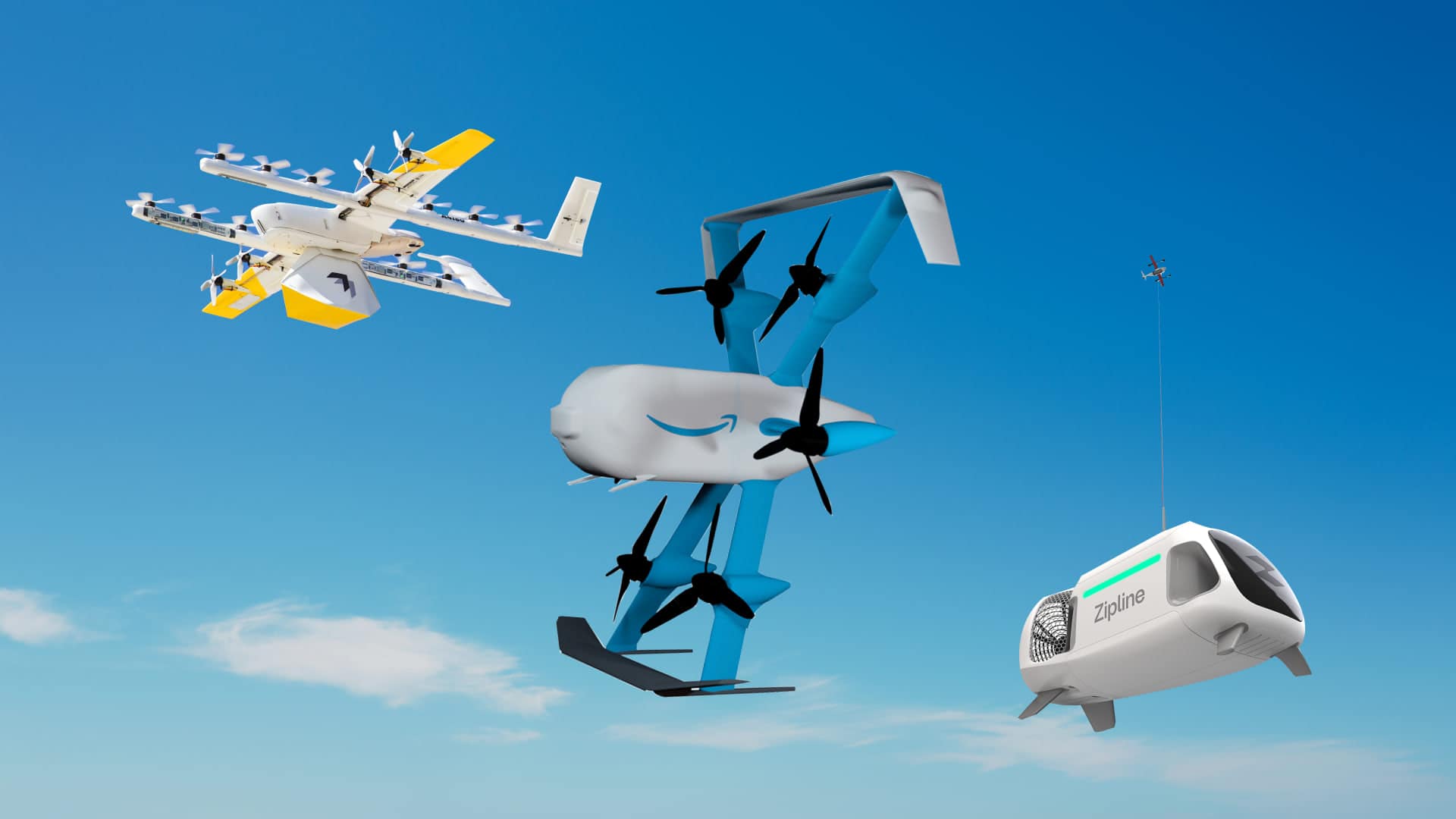
Amazon is preparing for a major expansion of its Prime Air drone delivery service, with the company planning to make the service available across about 500 U.S. cities and towns by the end of 2026. The move would represent a significant increase from the 11 locations where Amazon currently operates drone deliveries, serving several nearby communities from each location.
The expansion marks a major step forward for a program first presented more than a decade ago. In 2013, Amazon founder Jeff Bezos unveiled the concept of using unmanned drones, which he described as octocopters, to deliver packages directly to customers. At the time, Bezos predicted that the service could become available within four to five years. The rollout, however, has taken considerably longer.
Amazon currently operates its drone delivery service from 11 locations, including Papillion, Nebraska, and Ruskin, Florida. The company is also preparing to launch the service in Syracuse, New York, and in an area near Cleveland, among other communities. From a single delivery hub, drones can serve several towns located within approximately a 7.5-mile radius. With the planned expansion, Amazon expects its overall coverage to reach roughly 500 locales.
The company has redesigned its Prime Air drones several times since the program was introduced. Earlier versions were designed to land before releasing packages, while the latest model, known as the MK30, uses a different approach. The drone hovers several feet above the ground and releases the package before departing.
Customers are charged $4.99 for a drone delivery under the current pricing structure. Amazon Prime members receive a $2 discount, bringing the charge to $2.99. The delivery fee is waived for orders valued at $50 or more.
The expansion was announced after Reuters contacted Amazon on Tuesday about the status of its drone delivery program. While Amazon has received approval from the Federal Aviation Administration to operate drones in most areas of the United States, additional approval is generally required from individual communities before the service can begin.
Local authorization can involve planning meetings, council hearings and opportunities for residents to raise concerns. Issues such as noise, safety, logistics and the potential effect on wildlife have emerged during discussions over the technology.
In Nampa, Idaho, for example, Amazon executive Sam Bailey faced about an hour of questions from a planning and zoning board in May. Residents raised concerns involving noise, safety and drone operations, while some also expressed worries about the impact on birds. Despite the objections, the board unanimously approved the company’s rollout.
Bailey said the drones would typically be audible for around 20 seconds as they descend and then leave the area. According to him, their noise level is lower than that of a lawnmower. He characterized the disruption as brief and compared the experience with having a delivery truck arrive on a residential street.
Amazon has also highlighted potential benefits for certain customers. Bailey said drone deliveries could be particularly useful for older adults, parents dealing with children who suddenly develop a fever, and people who discover they are missing an ingredient while preparing a meal at home.
Noise remains a concern for some residents, however. Videos of successful deliveries shared on social media suggest that the drones can produce a sound comparable to a leaf blower, although the noise does not continue for as long. Amazon has also sought to address privacy concerns by saying that cameras installed on its drones are used only for navigation.
Safety incidents have also occurred. In October, two Amazon delivery drones collided with a crane in suburban Arizona. It remains under an investigation by the National Transportation Safety Board.
During a March hearing in Richardson, Texas, one resident complained about the noise created by drones flying overhead, saying it had become a source of irritation and disrupted the peacefulness of the area.
Amazon has made adjustments in response to community concerns. Bailey said the company had altered the average height at which its drones fly and modified routes so that the aircraft pass over commercial areas more consistently.
Despite continued concerns, some local officials appear to view the technology as unavoidable. One council member said the focus should be on finding ways to accommodate the new technology and making adjustments as it develops.
With the planned expansion, Amazon is seeking to move drone delivery from a limited service into a much broader part of its U.S. delivery network.
Technology
Non-Binding Acquisition Proposal Submitted by Sony Group to Optical Manufacturer Tamron

A formal non-binding acquisition proposal aimed at converting optical lens manufacturer Tamron into a wholly owned subsidiary was received from Sony Group, as announced on Thursday by the Japanese optical component producer. Following the receipt of the acquisition offer, an independent review committee was established by Tamron’s corporate leadership to evaluate potential strategic options and assess the transaction terms. Specific financial parameters and valuation metrics associated with the proposed series of transactions were omitted from the official public statements released by Tamron.
Market reactions across the Tokyo Stock Exchange were immediately observed following the corporate disclosure. Prior to the trading halt, a total market capitalization of approximately $1.18 billion was recorded for Tamron as of Wednesday’s market close. Conversely, a minor share price decline of 0.3 percent was experienced by Sony Group during the same trading period.
The underlying strategic rationale for the consolidation was addressed by a spokesperson for Sony Group, by whom it was affirmed that the proposed acquisition was expected to enhance overall corporate value for Tamron, advance the long-term interests of key corporate stakeholders, and contribute directly to the ongoing expansion and technological development of Sony’s global imaging business.
Within the optical and consumer hardware landscape, a dominant market position in digital cameras and image sensors is maintained by Sony, whereas interchangeable camera lenses, industrial optics, and specialized components are manufactured and supplied by Tamron for both Sony and competing camera makers, including Nikon and Canon. Prior to the submission of the acquisition proposal, an existing equity stake of 14.7 percent in Tamron was already held by Sony, according to financial repository data. The largest single equity holding in the optical manufacturer, amounting to a 17.4 percent stake, was held by Singapore-based investment entity Effissimo Capital.
The acquisition target, which was originally established in 1950, previously reported a 13 percent contraction in annual operating profit to 16.7 billion yen (approximately $102.15 million) for the fiscal year ended December 2025. The earnings decline reflected broader operational pressures and shifting consumer demand patterns within the global optical hardware market over recent reporting periods.
Concurrently, corporate equity valuations for Sony Group have experienced sustained downward pressure in recent months as institutional investor concerns were heightened regarding persistent global supply chain disruptions and potential structural headwinds facing its broader entertainment divisions from artificial intelligence technologies. Although substantial revenue generation is anticipated by market analysts for Sony’s interactive entertainment unit following the scheduled November launch of the highly anticipated video game title Grand Theft Auto VI, operational margins across its hardware units continue to be impacted by elevated component costs, particularly rising prices for memory microchips.
The creation of an independent evaluation committee by Tamron underscores the fiduciary protocols governing major corporate transactions in Japan. As the review process unfolds, the prospective integration of Tamron’s optical design capabilities into Sony’s broader hardware ecosystem represents a strategic move toward vertical integration within the high-end imaging and industrial optics sectors.
Technology
The Integration of Advanced Flight Control Systems and Regulatory Alignment in the Hybrid-Electric Aviation Sector

A strategic selection was announced on Thursday by Horizon Aircraft, through which the electric aviation manufacturer BETA Technologies was chosen to supply the primary flight-control computing architecture for the development of the Cavorite X7 aircraft. This collaboration has been initiated as part of a broader, systemic effort by the Canadian hybrid-electric aerospace enterprise to advance its rigorous regulatory certification procedures. It was indicated that the fly-by-wire flight control hardware, alongside highly specialized, customized software developed by BETA Technologies, will be comprehensively integrated into the Cavorite X7 platform. This specific aircraft model is engineered with the operational capacity to accommodate a single pilot and up to six passengers, while simultaneously supporting a maximum payload capacity specified at 1,500 pounds.
The finalization of this technological agreement occurs at a critical juncture within the emerging advanced air mobility industry, where numerous electric and hybrid-electric aerospace firms are actively securing tier-one suppliers and finalizing engineering frameworks. These initiatives are being accelerated to prepare for comprehensive regulatory approvals ahead of projected commercial deployment schedules, as companies strive to satisfy an expanding market demand for rapid, low-emission alternatives to traditional urban and regional transportation networks. Within the context of aviation engineering and regulatory compliance, flight-control computers are recognized as foundational components, as these systems are directly responsible for the automated management of aircraft aerodynamic stability and pilot handling qualities. Consequently, these processors represent some of the most critically scrutinized subsystems examined by global aviation authorities during the formal airworthiness certification process.
According to statements provided by the chief technology officer of Horizon Aircraft, Tom Brassington, the piloted demonstrator version of the Cavorite X7 is currently projected to initiate its comprehensive experimental flight-testing program in 2027. The agreement with BETA Technologies was characterized by the executive as a crucial milestone that is absolutely vital for the seamless integration of the aircraft’s overarching flight-control network. It was further disclosed by the corporation that a deliberate strategy will be pursued wherein the exact same flight-control computing hardware utilized by BETA Technologies within its own proprietary aircraft designs will be adopted by Horizon Aircraft. This shared procurement methodology was highlighted by both participating enterprises as a highly effective mechanism to substantially lower individual component manufacturing costs, while concurrently strengthening long-term industrial production efficiencies and supply chain resilience.
The selection of BETA Technologies as a core hardware vendor underscores its growing prominence within the defense and commercial aerospace sectors. In addition to the development of sophisticated flight-control architectures, safety-critical components—including high-performance electric motors and specialized battery modules—are also manufactured by the firm. The institutional credibility of the supplier was heavily reinforced earlier in the calendar year when the company, alongside industry competitors Archer Aviation and Joby Aviation, was selected to participate in a specialized United States government pilot program. This federal initiative was explicitly designed to accelerate the testing, deployment, and eventual infrastructure integration of autonomous and piloted flying air taxis within the national airspace.
The newly formalized agreement with BETA Technologies adds to a rapidly expanding portfolio of industrial partnerships that have been systematically announced by Horizon Aircraft as it transitions from theoretical design to physical assembly. Included among these previously finalized collaborations is a manufacturing agreement with RAMPF, an enterprise tasked with the fabrication of the main fuselage and structural body of the aircraft utilizes advanced composite materials. Furthermore, a specialized partnership was established with Motion Applied, a prominent United Kingdom-based supplier known for its contributions to Formula One racing infrastructure, to engineer a highly customized motor drive inverter system. The propulsion capabilities of the aircraft are also backed by established aerospace leadership, following the execution of a prior agreement with Pratt & Whitney Canada to supply the foundational combustion engine required for the vehicle’s hybrid-electric power generation configuration.
Ultimately, the systematic coordination of these diverse technical alliances is viewed by aerospace analysts as a necessary evolution for the survival of novel aviation startups. By relying on established component manufacturers and shared hardware baselines, the immense capital requirements and technical risks traditionally associated with clean-sheet aircraft development are effectively mitigated. The success of the Cavorite X7 testing timeline remains heavily contingent on the smooth synchronization of these multi-national components, which will face intense regulatory scrutiny as the 2027 flight trials approach.

RBI Actions, Global Cues Set to Shape Rupee and Bond Markets This Week

Reform UK Gets 75% of Quarterly Donations From Trump-Pardoned Crypto Entrepreneur

Amazon Drone Delivery Expansion Is Planned Across About 500 US Locales

Argentina Explores Debt Management Strategies: Potential Debt Swap and IMF Discussions on the Horizon

Apple Introduces “Tap to Pay” Feature for iPhone, Allowing Contactless Payments

Hedge Funds Capitalize on U.S. Regional Banking Stocks Plunge: Insights and Implications
-
 Banking3 years ago
Argentina Explores Debt Management Strategies: Potential Debt Swap and IMF Discussions on the Horizon
-
 Technology3 years ago
Apple Introduces “Tap to Pay” Feature for iPhone, Allowing Contactless Payments
-
 Banking2 years ago
Hedge Funds Capitalize on U.S. Regional Banking Stocks Plunge: Insights and Implications
-

 Technology2 years ago
Aviation Industry Urges Swift Action Against GPS Spoofing Amid Growing Threats
-

 Technology3 years ago
FTX denies talks of acquiring Robinhood
-

 Technology3 years ago
Bitcoin Weakens as Regulatory Concerns and Market Sentiment Impact Cryptocurrency Market
-

 Business2 years ago
Overcoming Financial Hurdles: TotalEnergies’ Quest for Renewable Energy in Africa
-

 Forex2 years ago
Navigating Risks in Bank-Fintech Partnerships: Insights from U.S. Bank Regulator