



Forex
Global Monetary Policy Stasis Amidst Geopolitical Volatility and Inflationary Contingencies
A collective posture of vigilant observation has been adopted by the majority of major developed market central banks this week, with interest rates being maintained at existing levels despite an increasingly complex global economic environment. Although a policy of inaction was broadly applied, a reinforced commitment to curbing inflationary pressures was emphasized by several governing boards. This stance is primarily informed by the potential for a broad surge in prices driven by the energy shock resulting from recent military strikes in the Middle East. Since the commencement of these hostilities, a significant recalibration of market expectations has occurred; previous projections for monetary easing within the current year have been largely abandoned by traders, who have instead begun to price in potential rate increases for several key institutions, including the European Central Bank and the Bank of England.
Within this landscape of global caution, the Reserve Bank of Australia has distinguished itself by continuing a trajectory of active tightening. A rate increase was implemented for the second consecutive month, bringing the policy rate to 4.1% on Tuesday. Official warnings were issued regarding a material risk to inflation stemming from the ongoing conflict, especially as core inflation reached a sixteen-month peak of 3.4% in January. Market participants now anticipate that at least two or three additional hikes may be required before the year’s end, which would position Australian rates above the highs recorded in late 2023. This aggressive stance contrasts with the Norges Bank in Norway, which is scheduled to meet next week. While that institution was characterized by a cautious approach last year, having implemented only two rate reductions from a 4.5% peak, the consensus has shifted toward an expected hike by August due to persistent inflationary “stickiness.”
In the United Kingdom, the Bank of England opted to hold its benchmark rate steady at 3.75% on Thursday. However, the accompanying policy statement was interpreted by many as decidedly hawkish. Concerns were raised by the governors regarding the possibility of higher inflation expectations becoming permanently embedded in the domestic economy. While the risks of an economic slowdown were acknowledged, it was suggested that the prevention of runaway inflation remains the primary objective. Consequently, a rate hike by April is now viewed as a statistical uncertainty, with multiple increases potentially being required by the conclusion of the year.
A similar narrative has emerged in the United States, where the Federal Reserve maintained its target range of 3.50% to 3.75% on Wednesday. The tone adopted by Chair Jerome Powell was noted for its hawkishness, leading to a significant postponement of rate cut expectations into 2027. Although prior projections had indicated the possibility of multiple reductions this year, those forecasts have been largely discarded. It was observed that the challenges of bringing inflation down are being compounded by both tariff-driven price escalations and the energy price volatility associated with the war. It was stated that such shocks might no longer be categorized as merely transitory, necessitating a more prolonged period of restrictive policy.
Elsewhere, the Reserve Bank of New Zealand and the Bank of Canada are navigating similar pressures. While New Zealand had previously cut rates more aggressively throughout 2024 and 2025 to a level of 2.25%, markets are now bracing for a reversal of this trend with multiple hikes priced in for the later months of the year. In Canada, the policy rate was kept at 2.25%, yet warnings were issued that borrowing costs would be increased if energy prices were to translate into persistent underlying inflation. A similar readiness to pivot was expressed by the European Central Bank, which left its deposit rate at 2% while signaling that discussions regarding tightening may be initiated as early as April. This proactive stance is seen as a response to criticisms that policymakers were too slow to react during previous inflationary cycles.
In the lower-rate jurisdictions, such as Sweden and Japan, the trend toward normalization persists. The Swedish central bank maintained its rate at 1.75% while flagging high levels of uncertainty, while the Bank of Japan kept rates at a thirty-year high of 0.75%. Despite this stability, the Japanese leadership indicated a growing focus on upside inflation risks rather than downside growth risks, an observation that led to a notable appreciation of the yen. Finally, the Swiss National Bank remains at the bottom of the policy rate spectrum at 0%. However, its primary challenge is currently identified as the rapid appreciation of the Swiss franc, which is being sought as a safe-haven asset. Because domestic inflation in Switzerland remains extremely low, at 0.1%, the strength of the currency is being viewed as a threat that could drive inflation below target levels, prompting a readiness for market intervention to ensure stability.









Forex
EU Regulator Warns Markets Could Face Sudden Correction Amid Rising Risks

The European Union’s financial markets watchdog has warned that growing differences between economic conditions and investor optimism could leave markets vulnerable to a sharp correction. The European Securities and Markets Authority (ESMA) said geopolitical tensions, higher energy prices and a weaker economic outlook are increasing the potential for a sudden market downturn.
ESMA Chair Verena Ross said investors remain optimistic even as economic and geopolitical risks increase. She warned that the widening gap between strong asset valuations and deteriorating underlying conditions could make an abrupt market correction more likely.
The warning came on Thursday, September 10, 2026, as ESMA published its latest assessment of risks facing European financial markets. The regulator pointed specifically to the conflict in the Middle East and rising energy prices as factors contributing to the increasingly uncertain environment.
Alongside market valuation concerns, ESMA said operational risks across financial markets had reached a very high level and were continuing to increase. The watchdog identified growing cyber threats as one major source of concern. It also highlighted advances in artificial intelligence, which can be used to identify and exploit weaknesses in cybersecurity systems.
According to ESMA, the rapid development of AI adds another layer of risk for financial institutions and market infrastructure. The technology can help identify vulnerabilities that could otherwise remain undetected, increasing the potential exposure of financial markets to cyber-related disruptions.
The regulator also repeated its concerns about the growing connections between cryptocurrency markets and the broader financial system. ESMA has previously warned that a major shock in crypto markets could potentially spread to other parts of the financial sector as links between digital assets and traditional finance expand.
While some newer crypto-related products remain relatively small, the watchdog is monitoring their increasing adoption. ESMA said tokenised equities — crypto-based products linked to equity derivatives — are still “negligible” when compared with the size of the global stock market. However, their growing use could eventually have implications for how markets operate and are structured.
The regulator also drew attention to the rapid expansion of prediction markets and the increasing involvement of institutional investors. Exchanges, investment funds and other market infrastructure providers are seeking partnerships in the sector, raising concerns about the potential for market abuse.
ESMA said prediction markets face particularly serious risks involving market manipulation and insider trading. These platforms allow users to take positions on the outcomes of real-world events, including elections, wars and sporting competitions. The use of cryptocurrencies on such platforms can make it harder for regulators and other market participants to detect and prevent certain forms of misconduct.
The watchdog said crypto-based activity can complicate efforts to identify insider trading, wash trading and coordinated attempts to manipulate markets. Wash trading generally involves transactions designed to create the appearance of market activity without representing genuine changes in ownership.
ESMA said the growing number of incidents involving prediction markets demonstrated the seriousness of the problem. In its report, the regulator described these markets as being rife with insider trading, underlining the challenges created by their rapid development and expanding institutional participation.
The concerns outlined by ESMA highlight several risks developing simultaneously across financial markets. Investors are maintaining high valuations despite a less favorable economic environment, while geopolitical tensions and energy costs are adding pressure. At the same time, financial institutions face rising cyber threats and new challenges associated with artificial intelligence.
The regulator is also watching the closer integration of crypto assets with traditional finance and the emergence of prediction markets as areas where risks could become more difficult to identify and contain.
Taken together, ESMA’s assessment suggests that financial markets are facing a combination of conventional economic pressures and newer technological and market-structure risks. The watchdog’s central warning is that continued investor optimism could become increasingly vulnerable if the gap between market expectations and underlying economic conditions continues to widen.
Forex
Reform UK Gets 75% of Quarterly Donations From Trump-Pardoned Crypto Entrepreneur
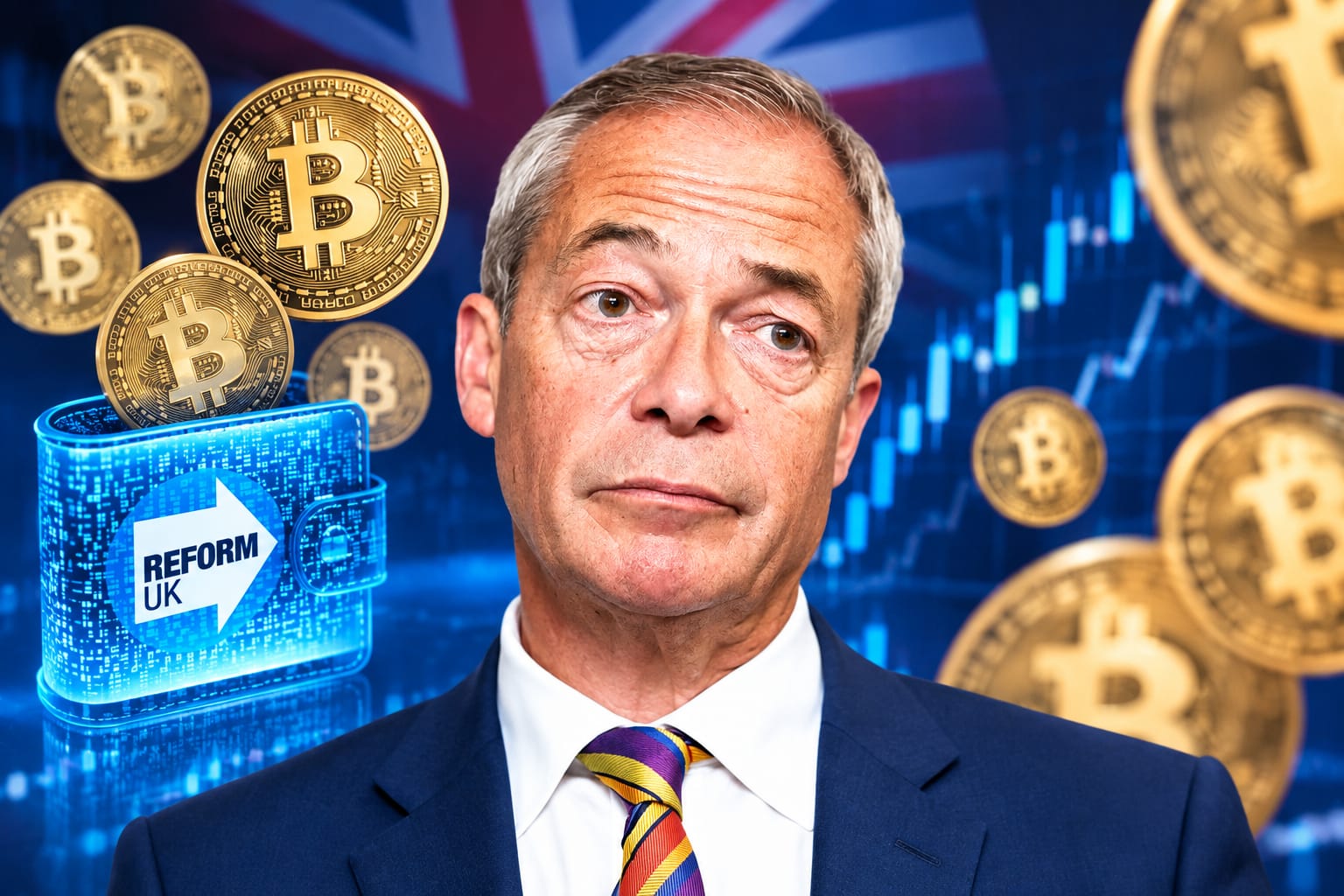
Britain’s Reform UK party received a £4 million ($5.4 million) contribution from crypto entrepreneur Ben Delo during the April-June quarter, making up 75% of the party’s total donations during the period.
Delo, a British crypto investor who was convicted in the United States of violating banking secrecy rules, was pardoned by U.S. President Donald Trump last year. The donation highlights the growing role of wealthy cryptocurrency figures in supporting Reform, which is led by veteran Brexit campaigner Nigel Farage.
Delo announced earlier this year that he was returning to the United Kingdom from Hong Kong and becoming more involved in politics. At the time, he said he wanted to help “save Britain before decline becomes irreversible.”
According to figures released by British election officials on Thursday, Reform raised £5.3 million in the second quarter of 2026. Although that was more than the amounts raised by its main political rivals, it represented a significant decline from the more than £9 million the party collected in each of the previous two quarters.
Delo pleaded guilty in 2022 to a U.S. banking secrecy violation. Prosecutors had accused BitMEX, the cryptocurrency company he co-founded, of intentionally failing to maintain safeguards required to prevent money laundering. Trump later pardoned Delo.
Reform welcomed the financial support, saying the party was pleased to have backing from successful British entrepreneurs as it prepares for the next general election.
The party’s latest fundraising figures also showed that Christopher Harborne, another prominent crypto entrepreneur and Reform’s largest donor, made no contribution during the quarter.
Harborne, who was born in Britain and is based in Thailand, has previously provided significant financial support to Farage and Reform. His absence from the latest figures comes as the British government moves to strengthen restrictions on political donations from British citizens living overseas.
The government has announced plans to introduce a £100,000 limit on donations from British citizens living abroad.
Harborne’s previous financial support has also become a political issue for Reform. The party’s popularity was damaged after it emerged that he had given Farage £5 million in 2024, a payment that Farage did not declare.
Parliamentary officials are examining whether the payment violated rules governing the declaration of political donations. Farage has rejected any wrongdoing, maintaining that the money was a personal gift and therefore did not have to be declared.
Farage subsequently left parliament and won re-election last month. However, he could lose his seat and be required to contest another election if an investigation determines that he breached parliamentary rules.
Despite having only eight members of parliament, Reform had led opinion polls in Britain for much of the past two years. Its position weakened after Prime Minister Keir Starmer resigned and Andy Burnham became prime minister in July, a change that helped revive support for the governing Labour Party.
The latest fundraising figures provide a snapshot of the changing political landscape. Reform remains financially stronger than some of its established competitors, but its overall donations have fallen sharply from the levels recorded at the end of 2025 and the beginning of 2026.
Labour raised £3.6 million in donations during the April-June quarter, excluding public funding, while the Conservative Party, which is the official opposition, collected £2.8 million.
Reform’s dependence on a small number of wealthy donors has also drawn greater attention as lawmakers consider tighter controls on political financing. The £4 million contribution from Delo alone accounted for three-quarters of the party’s donations in the latest quarter, while the absence of funding from Harborne marks a notable change from previous periods.
The developments come as Britain’s political parties prepare for the next general election and debate continues over how political donations from wealthy individuals, particularly those living overseas, should be regulated.
At an exchange rate of $1 to £0.7404, Delo’s £4 million contribution is equivalent to approximately $5.4 million.
Forex
Dollar Regains Strength as Investors Assess Prospects of a Limited Iran Ceasefire
The U.S. dollar regained strength against most major global currencies after initially trading lower on Thursday, as investors carefully evaluated developments surrounding the ongoing conflict involving Iran and the possibility of a temporary agreement to reduce tensions. Financial markets across the world were influenced by shifting expectations regarding the geopolitical situation, with optimism about a potential de-escalation competing against continued uncertainty over unresolved political and military issues.
According to officials and sources familiar with the matter, discussions between the United States and Iran were reportedly moving closer toward a limited and temporary framework agreement aimed at halting active fighting. The proposed arrangement was described as an effort to pause hostilities while leaving several of the most contentious and politically sensitive disputes unresolved for future negotiations.
The possibility of even a temporary reduction in conflict had initially encouraged optimism within global financial markets. Since Wednesday, stock markets and bond markets had been supported by hopes that a broader escalation in the Middle East could potentially be avoided. Investors were said to have interpreted the discussions as a possible step toward stabilizing energy markets and reducing risks to the global economy.
However, market sentiment became more cautious again on Thursday after reports emerged indicating that Iran was unlikely to accept what had been described as an unrealistic American proposal regarding the reopening of the Strait of Hormuz. The report, which was published by the Wall Street Journal, contributed to renewed uncertainty among investors and traders who remained concerned about the possibility of prolonged instability in one of the world’s most strategically important energy corridors.
The Strait of Hormuz is regarded as one of the most critical maritime routes for global energy supplies. Approximately one-fifth of the world’s oil and liquefied natural gas shipments normally pass through the narrow waterway. Any disruption to traffic through the strait has the potential to create significant consequences for global energy prices, inflation levels, and economic growth worldwide.
As investors reacted to the conflicting developments, currency markets reflected a more cautious and defensive tone. The euro traded relatively unchanged during the day at approximately $1.1748 after having gained nearly half a percent during the previous session. Similarly, the British pound weakened slightly against the dollar after earlier gains recorded on Wednesday.
Market strategists suggested that investor confidence remained fragile despite the earlier optimism surrounding ceasefire discussions. It was observed that many traders had initially moved quickly toward expectations that peace negotiations could progress rapidly, but sentiment later became more restrained as doubts emerged regarding the likelihood of a swift resolution.
According to analysts, the market appeared to remain highly sensitive to headlines related to the conflict. Even small developments or changes in negotiating positions were capable of causing rapid shifts in investor sentiment across currencies, commodities, equities, and bond markets.
Oil prices also experienced significant volatility throughout Thursday’s trading session. Prices fluctuated between gains and losses as investors reacted to reports regarding potential security measures in the Persian Gulf region. Ultimately, oil prices settled lower after reports indicated that the United States was considering resuming escort operations for commercial ships traveling through the Strait of Hormuz as early as that week.
The prospect of naval escort operations was interpreted by some investors as an attempt to reassure markets and maintain stability in global shipping lanes. However, analysts cautioned that such measures alone would not necessarily eliminate broader geopolitical risks or guarantee a durable diplomatic solution.
Concerns were also expressed that negotiating positions between the United States and Iran still appeared significantly divided. Although efforts to identify an “off-ramp” from the conflict were reportedly being pursued by the American administration, analysts suggested that meaningful convergence between both sides had not yet been achieved. As a result, further periods of market volatility were considered likely in the coming days and weeks.
Alongside broader geopolitical concerns, significant attention was also directed toward movements in the Japanese yen. The yen weakened slightly against the dollar after having strengthened sharply during the previous trading session amid speculation that Japanese authorities had once again intervened directly in currency markets to support their national currency.
The dollar was last reported trading near 156.79 yen after the Japanese currency eased by approximately 0.3%. The previous appreciation in the yen had followed growing expectations that Japanese officials were actively attempting to slow the currency’s prolonged decline against the U.S. dollar.
Data released by the Bank of Japan suggested that Japan may have spent as much as 5.01 trillion yen, equivalent to roughly $32 billion, during its latest efforts to stabilize the currency market. The figures indicated that repeated interventions may have been conducted over several sessions in order to counter speculative selling pressure on the yen.
Separately, Japan’s top currency diplomat, Atsushi Mimura, stated that Japan was not restricted in its ability to intervene in currency markets when necessary. The remarks were interpreted as a signal that Japanese authorities remained prepared to continue taking action if excessive volatility persisted.
Further attention was placed on upcoming diplomatic discussions between U.S. Treasury Secretary Scott Bessent and Japanese Prime Minister Sanae Takaichi. Reports indicated that speculative selling of the yen would likely be among the issues discussed during their meeting scheduled for the following week.
Despite intervention efforts, several analysts remained cautious regarding the longer-term outlook for the yen. It was argued that without stronger follow-through from Japanese monetary policy authorities, particularly through additional interest rate increases, the currency could remain vulnerable to further weakness.
The Bank of Japan has maintained relatively accommodative monetary policies compared with other major central banks, especially the Federal Reserve. This difference in interest rate levels has encouraged investors to favor higher-yielding currencies such as the U.S. dollar, thereby contributing to sustained pressure on the yen.
Meanwhile, other global currencies also experienced movement during the session. Norway’s crown strengthened after the country’s central bank raised its policy interest rate from 4% to 4.25%, citing inflation levels that remained too high. The dollar briefly touched a four-year low against the Norwegian currency before recovering to trade largely unchanged later in the day.
Overall, the developments in global currency markets reflected a broader atmosphere of caution as investors continued balancing hopes for geopolitical de-escalation against concerns surrounding unresolved conflicts, volatile energy prices, inflationary pressures, and shifting central bank policies. While temporary optimism regarding diplomacy had supported risk sentiment earlier in the week, markets remained highly reactive to uncertainty surrounding both geopolitical negotiations and global economic stability.

Yes Bank Reports 65% Profit Growth as Supreme Court AT1 Bond Ruling Raises Financial Uncertainty

HDFC Bank Puts Forward Two Names for Next CEO as Jagdishan’s Exit Approaches

EU Regulator Warns Markets Could Face Sudden Correction Amid Rising Risks

Argentina Explores Debt Management Strategies: Potential Debt Swap and IMF Discussions on the Horizon

Apple Introduces “Tap to Pay” Feature for iPhone, Allowing Contactless Payments

Hedge Funds Capitalize on U.S. Regional Banking Stocks Plunge: Insights and Implications
-
 Banking3 years ago
Argentina Explores Debt Management Strategies: Potential Debt Swap and IMF Discussions on the Horizon
-
 Technology3 years ago
Apple Introduces “Tap to Pay” Feature for iPhone, Allowing Contactless Payments
-
 Banking2 years ago
Hedge Funds Capitalize on U.S. Regional Banking Stocks Plunge: Insights and Implications
-

 Technology3 years ago
Aviation Industry Urges Swift Action Against GPS Spoofing Amid Growing Threats
-

 Technology3 years ago
Bitcoin Weakens as Regulatory Concerns and Market Sentiment Impact Cryptocurrency Market
-

 Technology3 years ago
FTX denies talks of acquiring Robinhood
-

 Business2 years ago
Overcoming Financial Hurdles: TotalEnergies’ Quest for Renewable Energy in Africa
-

 Forex2 years ago
Navigating Risks in Bank-Fintech Partnerships: Insights from U.S. Bank Regulator