Forex
China’s Foreign Exchange Reserves Show Modest Growth in May Amid Currency Fluctuations
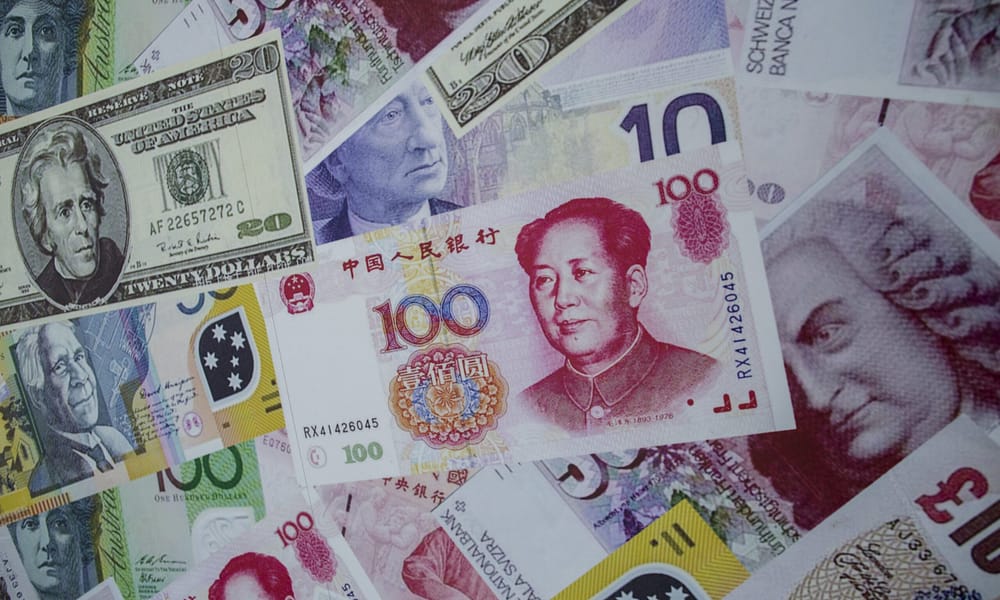
China’s foreign exchange reserves experienced a marginal increase in May, according to official figures released by the State Administration of Foreign Exchange (SAFE), though the growth remained below market expectations. The data, published on Saturday, indicated that reserves rose by $3.6 billion during the month, bringing the total to $3.285 trillion. This marked a 0.11% increase from April’s reserve level of $3.282 trillion.
Despite the slight uptick, the reported figure fell short of the Reuters forecast, which had projected that reserves would reach $3.292 trillion. The discrepancy between expectation and outcome was viewed by market analysts as a sign of tempered capital inflows and the complex interplay of global market conditions that continue to influence China’s foreign exchange holdings.
The modest rise was attributed by SAFE to a mix of factors, including fluctuations in exchange rates and shifts in global asset prices. It was explained that the value of foreign reserves is not determined solely by trade surpluses or capital account activity but is also shaped by revaluations of non-dollar assets, such as the euro or yen, in which portions of the reserves are held. The weakening of the U.S. dollar during May, though slight, also contributed to the valuation changes.
During the same period, the yuan was observed to have depreciated by 1.05% against the U.S. dollar. At the same time, the dollar itself weakened slightly—declining 0.23%—against a basket of other major global currencies. These dual movements in currency values produced a nuanced effect on the valuation of China’s reserve assets, influencing the final tally.
China continues to maintain the world’s largest stockpile of foreign exchange reserves, a position it has held for years due to its sustained trade surpluses and active management of capital flows. These reserves, comprising assets such as U.S. Treasury bonds, European sovereign debt, and other foreign securities, are used by the central bank to stabilize the yuan, manage inflationary pressures, and ensure the country’s financial resilience against external shocks.
While the monthly change was modest, it was regarded by some financial experts as a signal of the underlying economic stability maintained by Chinese authorities despite global headwinds. Geopolitical uncertainties, ongoing trade tensions, and the evolving trajectory of U.S. monetary policy have all played roles in shaping the international financial landscape, influencing both capital flows and exchange rate movements.
In recent years, China’s reserve management strategy has focused on diversification—both in terms of currency composition and asset classes. By allocating reserves across a variety of instruments and geographies, the country has aimed to reduce exposure to abrupt market swings and political risks tied to any single economy or currency. Consequently, even when external conditions appear volatile, the overall level of reserves tends to reflect a degree of insulation from abrupt losses.
Nevertheless, financial analysts have cautioned that ongoing uncertainties, including the possibility of further interest rate shifts in the United States or economic slowdowns in key trading partners, could affect the pace of future reserve accumulation. In particular, if the yuan continues to weaken against the dollar, further intervention by the People’s Bank of China (PBOC) might be necessitated, which could, in turn, place downward pressure on reserve levels.
The gradual buildup of reserves over time is also viewed as a key component of China’s broader economic strategy. By sustaining a large and liquid pool of foreign currency assets, Chinese policymakers have been better positioned to counteract speculative pressure on the yuan and to ensure the smooth execution of cross-border transactions. This has been especially important in times of international financial volatility, where sudden capital outflows or market disruptions could destabilize less-prepared economies.
Though May’s data did not surpass expectations, the relatively stable increase was interpreted by some observers as a continuation of cautious but deliberate financial management. The modest gain was also seen as consistent with broader efforts by Chinese authorities to maintain currency stability and to promote confidence in the country’s economic fundamentals.
As financial markets continue to respond to shifts in monetary policy, trade dynamics, and geopolitical developments, close attention is expected to remain on China’s foreign exchange reserves in the months ahead. Their level and composition may continue to serve as a barometer of how the world’s second-largest economy is navigating an increasingly interconnected and volatile global financial environment.