Fintech
Orienspace’s Gravity-1 Rocket: A Game-Changer in China’s Private Space Sector
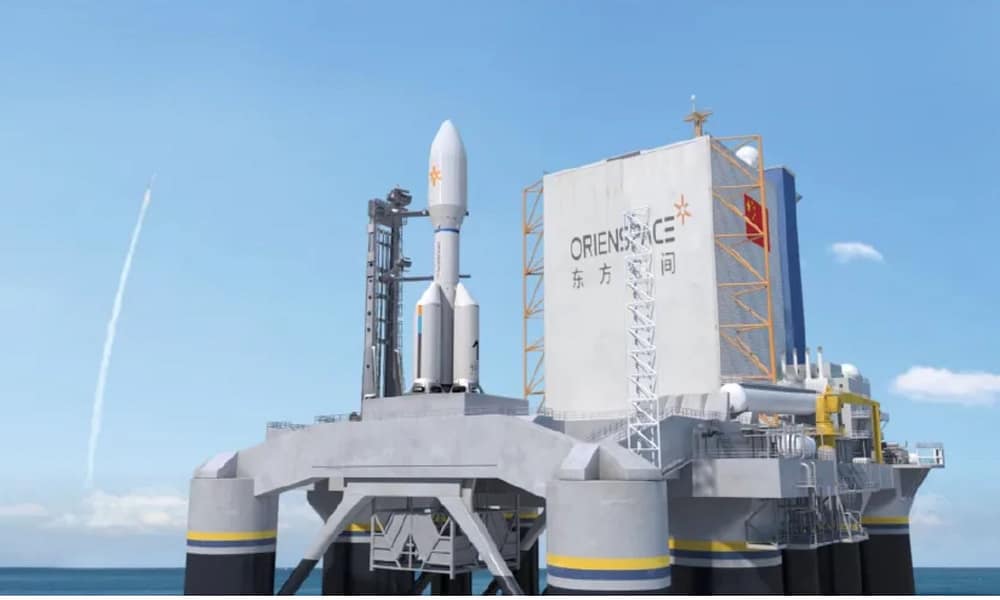
In a groundbreaking achievement for China’s private space sector, Orienspace, a Beijing-based startup founded in 2020 by veterans of China’s state space agencies, has successfully launched the most powerful rocket developed by a Chinese private enterprise. The Gravity-1 rocket marked its inaugural flight with a successful launch from a ship off the coast of eastern Shandong province, delivering three remote-sensing satellites into orbit.
The significance of this achievement reverberates beyond the success of a single mission. It reflects a paradigm shift in China’s space exploration landscape, as private companies increasingly challenge the dominance of state agencies in commercial satellite launches.
The Gravity-1 rocket, with its capacity to carry a payload of up to 6,500 kg into low earth orbit, stands as a testament to the technological prowess of Orienspace. This capability positions Orienspace as a formidable player in the competitive market for launching satellites into low- and mid-altitude orbits. The successful launch is a stepping stone toward Orienspace’s goal of conducting commercial launches, a domain traditionally reserved for China’s state space agencies.
Orienspace’s CEO had previously hinted at the company’s promising trajectory, noting that they had already secured orders for launching hundreds of satellites. The Gravity-1 rocket’s versatility is a key factor contributing to its appeal. It can place as many as 30 satellites into orbit in a single launch, showcasing efficiency and cost-effectiveness. Additionally, Orienspace claims that it can organize a launch in under seven days, and in some cases, within an astonishing 24 hours, providing unparalleled flexibility to satellite operators.
One distinguishing feature of the Gravity-1 rocket is its ability to be launched from a mobile sea platform. This innovation opens up new possibilities for launch sites and aligns with China’s strategic move toward sea launches. The advantage of sea launches lies in the reduced risk of rocket stages falling back to Earth in inhabited areas, addressing safety and environmental concerns associated with traditional launches.
The successful debut of the Gravity-1 rocket positions Orienspace as the fifth private Chinese firm to operate its own carrier rocket, following in the footsteps of i-Space, Galactic Energy, Space Pioneer, and LandSpace, as reported by Chinese state media. This collective endeavor underscores the maturation of China’s private space industry and its increasing ability to innovate, compete, and contribute to the nation’s space exploration initiatives.
Orienspace’s success comes at a time when the global space industry is witnessing dynamic shifts. Private space companies worldwide are playing an increasingly prominent role, challenging traditional aerospace giants. Orienspace’s achievement not only adds a significant player to China’s space industry but also positions the country to compete on the global stage.
The commercial implications of Orienspace’s successful launch are substantial. With the Gravity-1 rocket demonstrating its capabilities, private space enterprises are likely to gain more prominence in securing contracts for satellite launches. This shift may redefine the landscape of satellite deployment, with private companies offering more cost-effective and agile solutions.
The development aligns with broader efforts in China to foster innovation, competition, and commercialization in its space industry. The government’s support for private space enterprises reflects a strategic vision aimed at ensuring China’s competitiveness in the rapidly evolving space exploration arena.
As Orienspace sets its sights on future missions and commercial ventures, the successful launch of the Gravity-1 rocket serves as a testament to the company’s ambition, resilience, and contribution to advancing China’s position in the global space race. It also marks a notable chapter in the evolving narrative of private space exploration, where innovation, entrepreneurship, and technological breakthroughs are increasingly driving the next frontier of human exploration beyond our planet.