Finance
U.S. Stock Exchanges Seen Reporting Strong Q2 Earnings Amid Volatility-Driven Trading Surge
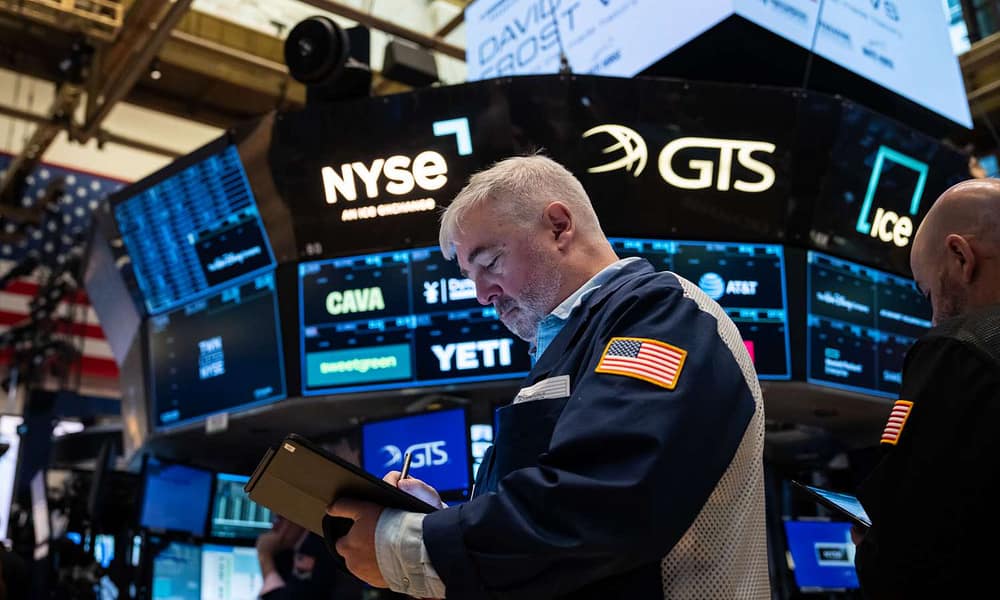
Second-quarter earnings for major U.S. stock exchanges were expected to reflect a notable increase, largely attributed to elevated trading volumes driven by market turbulence surrounding tariff disputes and geopolitical tensions. The surge in activity had reportedly enabled exchanges to collect higher transaction and clearing fees, which typically translate into improved financial results during periods of heightened volatility.
It had been observed that investors, reacting to the evolving macroeconomic landscape and U.S. President Donald Trump’s implementation of sweeping tariff measures, had undertaken widespread repositioning of their investment portfolios. The resulting volatility, further intensified by uncertainties stemming from the Middle East, was said to have created an environment conducive to increased trading across multiple asset classes. Analysts from RBC had commented that the persistence of macroeconomic ambiguity throughout the quarter had supported consistently strong performance in average daily volumes.
Major exchanges, including CME Group, Intercontinental Exchange (ICE), Cboe Global Markets, and Nasdaq, were all reported to have benefited from this spike in market activity. CME Group was said to have recorded a 16% jump in average daily volume (ADV), reaching a new quarterly high of 30.2 million contracts. Similarly, Intercontinental Exchange, which owns the New York Stock Exchange, had experienced a 26% rise in ADV, touching a record 10 million contracts. Trading activity at Cboe Global Markets had also set new benchmarks, with S\&P 500 index options reaching 3.7 million contracts in quarterly ADV, marking an all-time high. Nasdaq, for its part, had seen solid performance in U.S. equities and options trading.
The elevated trading levels were not confined solely to institutional activity. According to insights from brokerage firm Morgan Stanley, retail investor participation had remained resilient throughout the quarter. Retail traders were reported to have continued employing a “buy-the-dip” strategy, even as markets oscillated in response to the tariff disputes and subsequent rebounds in risk assets. This dynamic had provided further tailwinds for the exchanges.
In addition to traditional financial instruments, several exchanges had reportedly expanded their involvement in cryptocurrency markets. CME, for instance, had observed a 136% surge in cryptocurrency ADV during the quarter, driven in large part by unprecedented growth in ether futures. This trend had underscored the increasing integration of digital assets within the mainstream financial system, with more exchanges offering crypto-linked products to meet growing demand.
Although trading volumes had surged during the second quarter, projections for the remainder of the year suggested that activity might moderate slightly, particularly if current sources of uncertainty were resolved. Nonetheless, analysts had indicated that ongoing debates over the extent and timing of future interest rate cuts were expected to maintain volatility in fixed-income markets. Rates trading, therefore, was anticipated to remain active.
Market sentiment had also been lifted by signs of recovery in capital markets. It had been noted that initial public offering (IPO) activity, which had come to a standstill in the first half of the quarter due to volatility, began to pick up as optimism returned. Progress in trade negotiations was believed to have played a role in reigniting investor interest. Companies such as digital bank Chime and stablecoin issuer Circle were said to have gone public in June, reflecting a return of confidence among issuers and investors.
Data from Dealogic had indicated that the total deal value of U.S.-listed IPOs on the Nasdaq nearly tripled to \$13.2 billion in the second quarter, compared to the same period a year earlier. Moreover, the number of new listings had almost doubled, further signaling a revived IPO landscape.
The second-quarter earnings season for U.S. exchanges was scheduled to commence with CME Group reporting results on Wednesday, followed by Nasdaq on Thursday. Cboe and Intercontinental Exchange were expected to release their financial results the following week.
In terms of stock performance, shares of these exchanges had significantly outpaced the broader market. During the first six months of the year, CME and Cboe had each registered gains of nearly 19%, while Intercontinental Exchange and Nasdaq had risen by 23% and 16% respectively. In contrast, the benchmark S\&P 500 index had recorded a comparatively modest increase of 5.5% during the same period.
In conclusion, the strong second-quarter performance expected from U.S. stock exchanges had been shaped by a confluence of market volatility, retail resilience, crypto expansion, and a rebound in IPO activity. While future trading levels may normalize as volatility diminishes, structural shifts in investor behavior and asset diversification were seen as factors that could continue to bolster exchange earnings in the long term.