Finance
Structural Inertia and Sectoral Shifts: An Analysis of South Africa’s Gradual Labor Market Recovery in the Final Quarter of 2025
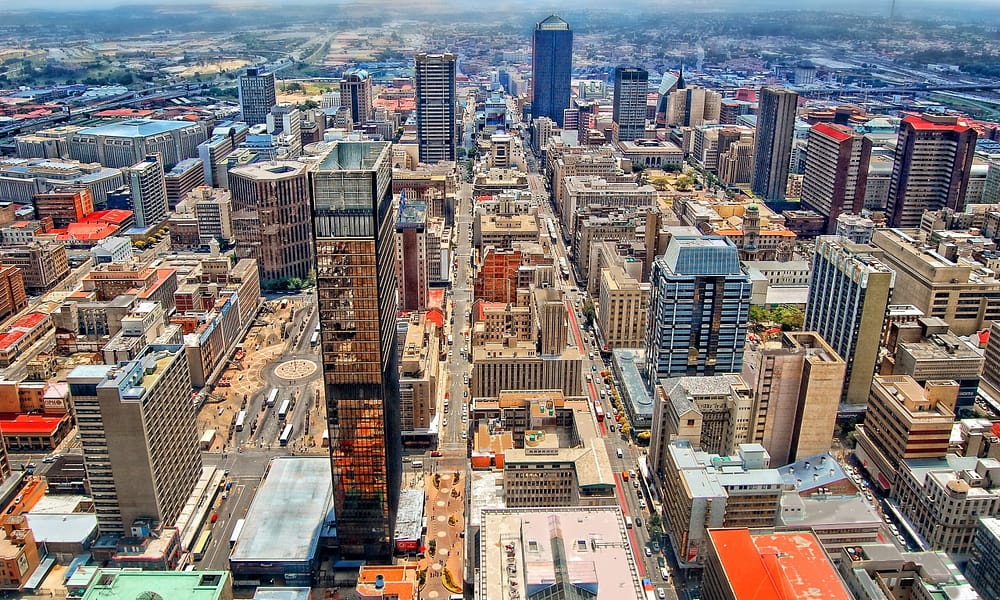
A modest contraction in the official unemployment rate of South Africa was documented on Tuesday, February 17, 2026, as data for the fourth quarter of the preceding year revealed a descent to its lowest level in more than five years. It was reported by the national statistics agency that the jobless rate reached 31.4% during the October-to-December period, representing a marginal improvement from the 31.9% recorded in the third quarter. Despite this positive trajectory, the labor market remains characterized by a persistent structural crisis, with unemployment figures continuing to be among the most elevated on a global scale. The threshold of 30% was breached during the COVID-19 pandemic, and notwithstanding various state-led initiatives designed to catalyze job creation, the rate has remained stubbornly above this level for several years.
The marginal gains observed in the final months of the year were primarily attributed to the expansion of employment within three specific sectors: community and social services, construction, and finance. It was noted that approximately 46,000 positions were added in social services, while the construction and finance sectors contributed 35,000 and 32,000 jobs, respectively. Overall, seven of the ten industries monitored by the statistics agency recorded net increases in their workforces. This growth occurred against an uncertain global economic backdrop, which had initially led many analysts to forecast a period of stagnation as private corporations remained hesitant to pursue aggressive expansion strategies.
However, the gains in the formal sectors were partially offset by significant contractions in other areas of the economy. The trade sector was reported to have shed 98,000 positions, while manufacturing and mining recorded losses of 61,000 and 5,000 jobs, respectively. A particularly significant factor contributing to the continued high level of unemployment was the substantial loss of informal employment. It was documented that approximately 293,000 informal jobs were eliminated during the quarter. This decline was elucidated by Statistician-General Risenga Maluleke, who suggested that the removal of numerous informal traders from the streets of Johannesburg, particularly in conjunction with the security and logistical requirements of the Group of 20 leaders’ summit held in November, had a measurable impact on these figures.
The broader macroeconomic environment in South Africa is perceived to be entering a phase of relative stabilization. Improvements in the reliability of the national electricity supply and the gradual easing of logistics bottlenecks have been highlighted as positive indicators for future industrial performance. Nevertheless, it has been observed that these structural improvements have not yet translated into a robust acceleration of economic growth or a significant surge in large-scale hiring. The discrepancy between improved infrastructure and actual job market outcomes remains a central challenge for policymakers, as the economy continues to operate below its potential capacity.
A more comprehensive view of the labor crisis is provided by the expanded definition of unemployment, which incorporates individuals who have ceased active job searches but remain available for work. This figure was observed to have edged down to 42.1% in the final quarter. While the slight downward movement in both the official and expanded rates is viewed as a welcome development, the scale of the challenge remains immense. The transition of the youth population into the workforce continues to be hampered by a lack of entry-level opportunities and a mismatch between available skills and the requirements of a modernizing economy.
In the context of the recent G20 summit and South Africa’s heightened international profile, the persistence of such high unemployment rates is regarded as a significant domestic vulnerability. While the finance and construction sectors have demonstrated resilience, the volatility of the informal economy remains a source of concern for the nation’s social stability. The removal of informal traders for diplomatic events is seen by some observers as a temporary disruption that highlights the precarious nature of work for a significant portion of the population. As the 2026 fiscal year progresses, the focus of both the government and private sector will likely remain on whether the current trend of modest job gains can be sustained and if the stabilization of the energy sector will eventually manifest as a primary driver of sustainable employment.
Ultimately, the 2025 year-end data suggests that while South Africa is moving away from the absolute peaks of its unemployment crisis, the recovery is characterized by incremental progress rather than a fundamental transformation. The resilience of the social services and finance sectors provides a foundation for growth, but the revitalization of the manufacturing and trade sectors is viewed as essential for achieving a more inclusive economic recovery.