Business
China-U.S. Trade Truce Offers Hope but Lacks Clarity, Leaving Markets on Edge
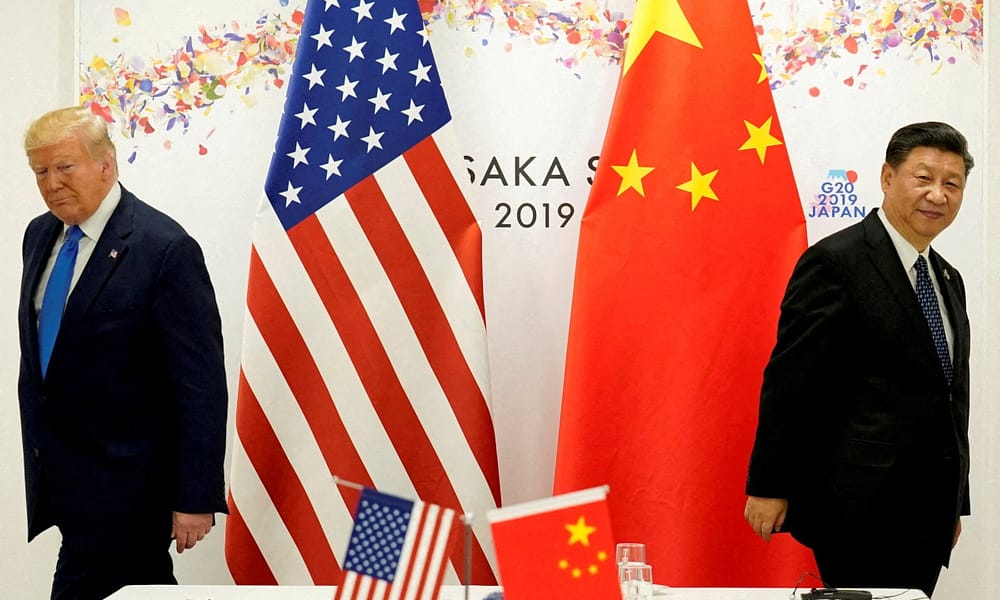
A tentative truce in the ongoing trade conflict between China and the United States has provided a glimmer of hope to investors who have long awaited signs of resolution between the two global economic powerhouses. While the recent announcement of an agreement between the two nations has been viewed as a potential step forward, the absence of detailed terms has led many to regard the deal as fragile and incomplete, with the possibility of future disputes remaining firmly on the horizon.
The announcement of the agreement was made by U.S. President Donald Trump, who declared that a deal had been reached under which China would supply critical materials such as magnets and rare earth minerals. In return, the United States would continue allowing Chinese students to study at American colleges and universities. While the exchange was presented as a significant development, the exact scope and enforcement mechanisms of the arrangement were not disclosed, leaving observers uncertain about its durability.
On the Chinese side, confirmation of the progress came from Vice Commerce Minister Li Chenggang, who reported that after two days of negotiations, both sides had settled on a framework for trade talks. This framework, it was noted, would now be reviewed by national leadership on both ends before further steps could be taken. However, no formal document or binding agreement was made public, raising questions about how much consensus had truly been reached.
A U.S. official familiar with the matter added that the agreement still allowed Washington to impose a 55% tariff on imported goods from China, suggesting that pressure on Beijing had not been fully lifted and that elements of the trade conflict remained unresolved. This detail, though buried in the broader announcement, has been interpreted by many as a sign that tensions could flare up again if further progress is not achieved.
In financial markets, reactions to the truce were notably mixed. Wall Street stocks experienced a slight dip, while the dollar weakened modestly. Meanwhile, Chinese equities saw a modest rise, with benchmark indexes approaching three-week highs. Despite this, market analysts described investor sentiment as cautious rather than celebratory. The cautious response indicated that while the announcement had temporarily soothed concerns, the broader investment community remained skeptical in the absence of clear outcomes and measurable policy shifts.
Financial strategist Chris Grisanti of MAI Capital Management remarked that the lack of concrete details made it difficult to view the situation as resolved. He noted that although both nations appeared to be presenting the outcome as a success, the underlying tensions had not been fully addressed. Similarly, Oliver Pursche of Wealthspire Advisors observed that the simultaneous declaration of a done deal and a framework for future discussions pointed to contradictions, further contributing to investor hesitation.
Another layer of uncertainty stems from the looming expiration of a temporary 90-day pause on tariffs affecting other U.S. trading partners. This moratorium, set to conclude in early July, has kept global investors on edge, as a failure to extend it or replace it with longer-term agreements could reignite market volatility. In past months, fears of an economic downturn had been triggered by President Trump’s imposition of sweeping tariffs, which caused a sharp market decline in early April, referred to by some analysts as “Liberation Day.” Those fears had only subsided after a significant rollback of the harsher trade measures.
Since then, the S&P 500 index has rebounded by more than 20%, approaching historic highs once again. Although Chinese markets have not fared as well—due in part to domestic economic challenges—they have also recovered much of the ground lost earlier in the year, returning to levels last seen in early April. However, continued investor anxiety over the strength of China’s economy and the fragility of global trade relationships has tempered overall enthusiasm.
Analysts generally agree that the one bright spot in the recent developments has been the apparent willingness on both sides to adopt a more pragmatic tone. This, they say, could create room for further negotiations and eventual resolution. Yet, as has often been the case in the prolonged trade saga between Washington and Beijing, optimism has been quickly followed by renewed friction.
In the end, while the latest agreement may have bought some temporary calm for global markets, its true impact will depend on whether it leads to meaningful, enforceable commitments—or merely postpones the next chapter in a trade war that has already reshaped global economic expectations.