Banking
U.S. Banks Turn to Fed for Short-Term Funding
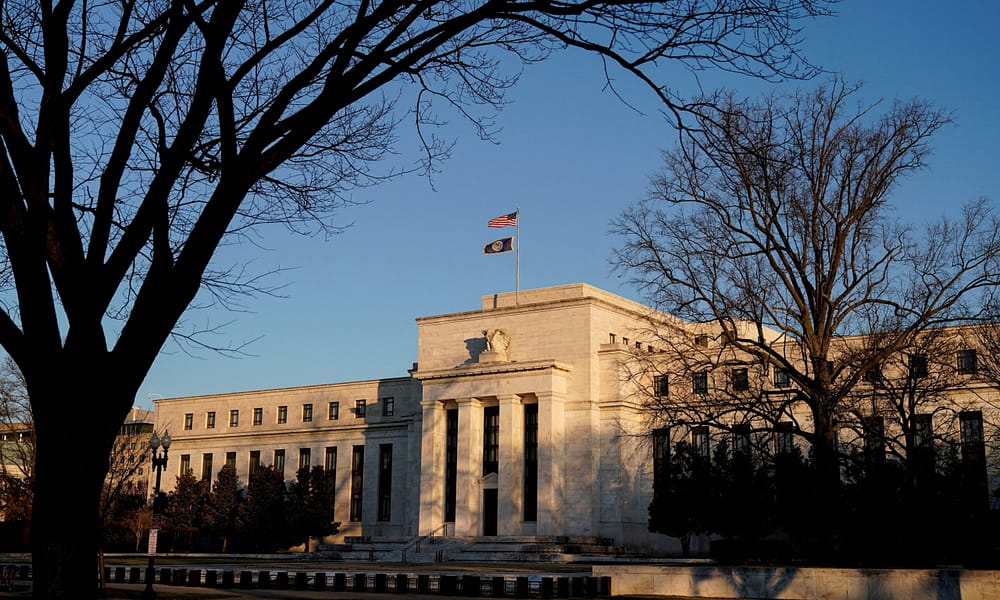
A recent development in the U.S. financial system has been observed, with it being reported that U.S. banks borrowed $1.5 billion from the Federal Reserve’s Standing Repo Facility (SRF) on a Monday. This particular day was noted to be the deadline for quarterly corporate tax payments and Treasury debt settlements. The borrowing, as shown by Fed data, has been seen as an indication of some tightness in the financial system in meeting its funding obligations. The SRF was established to serve as a backstop for any potential funding shortages. Launched in July 2021 in the aftermath of the COVID-19 pandemic, the Fed’s SRF provides daily overnight cash, in two separate sessions, in exchange for eligible collateral such as U.S. Treasuries.
Analysts have noted that the corporate tax payment date coincides with a large settlement of Treasury securities for recently issued debt. Data from a money market research firm, Wrightson ICAP, indicated that approximately $78 billion in payments were due to the U.S. Treasury on that Monday as well. It has been suggested that these settlements, along with the corporate tax payments, were expected to push the U.S. Treasury’s cash balance to a figure exceeding $870 billion. The borrowing from the SRF was recorded as $1.5 billion in cash during the morning session, with no further borrowings occurring in the afternoon.
This recent borrowing is not the largest that has been seen. On June 30, financial institutions had borrowed about $11.1 billion from the SRF, a transaction that was backed primarily by Treasuries as collateral. This was reported as the largest borrowing from the facility since its inception four years ago. The current utilization, however, has been described as small and in line with expectations. A U.S. rates strategist at Deutsche Bank, Steven Zeng, noted that the small utilization suggests that elevated repo levels may be providing an opportunity for some banks or dealers to make a return by sourcing funds from the Fed and then lending them out.
It was also explained that cash was tight on that day because money market funds had less excess to lend. This was attributed to the fact that they have been allocating a greater portion of their funds to T-bills. Additionally, it was noted that these funds were either losing or holding back cash for redemptions in anticipation of the corporate tax payment date.
Ahead of these significant payments, rates in the repurchase (repo) market, such as the Secured Overnight Financing Rate (SOFR), had risen above the interest rate paid on bank reserves. SOFR, which represents the cost of borrowing cash overnight with Treasuries as collateral, rose to 4.42% last Friday, a level that matched the high of 4.42% that was hit on September 5 and was the highest in two months. In contrast, the Interest on Reserve Balances (IORB) is currently at 4.40%.
The relationship between SOFR and IORB is significant. It is expected that SOFR should trade at or below IORB because banks have the option of parking their money at the Fed in a risk-free manner to earn IORB. However, when SOFR rises above IORB, it is seen as an indication of an exceptional demand for secured funding against Treasuries. This phenomenon typically occurs around the time of Treasury auction settlements. Teresa Ho, a managing director at JPMorgan, stated in a research note that while firmer SOFR levels were to be expected, the magnitude of the increase “somewhat caught us off guard.” She also noted that while the markets have largely been able to absorb the additional Treasury bill supply with ease, the reallocation of funds from the repo market to T-bills accelerated in August. This was attributed to money market funds aggressively extending their weighted average maturities, a move that was done in anticipation of potential Fed rate cuts. The current situation highlights the complex interplay between fiscal deadlines, monetary policy, and short-term funding markets.