Banking
Turkey launches measures to cool inflation and stabilize currency
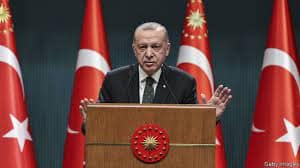
Turkey’s government has taken serious measures to harness the country’s banks and securities markets to contain the soaring inflation and stabilise the currency. The government’s steps have doubled down on President Tayyip Erdogan’s aversion to raising interest rates, despite the Treasury stating that fighting inflation remains its “top priority”. While the measures are intended to spur lira asset savings and cool some forms of credit growth, some analysts believe that the steps will do little to relieve an economy saddled by high living costs.
The Treasury revealed various initiatives, including the issuance of domestic bonds linked to state enterprise revenues, aimed at promoting savings in lira-denominated assets. Meanwhile, the central bank increased the mandatory reserve ratio for lira commercial cash loans from 10% to 20%. The banking watchdog also tweaked a maturity limit for consumer loans. The steps aim to boost individual Turks’ lira confidence and holdings while cooling some forms of credit growth that helped push inflation to a 24-year high above 73% last month.
After the Turkish government announced a set of coordinated measures aimed at stabilizing the country’s economy, the lira initially saw an uptick in value. However, the currency eventually settled at 17.06 to the dollar, which is close to its lowest point since the currency crisis in December. This recent development is part of the lira’s ongoing trend of losing value, having already decreased by 23% this year and 44% in the previous year.
The sharp decline of the lira and the economic turmoil in Turkey can be attributed in part to the unorthodox policies of President Erdogan. This has made the country’s emerging market economy a risky investment, as evidenced by the skyrocketing of 5-year credit default swaps to a record 830 basis points, indicating that investors are increasingly concerned about Turkey’s ability to repay its debt. The international bonds issued by the country also came under pressure, further highlighting the challenges faced by Turkey’s economy.
Analysts are sceptical about how much the latest steps could move the needle, given that they skirted the need to raise rates and could prove costly for the state. Arda Tunca, an Istanbul-based economist and columnist at PolitikYol, said, “There isn’t any policy change available to take inflation under control…All these schemes cause the Treasury to shoulder the burden of yields to be paid to investors.” Bankers said that in recent weeks, time deposit yields had been rising and the latest steps could raise banks’ costs and further lift loan rates.
The ongoing economic crisis has negatively impacted President Erdogan’s popularity in the lead up to the upcoming presidential and parliamentary elections. Despite this, the Turkish Treasury has assured that the new measures to improve the appeal of the lira will not compromise free market principles. One of these measures includes the issuance of revenue-indexed lira bonds, which has been attempted in the past, but with a focus on real persons this time around. However, experts have noted that it may be challenging to attract deposit holders without prior experience in equity investment. Ozlem Derici Sengul from Spinn Consulting stated that the current scheme would require careful promotion to gain traction among potential investors.