Banking
Subtle Stimulus and Strategic Caution: China’s Central Bank Eases Liquidity Amid Market Tensions
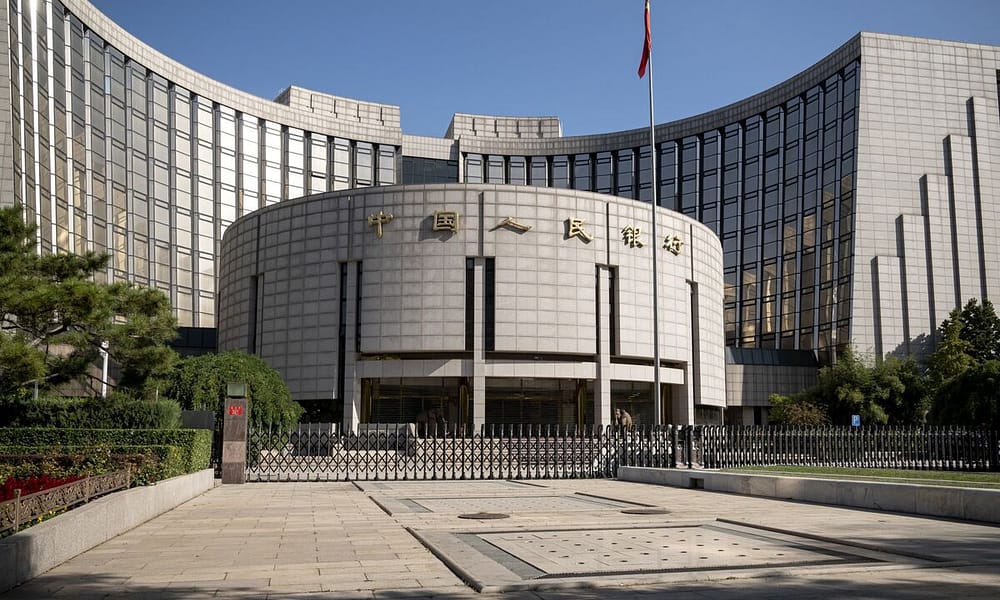
It was announced by China’s central bank that a total of 800 billion yuan, equivalent to approximately $110.32 billion, had been injected into the banking system over the course of March through the use of an outright reverse repurchase tool. This move, which had been officially confirmed by the People’s Bank of China (PBOC) on Monday, was seen as a signal of the institution’s cautious approach to easing financial conditions without sparking undue volatility in the broader economy.
The reverse repo operation had been carried out against a backdrop of mounting concerns in financial markets. It had been noted by investors that the availability of liquidity in the money markets had become increasingly constrained. This tightening of cash supply had triggered sell-offs in the bond markets and intensified the search for clear signs of policy direction from the central bank. As yields had come under pressure, market participants had closely followed the PBOC’s monetary maneuvers in an effort to anticipate the likely path of interest rates and financial stability measures.
Despite the sizable gross injection, attention had been drawn to the fact that 700 billion yuan of outright repos had also reached maturity during the same period. As a result, the net addition of liquidity to the system had amounted to only 100 billion yuan, which had been interpreted by analysts as the smallest net injection since the reverse repo tool had been introduced in November of the previous year. This suggested that while the PBOC had maintained a level of support, it had done so with measured restraint.
The stated purpose of these operations, according to the central bank, had been to ensure that liquidity in the banking system remained “reasonably ample.” The repo instruments employed had been issued with tenors of three and six months, indicating a preference for medium-term liquidity management rather than aggressive short-term stimulus.
Earlier in the month, it had also been reported that a separate liquidity infusion had been carried out by the PBOC in the form of one-year medium-term lending facility (MLF) loans, totaling 450 billion yuan, or approximately $62.03 billion. This issuance had provided some relief to bond investors, and in response, a softening in yields had been observed. The yield on 10-year Chinese treasury bonds had fallen from a recent three-month high to around 1.8%, reflecting a renewed confidence in the availability of liquidity.
As is generally understood in bond markets, prices tend to rise when yields fall, and this decline in yields had been taken as an encouraging sign by participants favoring fixed-income assets. Despite the more favorable sentiment, it was pointed out by Ze Yi Ang, a senior portfolio manager at Allianz Global Investors, that while optimism surrounding economic growth and equities had been reinforced by positive policy momentum, China’s economy remained mired in a deflationary cycle. It was suggested that interest rates would need to remain low for an extended period in order to support the gradual stabilization of economic activity. Furthermore, it was indicated that additional policy rate cuts could be expected in the near future, given the prevailing economic conditions.
Attention was also being directed toward developments in global trade policy, particularly those involving the United States. An impending deadline related to reciprocal tariffs, scheduled for April 2 and associated with U.S. President Donald Trump’s policies, had been identified as a key variable that might influence the sentiment surrounding the yuan. Depending on the outcome, it was considered possible that further adjustments to the PBOC’s monetary stance could be triggered, especially if currency pressures or trade-related shocks materialized.
In a separate announcement, the PBOC confirmed that it had refrained from buying or selling Chinese government bonds in open market operations for a third consecutive month. This inactivity had been interpreted as a sign of cautious restraint, possibly intended to avoid disrupting bond pricing while broader liquidity adjustments were being carried out through other mechanisms.
Overall, the central bank’s actions throughout March had reflected a delicate balancing act. While measures had been taken to ease financial conditions and support the bond market, the scale and nature of the interventions had suggested a preference for gradualism over bold stimulus. Investors and economists alike continued to watch the PBOC’s approach closely, recognizing that subtle signals and measured tools had become the hallmarks of China’s evolving monetary policy playbook in uncertain economic times.