Banking
Standard Chartered Shares Plunge Amid Call for U.S. Probe into Sanctions Allegations
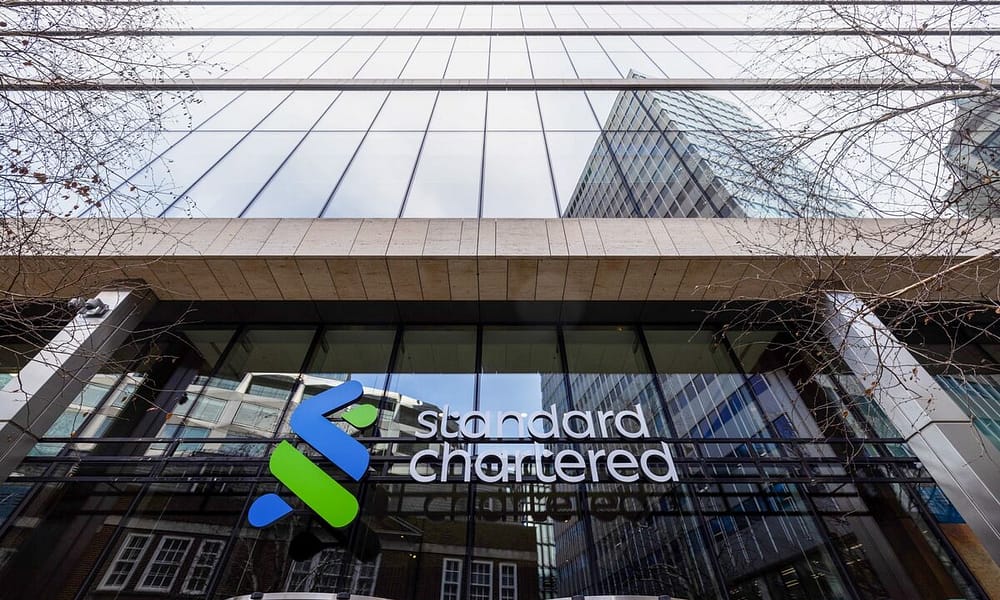
It was reported that the shares of Standard Chartered had fallen sharply on Friday after a request was made by a U.S. Republican lawmaker for an investigation into the bank’s alleged involvement in sanctions evasion. Nearly 9% of the value of the stock was said to have been lost during the trading session before the decline stabilized at about 7.2% by the close of the day. Market participants attributed the sudden drop in share prices to a letter that had been addressed to the U.S. Attorney General, urging that immediate action be taken.
It was revealed that the letter had been written by Elise Stefanik, a Republican representative from New York, who had asked for the appointment of a special attorney to examine the matter. The letter, which had been shared publicly on her website and on the social media platform X, was said to have called for a probe into the bank’s alleged failings. According to her statement, a case linked to the allegations was approaching its expiration in the following week, and therefore swift measures were being demanded to prevent it from lapsing without scrutiny.
In response, Standard Chartered was said to have dismissed the allegations in a statement, describing them as entirely false. The bank emphasized that these claims were part of a long-running civil case that had already been reviewed and rejected by U.S. courts on multiple occasions. It was stressed by the institution that the claimant had been pursuing the matter since 2012 without success, and the expectation was expressed that the dismissal of the case would continue to be upheld upon appeal. At the same time, the bank confirmed its willingness to cooperate fully with the relevant authorities and reiterated its broader commitment to combating financial crime.
The Attorney General’s office, when approached for comment, was reported not to have issued an immediate response, leaving the market with uncertainty over whether a new inquiry would in fact be launched.
The stock market reaction was interpreted as evidence of investor concern over the potential for renewed scrutiny of the bank. It was mentioned that Standard Chartered shares had already been trading about 1.5% lower earlier in the day before the steep decline was triggered. Traders indicated that the move was directly linked to the circulation of the lawmaker’s letter and the heightened risk it created.
The development stood in contrast to the bank’s recent performance. Like several other European lenders, Standard Chartered had experienced a surge in stock value during the year, supported by strong earnings and improved investor sentiment. Earlier in the same week, the bank’s share price had reached a level close to a twelve-year high, a milestone that highlighted the scale of the subsequent fall.
Observers recalled that Standard Chartered had faced regulatory and legal challenges in the United States in the past. In 2019, the bank had been required to pay \$1.1 billion in penalties to both U.S. and British authorities after it was found to have carried out transactions that breached sanctions against Iran and other jurisdictions. As part of that settlement, a deferred prosecution agreement had also been reached with the U.S. authorities. That agreement, it was noted, had later been extended for an additional two years, signaling the seriousness with which the regulators had viewed the matter.
The resurfacing of allegations now was perceived by analysts as a potential risk factor for the bank’s reputation, particularly given its global presence and the sensitivity of sanctions compliance in the current geopolitical climate. Questions were being raised as to whether renewed political attention could place the bank under pressure, even though courts had repeatedly dismissed the civil claims in the past.
While Standard Chartered had expressed confidence that the case would continue to be rejected on appeal, the episode was seen as a reminder of the vulnerability of financial institutions to sudden shifts in political and regulatory focus. Investors were reminded that legal uncertainties—even when unfounded or long-standing—could generate volatility and undermine confidence in a bank’s stability, particularly at times when overall performance was otherwise strong.
It was further observed that the wider environment for European banks had been improving in recent months, with higher interest rates and strong earnings providing momentum. Standard Chartered’s rapid fall in stock value on Friday, however, highlighted how quickly sentiment could be reversed when questions of legal compliance or regulatory exposure emerged.
By the end of the week, it had become clear that the immediate future of Standard Chartered’s market performance would depend not only on its earnings trajectory but also on the handling of the political and legal challenges raised in Washington. The situation was being closely monitored by both investors and industry observers, as the interplay between lawmaker scrutiny, regulatory action, and judicial outcomes continued to create uncertainty.
The incident was ultimately seen as part of the ongoing tension between global financial institutions and political authorities over compliance with sanctions and other financial crime regulations. Even as the bank projected confidence and reiterated its commitment to cooperate, the sharp reaction in its share price was taken as a sign of how fragile investor confidence could be when such allegations resurfaced.