Banking
Hong Kong retains status as financial hub 25 years after Chinese rule
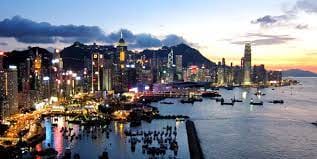
Hong Kong has retained its status as a financial hub and remains a crucial gateway for investment into mainland China, according to some of the city’s top executives. Charles Li, founder of microfinance platform Micro Connect and former CEO of Hong Kong Exchanges and Clearing, is optimistic about the future, saying that he is “convinced that the overall prosperity of Hong Kong will remain as strong as before because Hong Kong retains its value to both sides,” referring to China and the West. Despite political and civil liberties being curtailed, particularly since the introduction of a national security law in 2020, the finance sector has thrived since the handover. Hong Kong’s stock market value has surged to $3.52tn as of end-June, up from $411bn in 1997, and global investors have become increasingly reliant on Hong Kong to trade mainland stocks.
Fred Hu, the founder and chairman of private equity group Primavera, has expressed his belief that Hong Kong will continue to be the most competitive gateway between China and the rest of the world. Despite some concerns from business lobby groups and diplomats over the rule of law and judicial independence in Hong Kong, Hu does not believe that any mainland city will surpass Hong Kong in terms of its importance and competitiveness as a gateway to China.
Over the past few years, Hong Kong has seen a surge in initial public offerings, including Alibaba’s $13 billion secondary listing on the New York Stock Exchange in November 2019. According to Dealogic data, Hong Kong has been the world’s top stock exchange by IPO value seven times since the handover, with 146 companies raising a total of $40 billion on the main board in 2019.
Despite concerns over the outlook for Hong Kong due to an exodus of talent, David Chin, UBS’ head of investment banking for Asia-Pacific, is optimistic about Hong Kong’s future and China’s role on the global stage. Chin emphasizes that Hong Kong is the international gateway for China and its foreign relationships are critical for the city’s success.
Hong Kong is quickly approaching the halfway mark of a 50-year experiment designed to showcase a high degree of autonomy under Chinese rule. On Friday, President Xi Jinping will attend the swearing-in of the city’s new leader, John Lee, and celebrations to mark the handover. Lee, a former security chief who is sanctioned by the United States, will be closely watched by the financial industry, which is eager to bounce back from the COVID-19 restrictions that have led to an exodus of people and a mostly closed border with mainland China for the past two years.
In conclusion, despite some concerns over the outlook for Hong Kong, many industry experts remain optimistic about the city’s future as a competitive gateway between China and the rest of the world. The financial industry is particularly eager to get back on track after the COVID-19 restrictions, and the swearing-in of the city’s new leader will be closely watched to see how Hong Kong’s autonomy under Chinese rule will be maintained.