Banking
Bank of England warns financial institutions of significant profit hits if climate risks are not managed effectively
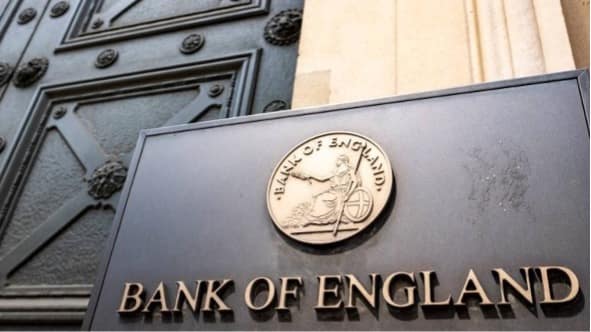
The Bank of England (BoE) has issued a warning that banks and insurers that fail to take climate risks seriously could face a 10% to 15% hit to annual profits and higher capital requirements. The bank released its first comprehensive stress test on Tuesday, revealing that climate risks would become a “persistent drag on banks’ and insurers’ profitability” over time if not managed effectively. Deputy Governor Sam Woods called for immediate action to lower future costs, adding that the average drag on annual profits could equate to between 10% and 15% overall. The BoE’s test, which was tougher than France’s, examined how Britain’s financial system would cope with the shift to a net zero-carbon economy by 2050.
According to Woods, banks and insurers will have to continue financing carbon-intensive sectors of the economy so as to to help transition them to a low-carbon future. He said that cutting off finance too quickly could have negative consequences including elevated energy prices. However, activists have called for more drastic action, such as “outright restrictions” on lending to new fossil fuel projects.
As part of the Bank of England’s (BoE) comprehensive stress test of Britain’s financial system, 19 banks and insurers were examined to determine their ability to comprehend and manage the impact of climate change on their business models, as well as their ability to hold sufficient capital to cover climate-related risks. HSBC, Lloyds, Aviva, NatWest, and the Lloyd’s of London insurance market were among the firms tested. The aim of the test was to evaluate how the financial system will manage the shift to a net-zero carbon economy by 2050, and how they will cope with climate risks as a first-order issue.
According to the Bank of England, if no extra measures are taken to reduce the global temperature rise, banks and insurers that underwent the stress test could suffer a cumulative loss of £334 billion ($417 billion) over the next 30 years. Properties at risk of flooding would become prohibitively expensive to insure under this scenario. While there was no pass or fail mark given due to the test’s experimental nature, BoE Deputy Governor Sam Woods emphasized the need for banks and insurers to effectively manage climate risks, as failure to do so could lead to a persistent drag on profits and higher capital requirements.
The most severe scenario posed by the BoE predicted that banks and insurers could face total losses of £334bn ($417bn) over three decades if no action was taken to reduce the rise in global temperatures. Properties at risk of flooding are most likely to be expensive to insure under the severe scenario. The BoE’s stress test results will not determine capital requirements for now as there was no pass or fail mark due to the test’s experimental nature.