



Insurance
Japanese Firms Offer Biggest Pay Hikes in Three Decades, Boosting Consumer Demand
In a significant development that economists believe will revive Japan’s sluggish consumer demand, Japanese companies have offered the largest pay hikes in three decades during this year’s negotiations with workers. The country’s largest trade union group, Rengo, revealed the findings of its survey on Wednesday, indicating that the initial reports of pay increases by unions at major employers in March were now expanding to include workers at small and medium enterprises (SMEs) and those with unions comprising 300 or fewer members. This positive trend highlights the broader distribution of wage hikes across the workforce.
According to the final survey, which involved 5,272 unions affiliated with Rengo, the average pay hike stood at 3.58%, equivalent to an increase of 10,560 yen per month. This represents the largest surge since 1993 when a 3.9% increase was observed. Notably, SMEs also raised wages by 3.23%, marking the fastest pace of growth seen in three decades.
The Bank of Japan (BOJ) has been closely monitoring wage growth as one of the key indicators while contemplating the timing of unwinding its ultra-loose monetary stimulus. BOJ Governor Kazuo Ueda has repeatedly emphasized the necessity of maintaining accommodative policies until wages rise sufficiently to sustainably achieve the 2% inflation target.
Economists and experts have lauded the recent developments, anticipating a positive impact on the overall economy. Hisashi Yamada, an economist and professor at Hosei University, stated, “Rising prices and a chronic labor crunch are driving up wages, which will continue to rise next year. What’s important from now on is to bring real wages to positive territory.” He further explained that rising wages would help stabilize inflation around the 2% target, putting pressure on the central bank to eventually consider phasing out its yield curve control policy.
The surge in pay hikes is expected to provide a much-needed boost to consumer demand in Japan. With increased disposable income, workers are likely to have greater purchasing power, leading to higher consumer spending and economic growth. Additionally, the expansion of wage increases beyond major corporations to SMEs reflects a more inclusive approach that benefits a broader spectrum of workers.
The rise in wages signifies a positive shift in the Japanese economy and is a testament to the efforts of trade unions in securing better compensation for their members. The pay hikes will not only improve the financial well-being of workers but also contribute to the overall health of the economy. As more workers experience increased income, the potential for increased consumer spending and economic activity becomes more pronounced.
Looking ahead, sustained wage growth will be crucial in maintaining the momentum and achieving long-term economic stability. It will play a significant role in bolstering domestic demand and supporting the government’s efforts to achieve sustainable economic growth. The focus now lies on continuing the upward trajectory of real wages and ensuring that the positive impact translates into improved living standards for workers across various sectors of the Japanese economy.
In conclusion, the substantial pay hikes offered by Japanese companies this year, the largest in three decades, have the potential to breathe new life into the country’s consumer demand. The expansion of wage increases to SMEs demonstrates a more inclusive approach, benefitting a wider range of workers. The Bank of Japan will closely monitor these developments as it contemplates its monetary policies. With rising wages contributing to higher purchasing power, Japan’s economy is poised for positive growth and stability in the coming years.

Insurance
The Strategic Divestment of Schenker: Deutsche Bahn’s Path to Streamlining Operations
German rail operator Deutsche Bahn is gearing up for a significant move in its corporate strategy, with plans to divest its logistics subsidiary Schenker. The anticipated sale, expected to draw considerable interest from the market, aims to generate between 12 billion and 15 billion euros, contributing to Deutsche Bahn’s debt reduction efforts. According to sources familiar with the matter, at least 10 potential bidders are anticipated to vie for the acquisition, with bids expected to be submitted by the end of March.
The sale of Schenker is part of Deutsche Bahn’s broader strategy to streamline its operations and focus on its core railway business in Germany. While Schenker has been a vital profit driver for the group, with record profits of approximately 1.8 billion euros in 2022, the divestment reflects Deutsche Bahn’s commitment to addressing its substantial debt burden, which currently exceeds 30 billion euros.
Despite its financial importance to Deutsche Bahn, Schenker’s sale has attracted significant attention from both logistics rivals and financial investors. Among the parties expressing interest are prominent names such as DSV, Maersk, Blackstone, Bain, Advent, CVC, Carlyle, UPS, and Saudi Arabia’s public investment fund (PIF). The involvement of these key players underscores the attractiveness of Schenker as a strategic asset in the global logistics landscape.
Moreover, the participation of financial investors highlights the potential for Schenker to deliver substantial returns on investment, given its strong performance and promising outlook. With anticipated operating profits of 1.1 billion euros and sales reaching around 19 billion euros in the current year, Schenker presents an appealing opportunity for prospective buyers to capitalize on its robust market position and profitability.
The sale process is expected to progress swiftly, with Deutsche Bahn aiming to finalize the transaction by the second half of 2024. Following the submission of initial offers, the pool of bidders will undergo a rigorous evaluation process, leading to the selection of preferred candidates. The involvement of multiple stakeholders, including logistics companies, financial institutions, and sovereign wealth funds, underscores the widespread interest in Schenker and the potential for a competitive bidding environment.
While Deutsche Bahn seeks to divest Schenker to streamline its operations, the decision has also prompted interest from potential suitors seeking to expand their presence in the logistics sector. For instance, DSV, Maersk, and UPS view the acquisition as an opportunity to enhance their service offerings and strengthen their market positions. Additionally, the support of Saudi Arabia’s PIF for DSV’s bid highlights the strategic importance of Schenker within the global logistics ecosystem.
Despite the significant interest from potential buyers, German logistics giant DHL has opted not to participate in the bidding process, signaling a strategic decision to focus on its existing operations. While DHL’s decision may influence the dynamics of the bidding process, it underscores the diversity of strategic priorities among industry players and the varied approaches to market expansion and consolidation.
Overall, the sale of Schenker represents a pivotal moment for Deutsche Bahn and the broader logistics industry. As the divestment process unfolds, all eyes will be on the outcome of the bidding process and the implications for Deutsche Bahn’s future strategic direction, as well as the potential impact on the competitive landscape of the global logistics market.
Insurance
XP Inc. Reports Strong Fourth-Quarter Performance and Strategic Outlook

XP Inc., a prominent financial services provider in Brazil, demonstrated robust performance in the fourth quarter of the fiscal year. The company recorded a significant increase in net profit, reaching 1.04 billion reais, marking a notable 33% rise compared to the same period in the previous year. This impressive growth was primarily driven by the strong performance of its fixed income segment and increased activity in debt dealmaking, which collectively propelled its net revenue to 4.05 billion reais, reflecting a substantial 27% increase.
The retail business segment, a cornerstone of XP’s operations, witnessed a commendable 24% growth in gross revenues. Notably, the equities segment experienced a 19% increase, albeit at a slightly slower pace compared to fixed income, which surged by an impressive 76%. The growth in fixed income can be attributed to the prevailing high-interest rates in Brazil, which remained in the double digits during the period under review. Despite challenges faced by the equities segment in accelerating growth earlier in the fiscal year, XP remains optimistic about the positive trajectory of this segment as market conditions improve.
XP’s performance was further bolstered by its dealmaking advisory business, with gross revenues soaring by 85% to 508 million reais. This exceptional growth was driven by robust activity in debt issuance and contributions from mergers and acquisitions. The company’s ability to capitalize on opportunities in the dealmaking landscape underscores its strong market position and expertise in providing comprehensive financial advisory services.
Looking ahead, XP remains cautiously optimistic about its prospects, particularly with the initiation of the monetary easing cycle by the Brazilian Central Bank and improving market conditions. The company anticipates a positive cycle for its core investments business as retail investors gradually adapt their behavior to the evolving market environment. This strategic outlook aligns with XP’s commitment to delivering value to its shareholders and leveraging emerging opportunities in the financial services sector.
In addition to its strong financial performance, XP announced a new share buyback program, reflecting confidence in its future growth trajectory and commitment to enhancing shareholder value. The board’s approval of the buyback program underscores XP’s proactive approach to capital allocation and its confidence in the underlying strength of its business model.
Overall, XP Inc.’s fourth-quarter results highlight its resilience and ability to navigate evolving market dynamics while capitalizing on growth opportunities across its business segments. With a strategic focus on innovation, client-centricity, and prudent financial management, XP is well-positioned to sustain its growth momentum and drive value creation for stakeholders in the foreseeable future.
Insurance
Walmart’s Strong Performance and Strategic Move: A Case Study
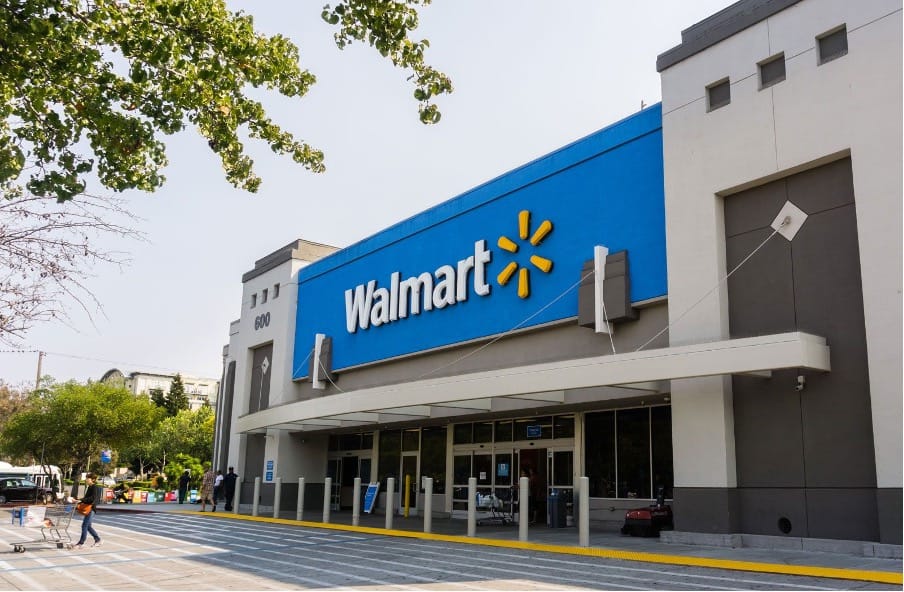
Walmart, a retail giant renowned for its expansive presence and competitive pricing, set a strong tone for the U.S. retail sector’s earnings season with its robust fourth-quarter results. The company’s shares surged to an all-time high following the announcement of its quarterly performance and strategic initiatives. In addition to its impressive financial figures, Walmart unveiled plans to acquire Vizio, a smart-TV maker, for $2.3 billion, signaling its intention to expand its reach and diversify its revenue streams.
One of Walmart’s key strengths lies in its emphasis on groceries, setting it apart from its competitors. While other retailers struggle amid slowing discretionary spending, Walmart’s focus on offering competitive prices on groceries has continued to attract shoppers, including those from higher-income households. By leveraging its size and negotiating power, Walmart has managed to keep grocery prices low, ensuring a steady stream of customers. Moreover, the company’s efforts to enhance its in-store experience, expand its online offerings, and provide convenient pickup and delivery options have contributed to its success in driving transactions and surpassing $100 billion in global e-commerce sales in 2023.
In contrast, Home Depot, another retail heavyweight, reported a decline in holiday quarter sales, citing consumers’ reluctance to undertake large-scale projects amidst rising food prices and mortgage rates. This divergence in performance underscores Walmart’s resilience and ability to adapt to changing market dynamics.
Walmart’s financial performance for the fourth quarter exceeded analysts’ expectations, with a 4% rise in total U.S. comparable sales and adjusted earnings per share of $1.80. The company also provided an upbeat sales forecast for the fiscal year ending January 31, 2025, projecting a growth rate of 3% to 4%, surpassing analysts’ estimates.
The announcement of Walmart’s intention to acquire Vizio reflects its strategic vision to capitalize on the growing digital advertising market. With Walmart Connect already generating $3 billion in annual advertising revenue, the acquisition of Vizio enhances its advertising capabilities by extending its reach into consumers’ homes through smart TVs. This move positions Walmart as a formidable competitor in the advertising space, particularly as it seeks to leverage data insights and multichannel advertising strategies to rival industry leaders like Amazon.
The proposed acquisition of Vizio at a premium of 47% to its closing price demonstrates Walmart’s confidence in the strategic value of the deal. By gaining access to Vizio’s SmartCast operating system and viewership data, Walmart aims to bolster its advertising business and drive future growth. While the deal is expected to be mildly dilutive to earnings in fiscal 2025, Walmart’s long-term strategy prioritizes diversification and innovation to secure its position as a market leader.
Overall, Walmart’s strong performance in the fourth quarter, coupled with its strategic move to acquire Vizio, reflects its commitment to driving innovation, expanding its market reach, and delivering value to shareholders. As the retail landscape continues to evolve, Walmart remains well-positioned to navigate challenges and capitalize on emerging opportunities, solidifying its status as a retail powerhouse in the global market.

Strategic Plan Demanded as Bank of America Seeks to Close Performance Gap with Key Rivals

Major European Media Conglomerate Expands into Gaming with Acquisition of Leading Betting Firm

Unexpected Canadian Inflation Tightens Yield Gap, Complicating Central Bank Policy Outlook

Argentina Explores Debt Management Strategies: Potential Debt Swap and IMF Discussions on the Horizon

Apple Introduces “Tap to Pay” Feature for iPhone, Allowing Contactless Payments

Hedge Funds Capitalize on U.S. Regional Banking Stocks Plunge: Insights and Implications
-
 Banking2 years ago
Argentina Explores Debt Management Strategies: Potential Debt Swap and IMF Discussions on the Horizon
-
 Technology3 years ago
Apple Introduces “Tap to Pay” Feature for iPhone, Allowing Contactless Payments
-
 Banking2 years ago
Hedge Funds Capitalize on U.S. Regional Banking Stocks Plunge: Insights and Implications
-

 Technology2 years ago
Aviation Industry Urges Swift Action Against GPS Spoofing Amid Growing Threats
-

 Technology2 years ago
Bitcoin Weakens as Regulatory Concerns and Market Sentiment Impact Cryptocurrency Market
-

 Business2 years ago
Overcoming Financial Hurdles: TotalEnergies’ Quest for Renewable Energy in Africa
-

 Technology3 years ago
FTX denies talks of acquiring Robinhood
-

 Forex1 year ago
Navigating Risks in Bank-Fintech Partnerships: Insights from U.S. Bank Regulator