



Forex
The Resurgence of the Greenback and Allied Currency Contractions: Analyzing Global Market Volatility Amidst Institutional and Geopolitical Flux
A significant appreciation of the United States dollar was documented on Thursday, February 12, 2026, as the currency reached a two-week peak amidst a backdrop of renewed equity market instability and a precipitous decline in the British pound. The strengthening of the greenback is understood to be driven by a shift toward risk-aversion among global investors, who are currently reassessing the trajectory of the U.S. corporate earnings season and the potential for a more hawkish transition at the Federal Reserve. Although recent domestic labor data—including a higher-than-anticipated rise in jobless claims and a reduction in December job openings—had previously suggested a softening economy, the dollar index, which tracks the currency against a basket of six major peers, advanced by 0.18% to reach 97.85.
The current valuation of the dollar is heavily influenced by the anticipated leadership transition within the Federal Reserve. It has been observed by market strategists that while the domestic economy remains solid and inflationary pressures persist, the central bank appears to be in no immediate hurry to implement further rate reductions. This stance has set a complex stage for the arrival of Kevin Warsh, the nominee for the next Federal Reserve chair. However, the path to his confirmation is reportedly obstructed by legislative hurdles, as several Republican lawmakers have indicated a refusal to proceed until an inquiry into the conduct of the current chair, Jerome Powell, is fully resolved. This institutional uncertainty has contributed to a broader sideways movement in currency markets, even as the dollar finds a firmer floor.
Simultaneous to the dollar’s rise, a dramatic liquidation was witnessed in the precious metals and technology sectors. Silver experienced a notable collapse, falling 15.66% to $74.25 per ounce, as speculative flows and leveraged buying positions were aggressively unwound. In the equity markets, the Nasdaq Composite documented its most severe two-day slide since October, declining by 2.9%. This volatility was triggered by aggressive infrastructure spending disclosures from major market bellwethers and a widespread rout in software stocks, as the industry continues to grapple with the disruptive influence of generative artificial intelligence on traditional business models.
The British pound was subjected to intense downward pressure throughout the session, falling 0.75% against the dollar to $1.3550. This decline followed a razor-thin 5-4 split decision by the Bank of England’s rate-setting committee to leave borrowing costs unchanged. Beyond monetary policy, the stability of the pound is being undermined by profound political instability within the United Kingdom. Concerns regarding the survival of Prime Minister Keir Starmer’s leadership have intensified following the controversial appointment of a U.S. ambassador with historically scrutinized personal ties. Analysts have suggested that the prospect of an earlier-than-anticipated leadership challenge, particularly one that could shift the governing party’s ideological center, has left the currency particularly unsettled.
A similar trend of policy inertia was documented within the Eurozone, where the European Central Bank (ECB) delivered no change in interest rates during its Thursday meeting. The euro receded by 0.16% to $1.1788, as traders perceived little probability of a rate cut within the current calendar year. Although the euro remains significantly higher against the dollar than it was twelve months prior, this strength has become a point of concern for regional policymakers. With Eurozone inflation falling to 1.7%—below the 2% target—the currency’s appreciation is viewed as an additional drag on regional price pressures and export competitiveness.
The contagion of volatility was also felt acutely within the digital asset markets. Bitcoin receded to its lowest valuation since late 2024, experiencing an 11.65% decline to $64,162.66—marking its most significant one-day drop in several years. Simultaneously, Ether slumped to a nine-month low, falling 12.4% to $1,862. These movements suggest that the “risk-off” sentiment currently dominating traditional finance is being mirrored in the cryptocurrency sector, as speculative capital is withdrawn in favor of the perceived safety of the U.S. dollar.
Ultimately, the global financial landscape in early 2026 is being defined by a transition toward defensive positioning. The interplay between static interest rate policies in Europe and the United Kingdom, combined with the structural and political uncertainties facing the United States, has created a high-volatility environment for all major asset classes. As the earnings season concludes and the Federal Reserve’s leadership transition remains in flux, the dollar’s role as a primary liquidity anchor appears to be strengthening, even as other global benchmarks face significant downward revisions.






Forex
The Resurgence of the American Greenback: Analyzing the Interplay of Robust Labor Dynamics and Shifting Monetary Expectations
A significant appreciation in the value of the United States dollar against the euro and the Swiss franc was documented on Wednesday, February 11, 2026, as market participants reacted to a series of surprisingly robust employment figures. The health of the underlying domestic economy was underscored by data revealing that 130,000 jobs were added by U.S. employers during the month of January. This figure substantially exceeded the consensus estimate of 70,000 jobs previously forecasted by economists, thereby signaling to the financial community that the Federal Reserve is likely to maintain its current interest rate levels for a more extended duration than was previously anticipated.
The broader labor landscape was further clarified by the U.S. Labor Department, which reported a decline in the unemployment rate to 4.3% in January, down from 4.4% in the preceding month. In response to these developments, the dollar advanced by 0.42% to 0.7711 against the Swiss franc, while the euro was observed to have receded by 0.18% against the greenback, trading at approximately $1.1874. It was noted by market strategists in London and New York that the rally was underpinned not only by the employment surprise but also by a firm corporate earnings season. This combination has created a favorable environment for the American currency, as the data serves to temper, though not entirely eliminate, the expectations for a potential rate reduction later in the year.
Prior to the release of these figures, a narrative of skepticism regarding the dollar’s strength had been adopted by many traders. This cautious outlook had been supported by earlier reports of slower-than-expected retail sales in December and public comments from White House economic advisors suggesting that job growth might experience a cooling period in the coming months. However, the January data effectively countered these bearish speculations. Consequently, the probability of the Federal Reserve leaving interest rates unchanged at its forthcoming meeting was recalibrated by market pricing tools, surging to 94% from 80% recorded on the previous day.
The institutional transition within the Federal Reserve remains a focal point for currency valuation. It was observed that if the confirmation of Kevin Warsh as the next Federal Reserve chair proceeds according to the established timeline, his inaugural meeting would coincide with the June policy session. In light of the recent employment strength, the market’s conviction regarding a rate cut in June has been significantly adjusted, falling from a nearly certain 97% probability to approximately 70%. Despite this shift, it is understood that at least 50 basis points of cumulative cuts for the 2026 fiscal year are still being priced into long-term financial instruments.
Simultaneous to the dollar’s rally, the Japanese yen was documented to have continued its trajectory of outperformance. This strength is largely attributed to the political aftermath of Prime Minister Sanae Takaichi’s recent landslide election victory. Analysts have suggested that the yen’s consolidation is being supported by a variety of factors, including potential downside surprises in Japanese inflation, a strategic rotation away from U.S. technology equities, and the normalization of Japanese bond yields relative to global benchmarks. The yen was observed to have strengthened by 0.75% against the greenback to 153.22 per dollar, marking its third consecutive session of gains against both the U.S. currency and the euro.
In the Antipodes, a notable surge was recorded for the Australian dollar, which reached a three-year peak of $0.71430. This movement followed assertive commentary from the Reserve Bank of Australia’s leadership, wherein it was declared that domestic inflation remains unacceptably high and that all necessary measures would be undertaken to restore price stability. This hawkish posture facilitated a 0.69% advance for the “Aussie” against the greenback, reaching its highest level since February 2023.
While the British pound receded by 0.14% to $1.36215 and the Swedish crown weakened marginally, the broader dollar index remained largely stable at 96.92. The resilience of the American economy, as demonstrated by the January labor report, has forced a comprehensive reassessment of global capital flows. The focus of the international financial community is expected to remain fixed on the upcoming confirmation hearings for the Federal Reserve’s leadership, as the policy direction established in the first half of 2026 will be critical in determining whether the dollar’s current rally can be sustained against the backdrop of a normalizing global interest rate environment.
Forex
Unexpected Canadian Inflation Tightens Yield Gap, Complicating Central Bank Policy Outlook
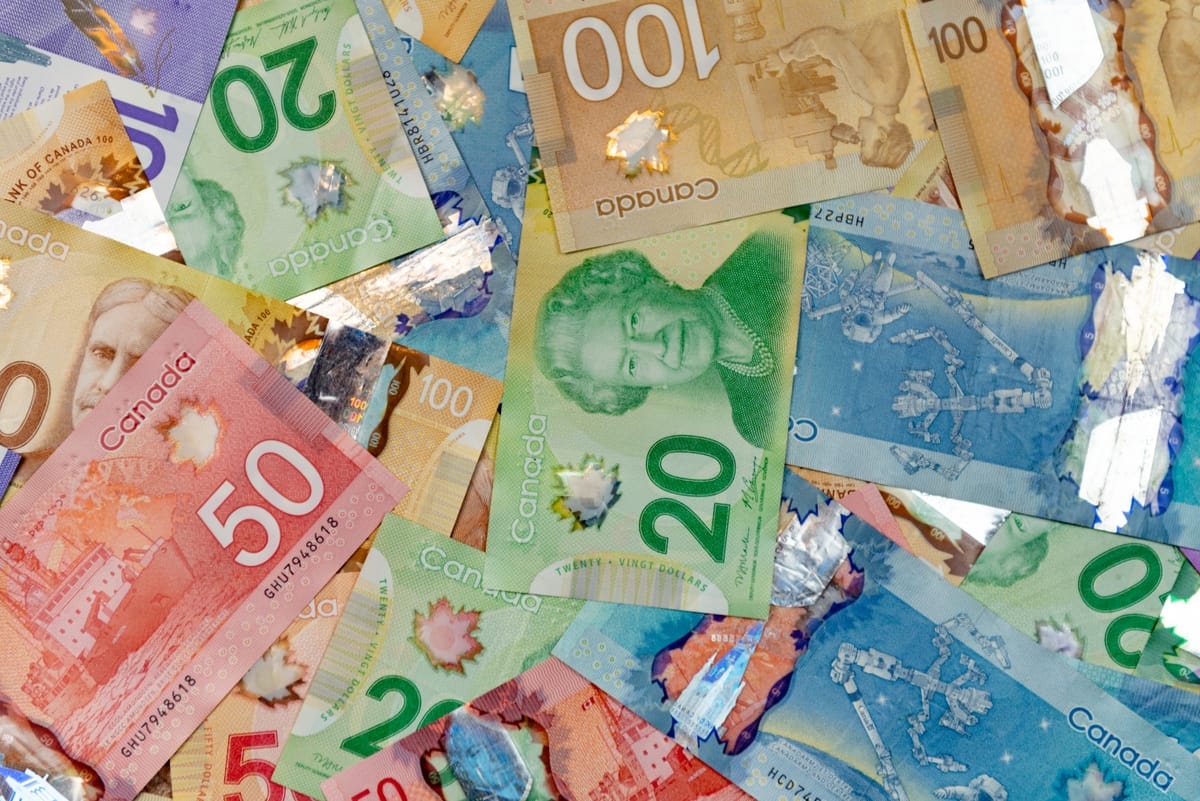
A notable strengthening was registered for the Canadian dollar against its American counterpart on Tuesday, a movement that was perceived to be a direct consequence of the narrowing of the yield differential observed between Canadian and U.S. government bonds. This adjustment in the fixed income markets was primarily precipitated by the public release of domestic economic statistics, which provided evidence that the nation’s inflation rate had accelerated to its highest level in seven months. The national currency, frequently referenced as the loonie, was observed to be trading 0.1% higher at a rate of 1.4020 per U.S. dollar, a valuation equivalent to 71.33 U.S. cents. Trading activity during the day had been confined within a relatively narrow span, with the rate fluctuating between 1.4004 and 1.4065. This performance constituted a mild recovery for the currency after it had earlier fallen to a six-month low of 1.4079 in the trading sessions of the preceding week.
The broader environment of global currency exchange was also taken into consideration. It was noted that the U.S. dollar, widely known as the greenback, had generally appreciated against a weighted basket of other major global currencies. This overall strength in the U.S. currency was largely assigned to external economic and political dynamics, most notably the political shifts taking place in Japan, where the process of electing a new prime minister was reported to be placing considerable downward pressure on the value of the yen. Despite the clear prevailing strength exhibited by the U.S. dollar, it was articulated by a chief market strategist at Bannockburn Global Forex that while the Canadian economy and its currency often display resilience when the U.S. dollar is strong, the more decisive influence on the loonie’s appreciation was the announcement of the higher-than-expected Consumer Price Index data. The surprising acceleration of domestic price pressures was thus judged to have provided a stronger and more immediate impetus for the Canadian dollar’s upward movement than could be explained by external currency dynamics alone.
The official statistics confirmed that Canada’s annual inflation rate had demonstrably increased to 2.4% in the month under review. This figure established the highest level recorded since February and represented a clear and measurable acceleration from the 1.9% rate that had been recorded in August. This inflationary surge was mainly driven by the combined effects of two core components of the price index. Firstly, a smaller year-over-year decline was recorded in gasoline prices when compared with the statistical results of the previous month. Secondly, a sustained and significant rise was noted in the cost of food purchased by consumers. The collective market expectation had generally been for a less pronounced price increase, with the average forecast from economists placing the Consumer Price Index rise at only 2.3%. Consequently, the realized figure of 2.4% introduced a small but impactful element of surprise into the prevailing macroeconomic forecast for the country.
The subsequent market reaction observed in the Canadian dollar was interpreted as robust, yet further analysis suggested that the high likelihood of an imminent monetary policy easing was still being factored into asset valuations. It was specifically observed that a high probability of a rate cut by the Bank of Canada, BoC, was being actively priced in for the central bank’s upcoming policy decision, which was scheduled for October 29th. The estimated probability of the central bank proceeding with a decision to lower its benchmark interest rate was approximated to be 80%. However, it was also noted that this estimated probability had experienced a slight decrease from 86% immediately prior to the release of the inflation data. This persistently high expectation for a rate cut was considered particularly noteworthy, especially since the central bank had already adjusted its policy rate to a three-year low of 2.50% in the preceding month, which marked the first such policy adjustment since March. The market’s continuing anticipation of further easing, despite the release of hotter inflation data, suggested that widespread concerns regarding global economic deceleration or a firm belief in previous central bank guidance were collectively outweighing the immediate signals emanating from domestic price pressures.
The parallel movements observed in the domestic bond market provided clear confirmation of a necessary reevaluation of the monetary policy trajectory. Canadian bond yields were pushed higher across the entire yield curve. The yield on the 2-year note, in particular, was up by 4.8 basis points, reaching a level of 2.402%. This upward adjustment in bond yields, which was directly influenced by the higher-than-expected inflation figures, immediately impacted the critical bond yield differential with the U.S. market. The gap existing between the Canadian 2-year yield and the equivalent U.S. rate was observed to have narrowed by 5.9 basis points. Even with this narrowing, however, the U.S. note was reported to still maintain a significant premium of approximately 105 basis points. The technical effect of this yield spread narrowing, which implies a marginal improvement in the relative attractiveness of Canadian dollar-denominated assets, was identified as the primary financial mechanism that provided critical support for the Canadian currency.
A degree of supplementary support for the currency was afforded by the small recovery witnessed in the price of oil. This commodity remains one of Canada’s most important exports, and its price was recorded as being up by 0.1%, trading at 57.91 dollars a barrel. This modest gain served to recover a small portion of the declines that had been recorded in the price of the commodity in recent trading sessions. Although the immediate impact of the oil price movement was considered marginal, the general positive sentiment in the commodity market contributes tangibly to the overall health of the Canadian economy and, consequently, exerts a positive influence on the strength of its currency. The overall financial picture that was presented was one where the unexpected increase in domestic inflation statistics clashed directly with pervasive market expectations of further monetary policy easing, a conflict which resulted in a temporary strengthening of the currency that was driven predominantly by technical adjustments observed in the bond market. The ultimate trajectory of the Canadian dollar was, therefore, perceived to be in a state of suspense, awaiting the crucial policy decision that was expected to be made by the Bank of Canada later in the week.
Forex
Political Interference and Monetary Policy: A Delicate Balance

The value of the U.S. dollar experienced a decline on Wednesday following a public call from U.S. President Donald Trump for Federal Reserve Governor Lisa Cook to resign. This action was reportedly based on allegations made by a political ally regarding mortgages held by Cook. The move was seen as an escalation of the president’s attempts to exert influence over the nation’s central bank. However, the dollar later recovered some of its value after the release of minutes from the latest Fed meeting, which indicated that only two policymakers had supported an interest rate reduction the previous month.
It was reported by the Wall Street Journal that the president had also told aides he was considering an attempt to remove Cook from her position. This was viewed by market strategists as a clear instance of political interference in the independence of the Federal Reserve, a development that markets had reacted to negatively. The president has been openly critical of Fed Chair Jerome Powell, accusing him of being too slow to cut interest rates. As a result, traders have been anticipating that a more accommodating, or dovish, appointment would be made to replace Powell when his term concludes in May.
However, the situation is said to be more complex due to the possibility that Powell might choose to remain on the board of governors. This would limit the number of appointments the president could make and could hinder any plans to establish a more dovish composition of policymakers. It has been suggested that the president’s actions are a thinly veiled attempt to gain control of the Federal Reserve. One strategist noted that if Powell does not step down as a governor after his term as chair ends, the president’s only appointment would be to the vacant seat that was temporarily filled by a different individual.
The dollar’s value came off its lows following the release of the Fed meeting minutes from July 29-30. The document showed that the two policymakers who had dissented against the decision to leave interest rates unchanged did not appear to have been joined by others in their support for a rate cut at that meeting. The dollar index, which measures the greenback’s value against a basket of other currencies, was last down by 0.13% at 98.20, while the euro was up by 0.09% at $1.1657. In a related development, U.S. stocks concluded the day lower, with the Dow, S&P 500, and Nasdaq all experiencing declines.
The Japanese yen strengthened by 0.32% against the dollar, reaching 147.2 per dollar. The markets have been closely watching for any signs of a potential interest rate cut at the upcoming Fed meeting in September. Particular attention is being paid to a speech by Fed Chair Powell at the Jackson Hole meeting on Friday, as traders are hoping for clarity following a recent weak jobs report. Powell has previously indicated a reluctance to cut rates, citing concerns that the president’s tariff policies could lead to increased inflation. Although July’s consumer price inflation data showed a limited impact from tariffs, a hotter-than-expected producer price inflation report has tempered expectations for the number of rate cuts that are likely to occur this year.
Currently, traders in the fed funds futures market are pricing in an 83% probability of a rate cut next month and 54 basis points of cuts by the end of the year. Meanwhile, other currencies have also been affected by global economic developments. The New Zealand dollar fell by 1.12% to a four-month low of $0.5826 after the country’s central bank reduced its policy rate to a three-year low of 3.00% and signaled that further reductions could be made in the coming months due to domestic and global economic headwinds. The Swedish crown, however, strengthened slightly by 0.1% to 9.59 after its central bank maintained its key interest rate at 2.00%, as had been widely anticipated. In Britain, the pound weakened by 0.3% to $1.3449 following the release of July’s inflation data, which showed the highest rate in 18 months. However, this was not seen as a factor likely to sway the policy of the Bank of England, as food inflation, a key concern for the central bank, had not changed significantly.

The Dawn of Stargate in South Asia: Analyzing OpenAI’s Landmark Infrastructure Partnership with Tata Consultancy Services

Structural Inertia and Sectoral Shifts: An Analysis of South Africa’s Gradual Labor Market Recovery in the Final Quarter of 2025

The Resurgence of the American Greenback: Analyzing the Interplay of Robust Labor Dynamics and Shifting Monetary Expectations

Argentina Explores Debt Management Strategies: Potential Debt Swap and IMF Discussions on the Horizon

Apple Introduces “Tap to Pay” Feature for iPhone, Allowing Contactless Payments

Hedge Funds Capitalize on U.S. Regional Banking Stocks Plunge: Insights and Implications
-
 Banking2 years ago
Argentina Explores Debt Management Strategies: Potential Debt Swap and IMF Discussions on the Horizon
-
 Technology3 years ago
Apple Introduces “Tap to Pay” Feature for iPhone, Allowing Contactless Payments
-
 Banking2 years ago
Hedge Funds Capitalize on U.S. Regional Banking Stocks Plunge: Insights and Implications
-

 Technology2 years ago
Aviation Industry Urges Swift Action Against GPS Spoofing Amid Growing Threats
-

 Technology2 years ago
Bitcoin Weakens as Regulatory Concerns and Market Sentiment Impact Cryptocurrency Market
-

 Business2 years ago
Overcoming Financial Hurdles: TotalEnergies’ Quest for Renewable Energy in Africa
-

 Technology3 years ago
FTX denies talks of acquiring Robinhood
-

 Forex1 year ago
Navigating Risks in Bank-Fintech Partnerships: Insights from U.S. Bank Regulator