



Finance
Santander Plans Expansion of Investment Bank, Hiring 50 Bankers Primarily in the US
Santander, Spain’s largest bank, is intensifying its growth in the investment banking sector by recruiting at least 50 bankers, primarily in the United States, according to sources familiar with the matter. While Santander is well-known as a retail lender in Europe and Latin America, the bank aims to establish a stronger presence in investment banking under the leadership of chairperson Ana Botin, a former JPMorgan banker.
The expansion strategy includes the recruitment of a minimum of 50 bankers, with many being targeted from troubled financial institution Credit Suisse, as per the sources. Over 20 bankers have already been hired, mainly in the United States, with an announcement regarding the overall recruitment drive expected in the coming weeks. The new recruits are anticipated to begin their roles in August.
Jose M. Linares, the former JPMorgan banker and current head of Santander Corporate and Investment Banking, is overseeing the recruitment process.
Currently, Santander is considered a minor player in U.S. investment banking. However, the bank aspires to become a “tier two” participant over time, positioning itself behind major Wall Street players like Goldman Sachs, according to one of the sources. The hiring efforts will primarily focus on areas such as leveraged finance and corporate services for multinational companies with a presence in Europe and Latin America.
In addition to the United States, Santander will also bring on new investment bankers in the United Kingdom and Spain.
The number of employees in Santander’s corporate and investment banking division in the U.S. has risen from around 500 at the end of 2019 to approximately 900, aided by the acquisition of U.S. fixed-income broker Amherst Pierpont. In the same period, the staff count in Britain has increased from 350 to around 700.
Gonzalo Lopez, an analyst at Redburn, noted that investors may express concerns about a strategy that could potentially erode Santander’s capital buffer, which stood at 12.2% at the end of March—lower than many European counterparts.
Lopez highlighted that a primary area of concern revolves around Santander’s stringent capital ratios. Historically, this has posed a significant challenge for expanding an investment banking business due to the larger capital requirements involved.
Earlier this year, Santander unveiled plans to expand its investment banking operations in the United States with an accumulated growth rate of 20% between 2023 and 2025, as outlined in a strategy update. In 2022, this segment generated revenues of $779 million in the U.S. Santander recently appointed Christiana Riley, formerly of Deutsche Bank, as its regional head.
The move to enhance the investment banking division is viewed as an effort to increase income from corporate clients while scaling back subprime car lending, which remains Santander’s largest business in the United States. The bank’s first-quarter results saw a nearly 50% decline as provisions for bad loans rose.
The contribution of the overall investment bank to Santander Group’s earnings rose to 32% in the first quarter of 2023, compared to approximately 20% in 2019. Between 2019 and the end of 2022, Santander’s corporate and investment bank witnessed a notable growth of approximately 60%, with profits reaching 2.8 billion euros ($3.2 billion).
Historically, Santander has leveraged the growth in Latin America to counter challenging conditions experienced by European banks. The bank’s expansion efforts in the investment banking division align with its goal of establishing a prominent position in the sector. Despite concerns regarding capital ratios, Santander aims to strengthen its presence in the United States and bolster its contribution to overall group earnings through the growth of its investment bank.

Finance
Major European Media Conglomerate Expands into Gaming with Acquisition of Leading Betting Firm
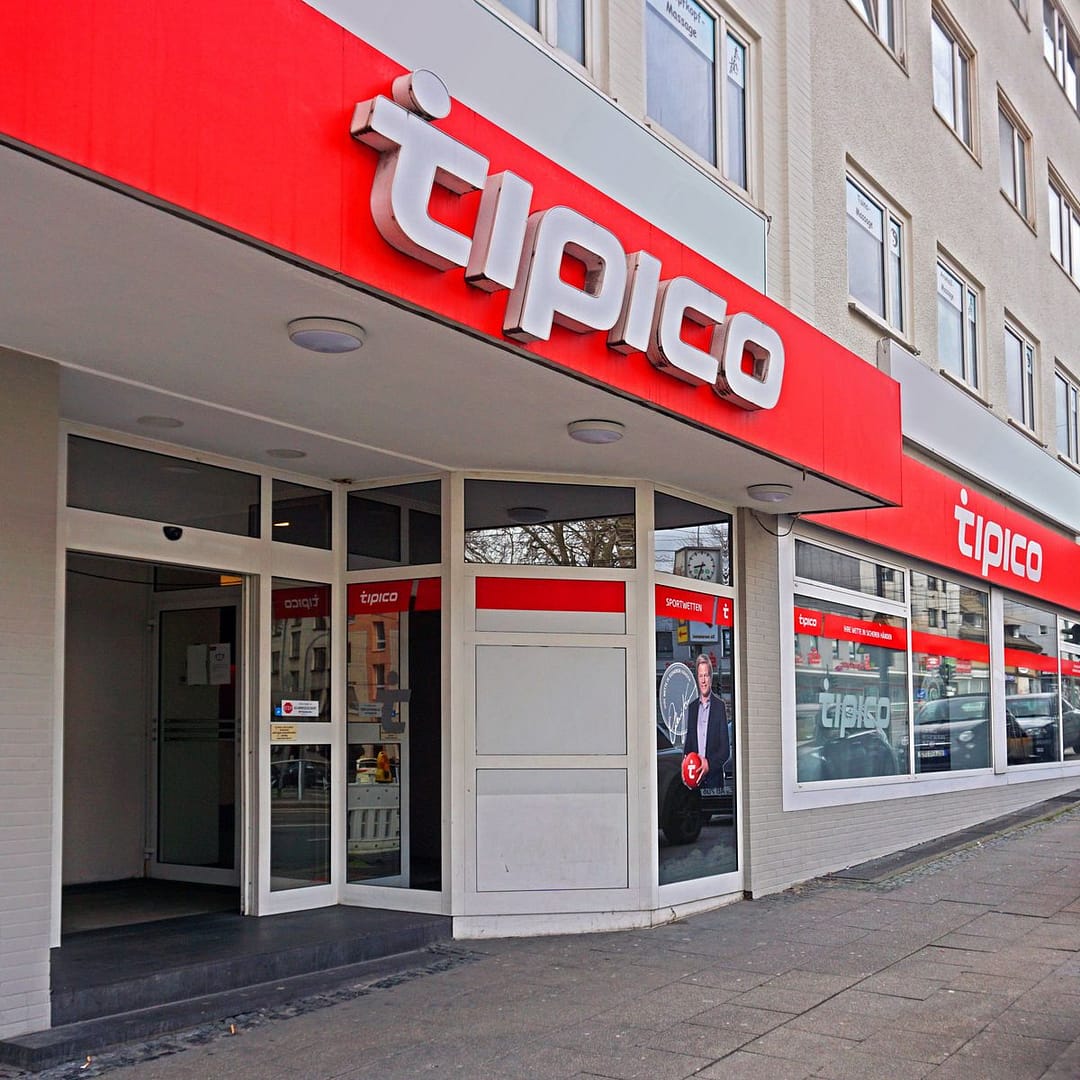
A significant transaction was announced by the French media conglomerate Banijay on a Tuesday, revealing that a majority stake in the betting firm Tipico would be acquired from the private equity group CVC. This strategic move is poised to culminate in the creation of one of Europe’s largest operators in the online gaming sector. The intention to expand the business beyond its established television production roots through targeted acquisitions has been evident in Banijay’s recent corporate strategy. Following the announcement, the company’s shares, whose shareholders include the Arnault family and Vivendi, were observed to have risen by 7.6% by midday trading.
The deal assigned a substantial value of 4.6 billion euros to Tipico, which is equivalent to approximately $5.4 billion. The key structural element of the transaction involves the merger of Tipico with Banijay-owned Betclic, which will then be consolidated under a newly established entity to be named Banijay Gaming. This merged operation is projected to become the largest sports betting company by revenue in continental Europe, surpassing rivals such as Italy’s Lottomatica. The creation of this new entity demonstrates a clear ambition to dominate the European online gaming market.
Banijay, whose business activities extend well beyond betting to include the production of major television shows like “Big Brother” and the sci-fi series “Black Mirror”, plans to initially hold a 65% stake in the newly formed company. Furthermore, the firm aims to increase this ownership stake to 72% through the execution of call options. It was reported that CVC will retain a minority stake in the merged entity. The private equity company, which is listed in Amsterdam, had originally acquired its majority stake in Tipico in 2016. At that time, the business was reported to have been valued at 1.4 billion euros, according to sources close to the matter.
The sale of this long-held asset by the private equity group was viewed as a strong indication that dealmaking activity in Europe is once again gaining momentum after a quiet period. Buyout firms have been facing increasing pressure to divest long-term holdings and return capital to their investors. The managing partner of CVC, Daniel Pindur, conveyed that confidence had existed from the outset that a strategic buyer for Tipico would eventually emerge. It was further stated that the existing Banijay-owned entity, Betclic, was considered by far the preferred partner for the transaction.
The precise financial outlay for the majority stake in Tipico was estimated to be around 3 billion euros. This amount is to be funded through a combination of cash and shares, and the transaction is structured to include the repayment of Tipico’s existing debt obligations. The Chief Executive Officer of Banijay, Francois Riahi, expressed confidence that the company would successfully secure the necessary regulatory approval for the deal. The transaction is currently expected to close in mid-2026.
A key factor supporting this confidence in regulatory clearance was articulated by the CEO. It was noted that no significant overlap exists between the two major operations. To further mitigate any potential anti-trust concerns, it was stated that Banijay will divest its existing stake in Bet-at-home, which operates as a publicly listed German company. Tipico, which maintains its market leadership position in Germany, conducts its operations from Malta, a recognized European center for sports betting and online gaming. It was confirmed that no plans are currently in place to alter this operational setup.
From a financial perspective, Banijay expects the acquisition to yield 100 million euros in annual cost benefits within three years following the close of the deal. While the group had previously been reported to be in early-stage discussions regarding the acquisition of British broadcaster ITV’s studio business, the CEO indicated that the company’s focus would be entirely on the Tipico deal in the immediate months ahead. However, it was simultaneously noted that the group would not lose sight of its overarching strategy in the entertainment industry, stating that consolidation in that sector “makes a lot of sense.” The company is expected to release an updated financial guidance to reflect the major impact of the transaction in the coming weeks or months.
Finance
U.S. Stock Exchanges Seen Reporting Strong Q2 Earnings Amid Volatility-Driven Trading Surge
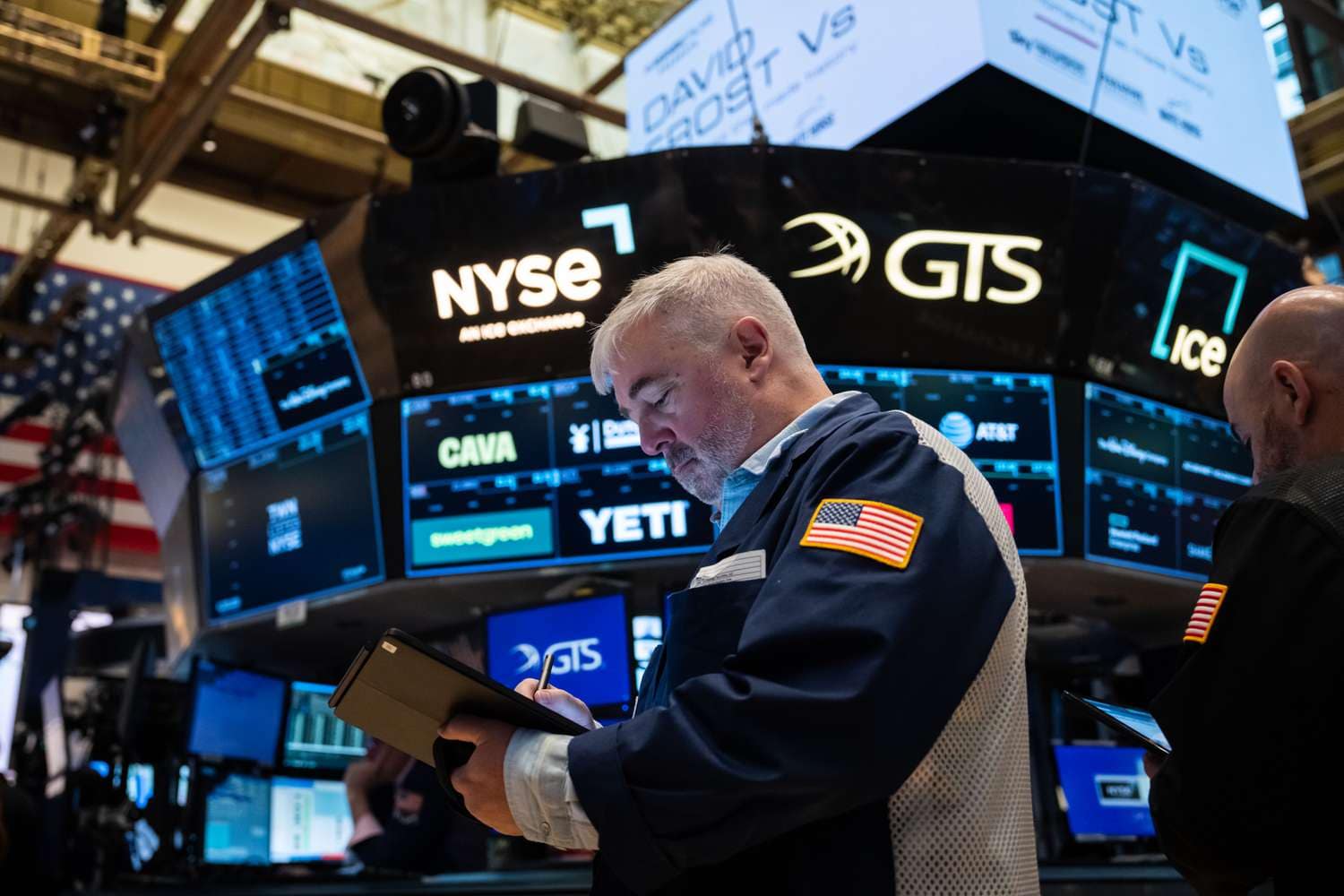
Second-quarter earnings for major U.S. stock exchanges were expected to reflect a notable increase, largely attributed to elevated trading volumes driven by market turbulence surrounding tariff disputes and geopolitical tensions. The surge in activity had reportedly enabled exchanges to collect higher transaction and clearing fees, which typically translate into improved financial results during periods of heightened volatility.
It had been observed that investors, reacting to the evolving macroeconomic landscape and U.S. President Donald Trump’s implementation of sweeping tariff measures, had undertaken widespread repositioning of their investment portfolios. The resulting volatility, further intensified by uncertainties stemming from the Middle East, was said to have created an environment conducive to increased trading across multiple asset classes. Analysts from RBC had commented that the persistence of macroeconomic ambiguity throughout the quarter had supported consistently strong performance in average daily volumes.
Major exchanges, including CME Group, Intercontinental Exchange (ICE), Cboe Global Markets, and Nasdaq, were all reported to have benefited from this spike in market activity. CME Group was said to have recorded a 16% jump in average daily volume (ADV), reaching a new quarterly high of 30.2 million contracts. Similarly, Intercontinental Exchange, which owns the New York Stock Exchange, had experienced a 26% rise in ADV, touching a record 10 million contracts. Trading activity at Cboe Global Markets had also set new benchmarks, with S\&P 500 index options reaching 3.7 million contracts in quarterly ADV, marking an all-time high. Nasdaq, for its part, had seen solid performance in U.S. equities and options trading.
The elevated trading levels were not confined solely to institutional activity. According to insights from brokerage firm Morgan Stanley, retail investor participation had remained resilient throughout the quarter. Retail traders were reported to have continued employing a “buy-the-dip” strategy, even as markets oscillated in response to the tariff disputes and subsequent rebounds in risk assets. This dynamic had provided further tailwinds for the exchanges.
In addition to traditional financial instruments, several exchanges had reportedly expanded their involvement in cryptocurrency markets. CME, for instance, had observed a 136% surge in cryptocurrency ADV during the quarter, driven in large part by unprecedented growth in ether futures. This trend had underscored the increasing integration of digital assets within the mainstream financial system, with more exchanges offering crypto-linked products to meet growing demand.
Although trading volumes had surged during the second quarter, projections for the remainder of the year suggested that activity might moderate slightly, particularly if current sources of uncertainty were resolved. Nonetheless, analysts had indicated that ongoing debates over the extent and timing of future interest rate cuts were expected to maintain volatility in fixed-income markets. Rates trading, therefore, was anticipated to remain active.
Market sentiment had also been lifted by signs of recovery in capital markets. It had been noted that initial public offering (IPO) activity, which had come to a standstill in the first half of the quarter due to volatility, began to pick up as optimism returned. Progress in trade negotiations was believed to have played a role in reigniting investor interest. Companies such as digital bank Chime and stablecoin issuer Circle were said to have gone public in June, reflecting a return of confidence among issuers and investors.
Data from Dealogic had indicated that the total deal value of U.S.-listed IPOs on the Nasdaq nearly tripled to \$13.2 billion in the second quarter, compared to the same period a year earlier. Moreover, the number of new listings had almost doubled, further signaling a revived IPO landscape.
The second-quarter earnings season for U.S. exchanges was scheduled to commence with CME Group reporting results on Wednesday, followed by Nasdaq on Thursday. Cboe and Intercontinental Exchange were expected to release their financial results the following week.
In terms of stock performance, shares of these exchanges had significantly outpaced the broader market. During the first six months of the year, CME and Cboe had each registered gains of nearly 19%, while Intercontinental Exchange and Nasdaq had risen by 23% and 16% respectively. In contrast, the benchmark S\&P 500 index had recorded a comparatively modest increase of 5.5% during the same period.
In conclusion, the strong second-quarter performance expected from U.S. stock exchanges had been shaped by a confluence of market volatility, retail resilience, crypto expansion, and a rebound in IPO activity. While future trading levels may normalize as volatility diminishes, structural shifts in investor behavior and asset diversification were seen as factors that could continue to bolster exchange earnings in the long term.
Finance
UniCredit to Gradually Exit Generali Stake, Rules Out Major Insurance Mergers
In a significant statement regarding the future strategic direction of UniCredit, Chief Executive Andrea Orcel announced on Tuesday that the bank would gradually reduce its stake in Italy’s top insurance firm, Generali. This declaration, which was made during a financial conference hosted by rival institution Mediobanca, put to rest growing speculation that UniCredit might be positioning itself for a larger move into the insurance sector, particularly through mergers or acquisitions.
UniCredit’s current holding in Generali stands at approximately 6.7%, a position that has officially been described as a financial investment. However, questions had been raised within financial and investor circles about whether this stake might evolve into a more substantial strategic play, especially considering Orcel’s history of pursuing bold corporate moves and the recent wave of consolidation sweeping through Italy’s financial industry. Some had wondered if Generali could become a target within Orcel’s broader merger and acquisition ambitions, particularly after other speculative plays involving Germany’s Commerzbank and Italy’s Banco BPM encountered significant hurdles.
Orcel, however, was clear in distancing the Generali investment from any such intentions. It was emphasized during the event that the stake in the insurer should not be interpreted as a precursor to a full-scale acquisition or merger. Instead, it was explicitly stated that UniCredit intends to reduce and ultimately exit the Generali holding over time. The investment, according to Orcel, had been made purely on financial grounds and not as part of any strategic bid for operational integration or control.
The context in which this announcement was made is one of heightened sensitivity around bank mergers and acquisitions in Europe. Across the continent, political resistance and regulatory caution have complicated the landscape for bank M&A. Orcel acknowledged that acquiring minority stakes could, in some circumstances, serve as a viable entry point toward future tie-ups, especially in jurisdictions where government hostility toward direct mergers is pronounced. Nevertheless, he reiterated that the situation with Generali did not fall into that category.
Concurrently, UniCredit is in the process of internalizing its life insurance business, a shift that may lead to the bank applying for regulatory classification as a financial conglomerate. This status, if granted, would allow the bank to benefit from the so-called “Danish Compromise”—a favorable set of capital regulations that apply to banking groups that also have insurance subsidiaries. The move reflects a strategic decision to manage insurance operations internally without seeking major external deals or disruptive acquisitions in the insurance sector.
Orcel further clarified that UniCredit would not be pursuing large-scale insurance acquisitions in the future. Instead, the possibility of small, targeted acquisitions—often referred to as “bolt-on” deals—was left open. These would serve to enhance specific product offerings or capabilities without materially shifting the bank’s core strategic orientation.
From a financial perspective, UniCredit’s capital position appears strong, and Orcel indicated that the bank currently holds approximately 10 billion euros in excess capital above its own internal threshold. This surplus, it was noted, is earmarked for eventual distribution to shareholders by 2027, reaffirming UniCredit’s commitment to returning value to its investors. However, Orcel also acknowledged that if suitable opportunities presented themselves, portions of this capital could be used for transactions that deliver long-term strategic value to the bank.
He expressed a clear preference for this capital to be allocated toward value-enhancing initiatives, a stance that is likely aligned with the expectations of banking regulators and supervisors. Orcel’s comments suggested a cautious but pragmatic approach to growth: maintaining investor confidence through measured capital returns while remaining open to modest acquisitions that serve the bank’s long-term interests.
Overall, the message delivered was one of strategic restraint and fiscal discipline. While UniCredit has shown a willingness to explore merger and acquisition options in the past, the current tone reflects a greater sensitivity to regulatory climate, political sentiment, and investor expectations. Orcel’s remarks were interpreted by many as a deliberate effort to dispel speculation and affirm a steady, long-term focus.
As UniCredit continues to navigate the evolving landscape of European banking, its management appears intent on balancing growth ambitions with capital prudence and operational clarity. The gradual divestment from Generali, coupled with a refusal to engage in large-scale insurance deals, underscores a strategic pivot toward core banking functions, internal consolidation, and incremental value creation—moves that are likely to be closely monitored by both regulators and shareholders in the months ahead.

Strategic Plan Demanded as Bank of America Seeks to Close Performance Gap with Key Rivals

Major European Media Conglomerate Expands into Gaming with Acquisition of Leading Betting Firm

Unexpected Canadian Inflation Tightens Yield Gap, Complicating Central Bank Policy Outlook

Argentina Explores Debt Management Strategies: Potential Debt Swap and IMF Discussions on the Horizon

Apple Introduces “Tap to Pay” Feature for iPhone, Allowing Contactless Payments

Hedge Funds Capitalize on U.S. Regional Banking Stocks Plunge: Insights and Implications
-
 Banking2 years ago
Argentina Explores Debt Management Strategies: Potential Debt Swap and IMF Discussions on the Horizon
-
 Technology3 years ago
Apple Introduces “Tap to Pay” Feature for iPhone, Allowing Contactless Payments
-
 Banking2 years ago
Hedge Funds Capitalize on U.S. Regional Banking Stocks Plunge: Insights and Implications
-

 Technology2 years ago
Aviation Industry Urges Swift Action Against GPS Spoofing Amid Growing Threats
-

 Technology2 years ago
Bitcoin Weakens as Regulatory Concerns and Market Sentiment Impact Cryptocurrency Market
-

 Business2 years ago
Overcoming Financial Hurdles: TotalEnergies’ Quest for Renewable Energy in Africa
-

 Technology3 years ago
FTX denies talks of acquiring Robinhood
-

 Forex1 year ago
Navigating Risks in Bank-Fintech Partnerships: Insights from U.S. Bank Regulator