

Finance
Major European Media Conglomerate Expands into Gaming with Acquisition of Leading Betting Firm
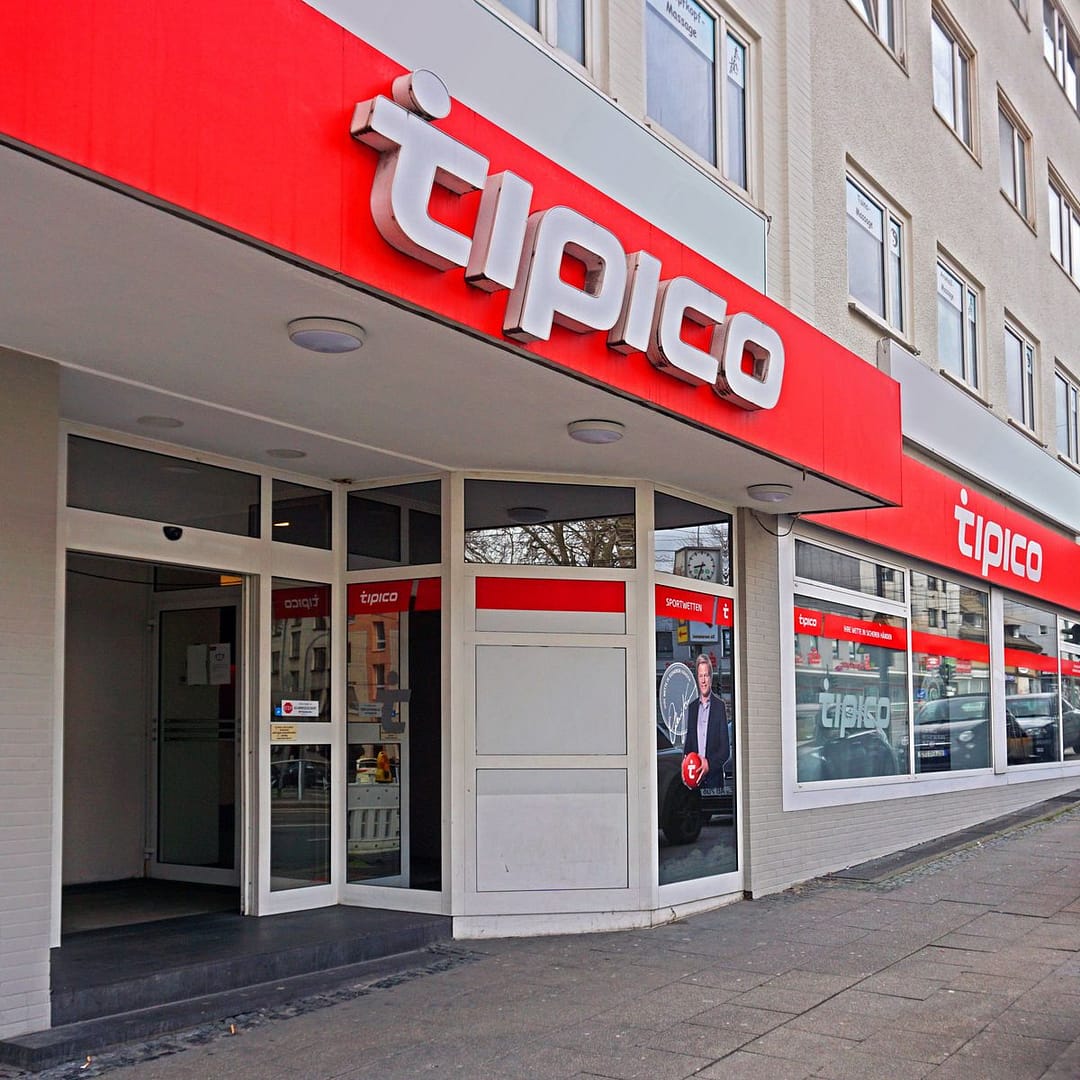
A significant transaction was announced by the French media conglomerate Banijay on a Tuesday, revealing that a majority stake in the betting firm Tipico would be acquired from the private equity group CVC. This strategic move is poised to culminate in the creation of one of Europe’s largest operators in the online gaming sector. The intention to expand the business beyond its established television production roots through targeted acquisitions has been evident in Banijay’s recent corporate strategy. Following the announcement, the company’s shares, whose shareholders include the Arnault family and Vivendi, were observed to have risen by 7.6% by midday trading.
The deal assigned a substantial value of 4.6 billion euros to Tipico, which is equivalent to approximately $5.4 billion. The key structural element of the transaction involves the merger of Tipico with Banijay-owned Betclic, which will then be consolidated under a newly established entity to be named Banijay Gaming. This merged operation is projected to become the largest sports betting company by revenue in continental Europe, surpassing rivals such as Italy’s Lottomatica. The creation of this new entity demonstrates a clear ambition to dominate the European online gaming market.
Banijay, whose business activities extend well beyond betting to include the production of major television shows like “Big Brother” and the sci-fi series “Black Mirror”, plans to initially hold a 65% stake in the newly formed company. Furthermore, the firm aims to increase this ownership stake to 72% through the execution of call options. It was reported that CVC will retain a minority stake in the merged entity. The private equity company, which is listed in Amsterdam, had originally acquired its majority stake in Tipico in 2016. At that time, the business was reported to have been valued at 1.4 billion euros, according to sources close to the matter.
The sale of this long-held asset by the private equity group was viewed as a strong indication that dealmaking activity in Europe is once again gaining momentum after a quiet period. Buyout firms have been facing increasing pressure to divest long-term holdings and return capital to their investors. The managing partner of CVC, Daniel Pindur, conveyed that confidence had existed from the outset that a strategic buyer for Tipico would eventually emerge. It was further stated that the existing Banijay-owned entity, Betclic, was considered by far the preferred partner for the transaction.
The precise financial outlay for the majority stake in Tipico was estimated to be around 3 billion euros. This amount is to be funded through a combination of cash and shares, and the transaction is structured to include the repayment of Tipico’s existing debt obligations. The Chief Executive Officer of Banijay, Francois Riahi, expressed confidence that the company would successfully secure the necessary regulatory approval for the deal. The transaction is currently expected to close in mid-2026.
A key factor supporting this confidence in regulatory clearance was articulated by the CEO. It was noted that no significant overlap exists between the two major operations. To further mitigate any potential anti-trust concerns, it was stated that Banijay will divest its existing stake in Bet-at-home, which operates as a publicly listed German company. Tipico, which maintains its market leadership position in Germany, conducts its operations from Malta, a recognized European center for sports betting and online gaming. It was confirmed that no plans are currently in place to alter this operational setup.
From a financial perspective, Banijay expects the acquisition to yield 100 million euros in annual cost benefits within three years following the close of the deal. While the group had previously been reported to be in early-stage discussions regarding the acquisition of British broadcaster ITV’s studio business, the CEO indicated that the company’s focus would be entirely on the Tipico deal in the immediate months ahead. However, it was simultaneously noted that the group would not lose sight of its overarching strategy in the entertainment industry, stating that consolidation in that sector “makes a lot of sense.” The company is expected to release an updated financial guidance to reflect the major impact of the transaction in the coming weeks or months.












Finance
Alphabet Becomes Berkshire Hathaway’s Third-Largest Stock Investment

Berkshire Hathaway significantly increased its investment in Alphabet during the second quarter of 2026, making the Google parent company its third-largest stock holding. The move reflects a major shift in Berkshire’s investment portfolio as the company begins deploying more of the substantial cash reserves accumulated under former CEO Warren Buffett.
In a regulatory filing on Friday, August 14, Berkshire Hathaway reported that it held nearly 106 million shares of Alphabet as of June 30. The position was valued at approximately $37.8 billion. That compares with 57.8 million shares held three months earlier, representing an increase of about 83%.
The Alphabet investment included a $10 billion purchase announced in June. Alphabet had planned the investment as part of efforts to expand its artificial intelligence infrastructure, an area that has required significant capital spending as technology companies compete to build advanced AI systems and computing capacity.
Alphabet now ranks behind only Apple and American Express among Berkshire Hathaway’s stock investments. Apple remained the company’s largest holding at the end of June, valued at $66 billion. American Express was second at $51.3 billion. Coca-Cola ranked fourth, followed by Bank of America in fifth place.
The changes came as Berkshire made a broader shift in its investment activity during the second quarter. The company purchased $23.5 billion worth of stocks and sold $3.7 billion, ending a 14-quarter period in which it had been a net seller of equities.
The increased stock purchases also coincided with a reduction in Berkshire’s enormous cash holdings. Cash and cash equivalents declined to $364.7 billion on June 30 from $380.2 billion at the end of March. The decrease was partly influenced by $4.5 billion spent on share buybacks.
Greg Abel, who succeeded Buffett as Berkshire’s chief executive at the end of 2025, has started putting more of the company’s financial resources to work. Buffett continues to serve as Berkshire’s chairman and said last month that the decision to invest in Alphabet was his idea. Berkshire first began building its Alphabet position during the third quarter of 2025.
Buffett also said that he and Abel continue to consult with each other on Berkshire’s capital allocation decisions. Abel previously said that he was responsible for 94% of Berkshire’s stock holdings, while investment manager Ted Weschler managed the remaining 6%. The latest filing, however, did not identify which executive was responsible for individual purchases or sales.
Berkshire also made several smaller adjustments to its portfolio during the quarter. Its investment in Delta Air Lines increased by 44% to 57.3 million shares, worth nearly $5.4 billion at the end of June. The company also more than doubled its Macy’s position to approximately 7.3 million shares, valued at $173 million.
At the same time, Berkshire completely exited its investment in beverage company Constellation Brands. The position had been established about a year and a half earlier.
The conglomerate increased its holdings in homebuilder Lennar and disclosed a small $580,000 investment in another homebuilder, D.R. Horton. It reduced positions in Ally Financial, Bank of America, Capital One, kidney dialysis provider DaVita, grocery chain Kroger and steelmaker Nucor.
The disclosed stock holdings represented most of Berkshire’s $323.8 billion equity portfolio invested in U.S.-listed companies as of June 30. The portfolio changes provide an indication of how Berkshire is adjusting its investment strategy under Abel while Buffett remains involved as chairman.
Beyond its publicly traded investments, Berkshire Hathaway owns a wide range of operating businesses. These include BNSF railroad, Geico car insurance, energy and manufacturing operations, as well as consumer brands such as Brooks, Dairy Queen, Fruit of the Loom and See’s.
The stronger position in Alphabet marks one of Berkshire’s most significant recent investments and places the technology company among the conglomerate’s most important publicly traded assets.
Finance
Australian Shares Edge Lower as Westpac Drags Banks Ahead of RBA Rate Decision
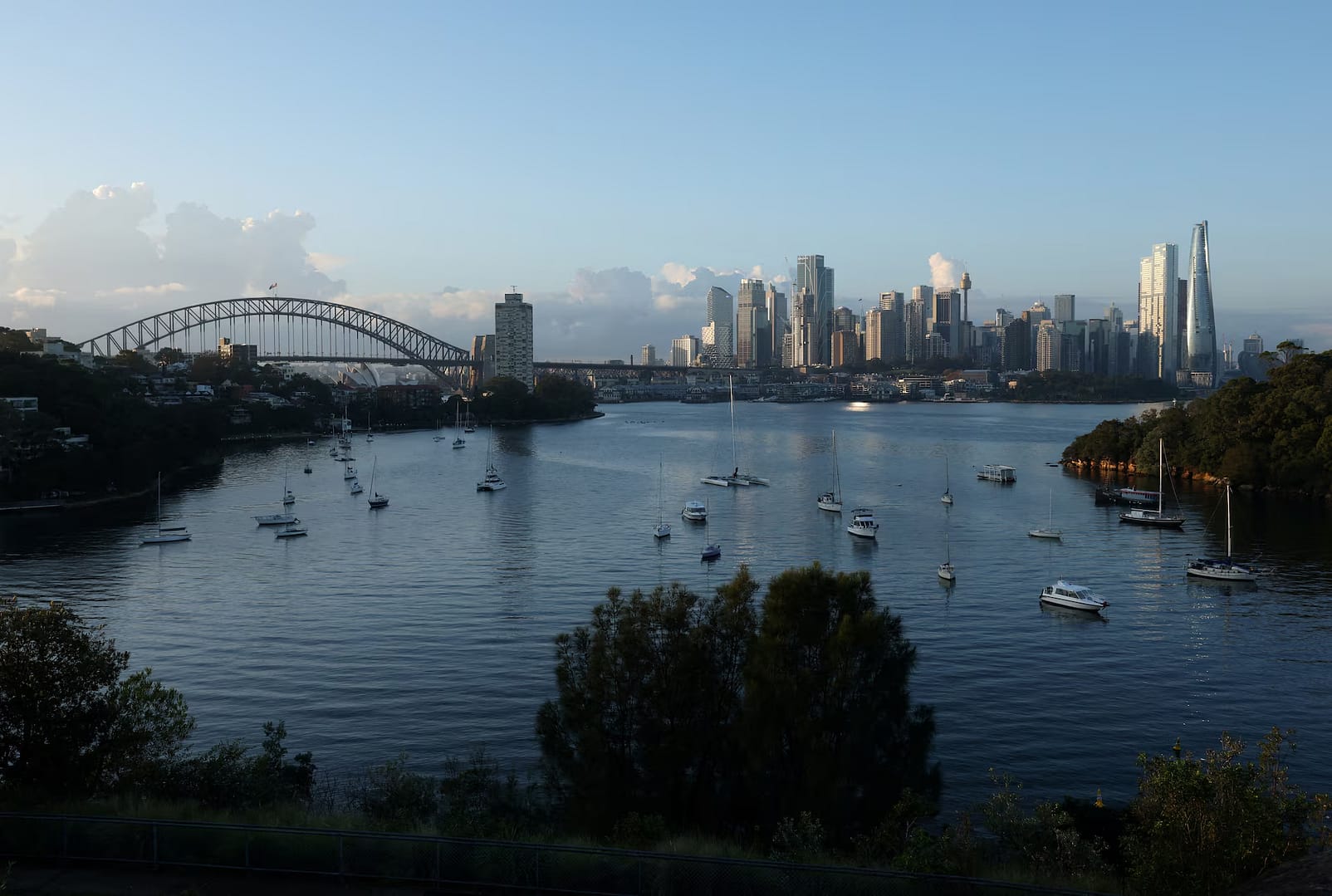
Australian stocks moved lower on Monday, August 10, as a sharp decline in Westpac shares pressured the banking sector, offsetting gains among mining companies. Investors were also positioning ahead of the Reserve Bank of Australia’s monetary policy decision, due on Tuesday, with markets largely expecting interest rates to remain unchanged.
The benchmark S&P/ASX 200 index fell 0.5% to 9,220.30 points by 0057 GMT. The index had advanced 3.2% during the previous week, but the latest session reflected renewed caution among investors as companies entered a closely watched fiscal 2027 earnings season.
Westpac was among the biggest drags on the market. Its shares dropped more than 5% during intraday trading, marking their steepest decline since March 30. The fall followed the lender’s quarterly update, which included weaker mortgage application figures and a more cautious outlook for housing credit growth.
Westpac said investor housing credit growth could halve next year and reported a 20% decline in mortgage applications. The bank recorded cash earnings of A$1.8 billion for the quarter ended June 30, compared with A$1.9 billion during the same period a year earlier.
The weakness spread across Australia’s major banks. The financials sub-index dropped 1.9%, recording its biggest intraday decline in three months. Commonwealth Bank of Australia, ANZ and National Australia Bank all fell, with their shares declining between 1.3% and 2.4%.
The banking sector’s performance came as investors turned their attention toward the Reserve Bank of Australia. The central bank was scheduled to announce its policy decision on Tuesday. Financial markets broadly anticipated that the RBA would leave interest rates unchanged, while investors were expected to closely examine its assessment of the economy and any signals about the future direction of monetary policy.
Mining stocks provided some support to the broader market. The mining sub-index climbed 1.4%, helped by stronger metal prices. Major mining companies BHP Group and Rio Tinto each gained more than 1%, while Fortescue rose 0.7%.
Gold-related shares performed even more strongly. The gold sub-index advanced more than 3%, reaching its highest level since mid-April as it tracked gains in bullion prices. Gold miners Evolution Mining and St Barbara rose 1.3% and 4.7%, respectively.
Elsewhere in the market, Treasury Wine Estates was a notable gainer. Its shares jumped nearly 8% after the company announced plans to reduce the size of its U.S. North Coast vintages from 2026 and said it would write down inventory, primarily bulk wine.
The Penfolds owner also provided an updated earnings outlook. Treasury Wine Estates forecast unaudited fiscal 2026 earnings before interest, tax, SGARA and material items, or EBITS, at A$492.3 million. That figure was above its previous guidance range of A$480 million to A$490 million.
The contrasting performances across sectors left the Australian benchmark under pressure despite strong gains in mining and gold-related stocks. Investors remained focused on corporate earnings developments as well as the upcoming RBA decision, which was expected to provide further insight into the central bank’s assessment of economic conditions.
Across the Tasman Sea, New Zealand stocks moved in the opposite direction. The benchmark S&P/NZX 50 index gained 0.5% to reach 13,892.88 points.
The Australian market’s decline highlighted the differing forces influencing equities ahead of the RBA announcement. Weakness in major lenders, particularly Westpac, weighed heavily on the benchmark, while stronger commodity prices supported mining and gold stocks. The combination left investors balancing concerns about housing and banking conditions against continued strength in parts of the resources sector.
Finance
The Capitalization of Special Non-Resident Foreign Exchange Deposit Frameworks and Sovereign Reserves Optimization in India

An aggregate total of approximately $10 billion in foreign capital inflows has been successfully attracted by India through a specialized deposit initiative administered by the Reserve Bank of India for overseas non-resident citizens, according to disclosures provided by two individuals familiar with the matter. This substantial accumulation of capital has been mobilized to directly support broader sovereign efforts aimed at shoring up national foreign exchange reserves and providing fundamental stability to the domestic rupee currency. The underlying framework for this financial mechanism was originally established during the central bank’s policy meeting on June 5, when a zero-cost foreign-exchange swap facility was announced for non-resident Indian deposits, thereby enabling domestic commercial banks to offer significantly elevated return rates on these specific foreign-currency accounts.
The operational appeal of the deposit scheme was further enhanced following an official regulatory clarification issued on June 23, through which domestic banks were formally permitted to execute credit lending operations against these deposits and establish legal liens over the underlying balances. This administrative revision effectively introduced structural leverage into the program, rendering the financial offering considerably more lucrative for prospective overseas depositors. It was confirmed by the initial source that a noticeable acceleration in capital inflows was documented over the preceding week following the dissemination of the regulatory clarification. However, it was also noted that the vast majority of anticipated capital flows are expected to be back-ended toward the final phase of the subscription window, which maintains a formal closing deadline set for September 30. Official inquiries regarding the transaction metrics were not immediately answered by representatives of the central bank, while the primary sources requested anonymity due to strict media communication protocols.
The multi-billion-dollar sums secured thus far represent merely a localized fraction of the total foreign capital anticipated under the national framework. According to analytical estimates compiled by prominent economists and institutional bankers, total foreign-currency deposits attracted through the facility are projected to settle between $30 billion and $60 billion before the expiration of the program. Such an influx is recognized as a critical macroeconomic buffer that could substantially narrow India’s projected balance of payments deficit for the current fiscal year. These capital injections are viewed as particularly vital for the stabilization of the rupee, which has been subjected to renewed depreciation pressures driven by rising global crude oil benchmarks alongside market expectations that interest rate increases may be enacted by the Federal Reserve later in the calendar year. The geopolitical friction between the United States and Iran has driven Brent crude prices up by more than 20 percent above recent cyclical lows, thereby reigniting structural anxieties regarding India’s external trade accounts. While a temporary rally toward 94 per U.S. dollar was initially registered by the rupee following the early central bank interventions, a subsequent weakening past the 96 threshold was recorded on Tuesday, positioning the currency within 1 percent of its historic low of 96.96 per dollar.
Simultaneously, a series of operational friction points and structural challenges have been highlighted by commercial bankers attempting to market the deposit structures to overseas clients. The most prominent impediment cited involves a 25-to-40 basis point increase in the borrowing cost of U.S. dollars, an inflation in capital costs that emerged directly after the June 23 clarification enabled leveraged deposit frameworks. Because elevated funding costs directly compress the net yield margins that commercial institutions can pass on to international depositors, the overall competitive appeal of the program risks being diluted. Furthermore, severe operational constraints have been encountered by domestic lenders seeking to secure cross-border funding, as major Middle Eastern and Japanese banking institutions have reached internal country-specific risk exposure limits. Although the Middle East was initially identified as the primary liquidity pool for the initiative, it was posited by industry executives that the majority of successful placements will ultimately be driven by non-resident networks situated in Singapore and Hong Kong.
The competitive landscape has been further complicated for mid-sized domestic lenders, whose representatives reported being effectively priced out of the active primary market due to these elevated borrowing spreads. Additionally, the taxation treatment applied to overseas interest earnings continues to represent a significant point of friction for non-resident citizens residing within the United Kingdom and the United States. Although complete tax-exempt status is granted to interest income generated from these specialized accounts within Indian jurisdiction, such earnings are classified as fully taxable income by British and American fiscal authorities, thereby diminishing post-tax net yields for depositors. To address these operational dynamics, a high-level consultative session was scheduled for Tuesday between Reserve Bank of India Governor Sanjay Malhotra and senior banking executives, following preliminary discussions conducted on Monday between the Ministry of Finance and state-run lenders where strong underlying demand from Asian financial hubs was officially reported.

RBI Actions, Global Cues Set to Shape Rupee and Bond Markets This Week

Reform UK Gets 75% of Quarterly Donations From Trump-Pardoned Crypto Entrepreneur

Amazon Drone Delivery Expansion Is Planned Across About 500 US Locales

Argentina Explores Debt Management Strategies: Potential Debt Swap and IMF Discussions on the Horizon

Apple Introduces “Tap to Pay” Feature for iPhone, Allowing Contactless Payments

Hedge Funds Capitalize on U.S. Regional Banking Stocks Plunge: Insights and Implications
-
 Banking3 years ago
Argentina Explores Debt Management Strategies: Potential Debt Swap and IMF Discussions on the Horizon
-
 Technology3 years ago
Apple Introduces “Tap to Pay” Feature for iPhone, Allowing Contactless Payments
-
 Banking2 years ago
Hedge Funds Capitalize on U.S. Regional Banking Stocks Plunge: Insights and Implications
-

 Technology2 years ago
Aviation Industry Urges Swift Action Against GPS Spoofing Amid Growing Threats
-

 Technology3 years ago
FTX denies talks of acquiring Robinhood
-

 Technology3 years ago
Bitcoin Weakens as Regulatory Concerns and Market Sentiment Impact Cryptocurrency Market
-

 Business2 years ago
Overcoming Financial Hurdles: TotalEnergies’ Quest for Renewable Energy in Africa
-

 Forex2 years ago
Navigating Risks in Bank-Fintech Partnerships: Insights from U.S. Bank Regulator